
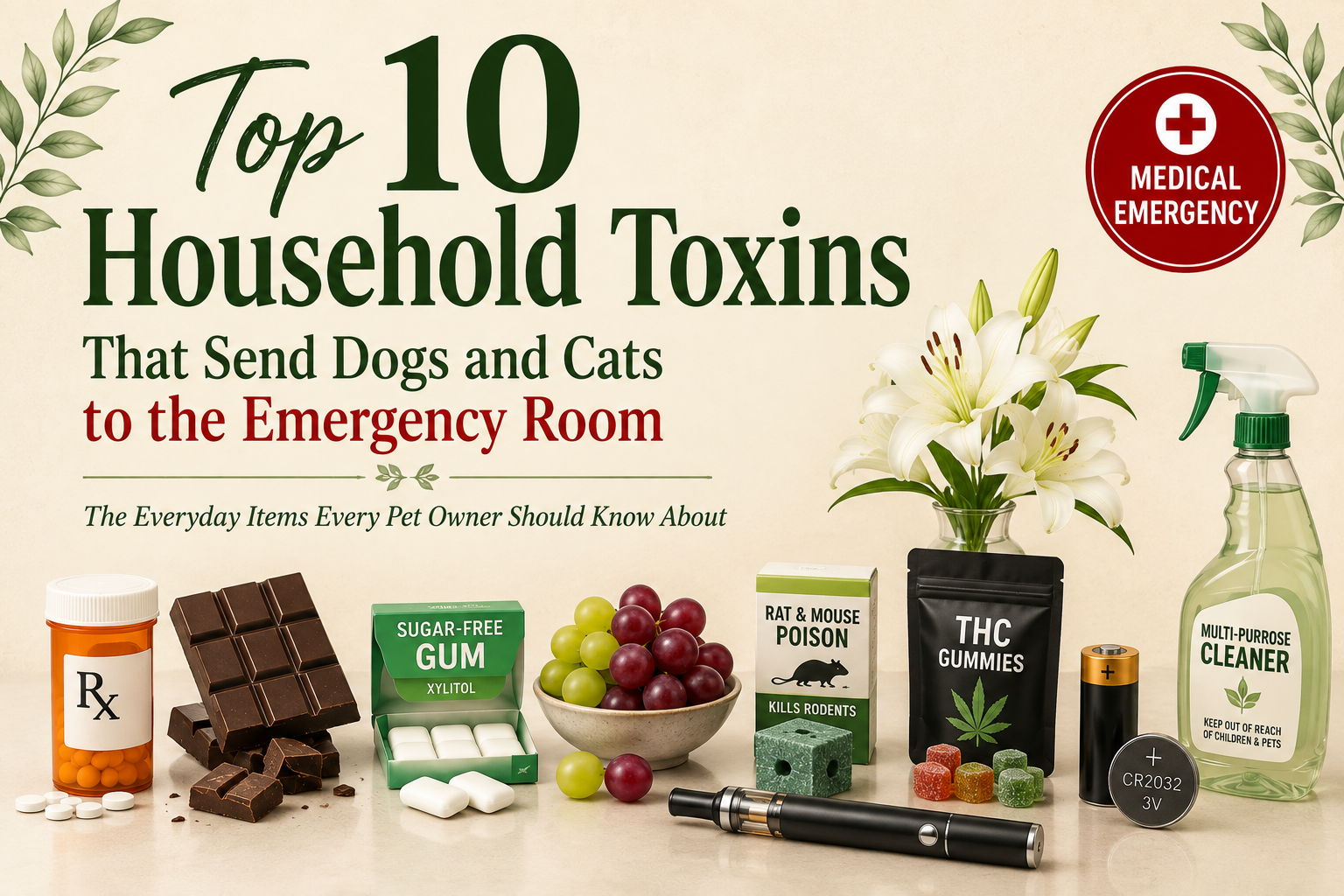
Top 10 Household Toxins That Send Dogs and Cats to the Emergency Room
The Everyday Items Every Pet Owner Should Know About
Many of the most dangerous pet poisonings begin with ordinary products found on kitchen counters, bathroom shelves, bedside tables, and inside cabinets. Learn the ten household toxins every dog and cat owner should recognize—and why you should never wait for symptoms before seeking help.
Every year, thousands of pets are rushed to emergency veterinary hospitals after getting into something that seemed harmless sitting on a kitchen counter, bathroom shelf, or bedside table.
The surprising part? Most poisonings happen with products we use every single day.
The good news is that many emergencies are completely preventable once you know what to watch for.
Whether you have a curious Labrador, a mischievous kitten, or a determined puppy who believes everything is edible, knowing the most common household toxins could save your pet's life.
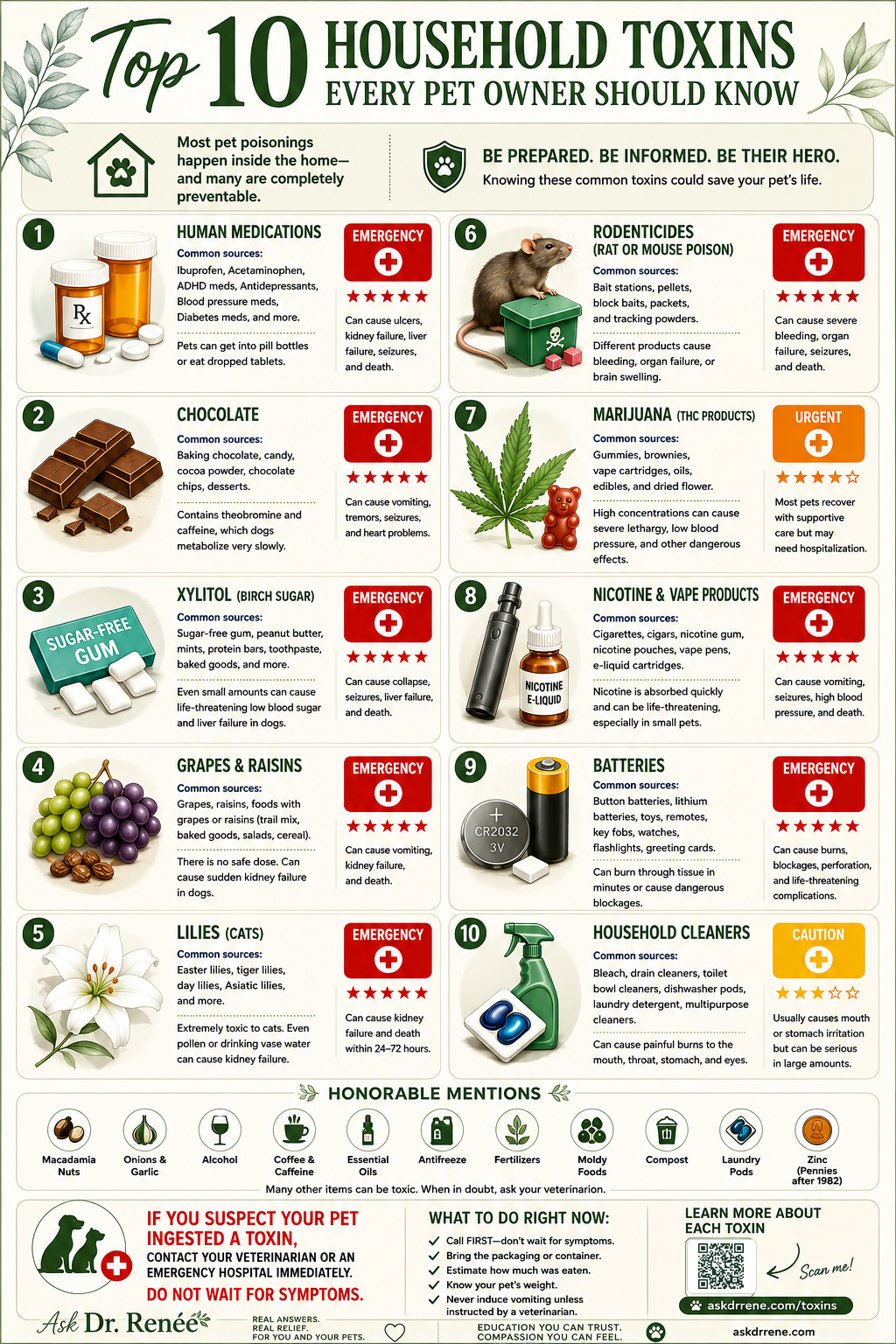
1. Human Medications
One of the most common—and most dangerous—pet poisonings.
Examples include:
- Ibuprofen (Advil®, Motrin®)
- Naproxen (Aleve®)
- Acetaminophen (Tylenol®)
- ADHD medications
- Antidepressants
- Blood pressure medications
- Diabetes medications
Pets often chew pill bottles or eat dropped tablets from the floor.
Signs
- Vomiting
- Lethargy
- Tremors
- Seizures
- Stomach ulcers
- Kidney failure
- Liver failure
Emergency Level: Emergency
2. Chocolate
Chocolate contains the stimulants theobromine and caffeine, both of which dogs metabolize very slowly.
Dark chocolate and baking chocolate are much more dangerous than milk chocolate.
Signs
- Vomiting
- Hyperactivity
- Fast heart rate
- Tremors
- Seizures
Emergency Level: Emergency
3. Xylitol (Birch Sugar)
This artificial sweetener, also called xylitol, is found in:
- Sugar-free gum
- Peanut butter
- Protein bars
- Mints
- Toothpaste
- Baked goods
Even tiny amounts can cause life-threatening low blood sugar in dogs.
Signs
- Weakness
- Collapse
- Vomiting
- Tremors
- Seizures
- Liver failure
Emergency Level: Emergency
4. Grapes and Raisins
No one knows exactly why some dogs develop kidney failure after eating grapes and raisins.
The frustrating part is that there is no safe dose.
One dog may eat several grapes without issue while another develops severe kidney failure after only a few.
Signs
- Vomiting
- Loss of appetite
- Lethargy
- Increased thirst
- Kidney failure
Emergency Level: Emergency
5. Lilies (Cats)
True lilies are among the deadliest plants a cat can encounter.
Even licking pollen off their fur or drinking vase water can be enough to cause kidney failure.
Signs
- Vomiting
- Drooling
- Loss of appetite
- Kidney failure within 24–72 hours
Emergency Level: Emergency
6. Rodenticides (Rat and Mouse Poison)
Different products work in different ways.
Some cause internal bleeding.
Others cause brain swelling or kidney failure.
Treatment depends entirely on the active ingredient.
Signs
- Weakness
- Bleeding
- Difficulty walking
- Tremors
- Seizures
Emergency Level: Emergency
7. Marijuana (THC Products)
Today's cannabis products are much more concentrated than they were years ago. Learn more about marijuana toxicity.
Pets commonly ingest:
- Gummies
- Brownies
- Vape cartridges
- Oils
- Edibles
Signs
- Extreme sleepiness
- Dribbling urine
- Wobbliness
- Dilated pupils
- Low heart rate
Most pets recover with supportive care, but severe cases require hospitalization.
Emergency Level: Urgent
8. Nicotine and Vape Products
Nicotine is absorbed extremely quickly.
Products include:
- Cigarettes
- Cigars
- Nicotine gum
- Nicotine pouches
- Disposable vape pens
- E-liquid cartridges
Just one vape cartridge can contain enough nicotine to be life-threatening for a small dog.
Signs
- Vomiting
- Tremors
- Fast heart rate
- High blood pressure
- Seizures
- Collapse
Emergency Level: Emergency
9. Batteries
Button batteries and lithium batteries can burn through tissue in minutes.
Large lithium batteries can also become lodged in the stomach.
Signs
- Drooling
- Pawing at the mouth
- Difficulty swallowing
- Vomiting
- Mouth burns
Emergency Level: Emergency
10. Household Cleaning Products
Fortunately, many household cleaners cause mild stomach upset rather than severe poisoning.
However, concentrated cleaners, bleach, drain cleaners, toilet bowl cleaners, and dishwasher pods can cause serious burns.
Signs
- Drooling
- Mouth pain
- Vomiting
- Difficulty swallowing
- Eye irritation
Emergency Level: Caution
Honorable Mentions
These also send pets to veterinary hospitals every day:
- Macadamia nuts
- Onions and garlic
- Alcohol
- Coffee and caffeine
- Essential oils
- Fertilizers
- Antifreeze
- Compost
- Moldy foods
- Glow sticks (mostly cats)
- Laundry detergent pods
- Zinc (pennies minted after 1982)
How to Pet-Proof Your Home
The easiest poison to treat is the one your pet never reaches.
A few simple habits can dramatically reduce the risk:
- Store medications in cabinets, not purses or countertops.
- Keep all foods out of reach.
- Avoid true lilies if you own cats.
- Read ingredient labels for xylitol or birch sugar.
- Secure trash cans with locking lids.
- Store nicotine and cannabis products in closed cabinets.
- Keep batteries away from curious pets.
- Clean spills immediately.
- Never assume a product is safe because it's “natural.”
The Bottom Line
Most pet poisonings happen in loving homes—not because owners are careless, but because pets are curious.
Knowing which toxins are most dangerous allows you to act quickly when accidents happen. When in doubt, it's always safer to call your veterinarian immediately than to wait for symptoms to develop.
Educational only. This article is not a substitute for veterinary care. If your pet is unwell, please contact your veterinarian.
Continue Learning About Pet Toxicities
What Happens After My Dog Eats Marijuana? Understanding THC Toxicity in Dogs
If your dog ate marijuana, a THC gummy, edible, or vape product, symptoms may not appear immediately. Learn the timeline of marijuana toxicity, common signs, when to seek emergency veterinary care, and why being honest with your veterinarian can make all the difference.
Read ToxicitiesWhat Happens at the Veterinary Hospital After My Dog Eats Marijuana? Diagnosis and Treatment of THC Toxicity
Wondering what happens if your dog goes to the veterinarian after eating marijuana? Learn how THC toxicity is diagnosed, when blood work and X-rays are needed, the treatments veterinarians use, and what to expect during hospitalization and recovery.
Read ToxicitiesGoing Home After Marijuana Toxicity: Recovery and Prevention for Dogs
Most dogs recover completely after marijuana toxicity with prompt veterinary care. Learn what to expect during recovery at home, warning signs that require another veterinary visit, how to prevent future THC exposures, and answers to common questions about cannabis poisoning in dogs.
Read ToxicitiesMy Dog Chewed a Vape Pen (Part 2): The Timeline of Nicotine Poisoning and When Symptoms Begin
How quickly does nicotine poisoning develop after a dog chews a vape pen? Learn the minute-by-minute timeline of nicotine toxicity, why symptoms can worsen rapidly, what affects severity, and why waiting to "see what happens" can be dangerous.
Read ToxicitiesMy Dog Chewed a Vape Pen (Part 3): Recognizing the Signs of Nicotine Poisoning
What does nicotine poisoning look like in dogs? Learn how nicotine affects the brain, heart, muscles, lungs, digestive system, and behavior, why symptoms change over time, and when emergency veterinary care is needed.
Read ToxicitiesMy Dog Chewed a Vape Pen (Part 4): The Hidden Danger of Swallowed Batteries and Broken Vape Devices
Nicotine isn't the only danger when a dog chews a vape pen. Learn why swallowed lithium-ion batteries, plastic, and metal pieces can cause life-threatening injuries, how veterinarians diagnose battery ingestion, and when endoscopy or surgery may be needed.
ReadKeep learning with Dr. Rene'
Browse the library, search another topic, or ask a question of your own.
Continue your journey
Loved this? Here's what to do next.
Every visit is a chance to understand your pet a little better. Pick your next step.
Explore the Learning Center
Browse evidence-based articles about symptoms, diseases, medications, treatments, preventive care, and more.
Explore ArticlesWatch Dr. Rene'
Prefer to watch instead of read? Explore practical veterinary education videos from Dr. Rene'.
Watch VideosGet Free Resources
Explore practical veterinary guides, checklists, and tools designed to help pet owners feel more informed and prepared.
Browse Free ResourcesProducts I Recommend
Browse pet products, supplies, and everyday essentials selected and recommended by Dr. Rene'.
See My Recommendations