
My Dog Ate Xylitol: How Much Is Dangerous and What Should I Do?
If your dog ate xylitol (found in sugar-free gum, candy, peanut butter, toothpaste, and other products), don't wait for symptoms to appear. Learn how much xylitol is dangerous, what signs to watch for, and what to do immediately to give your dog the best chance of recovery.
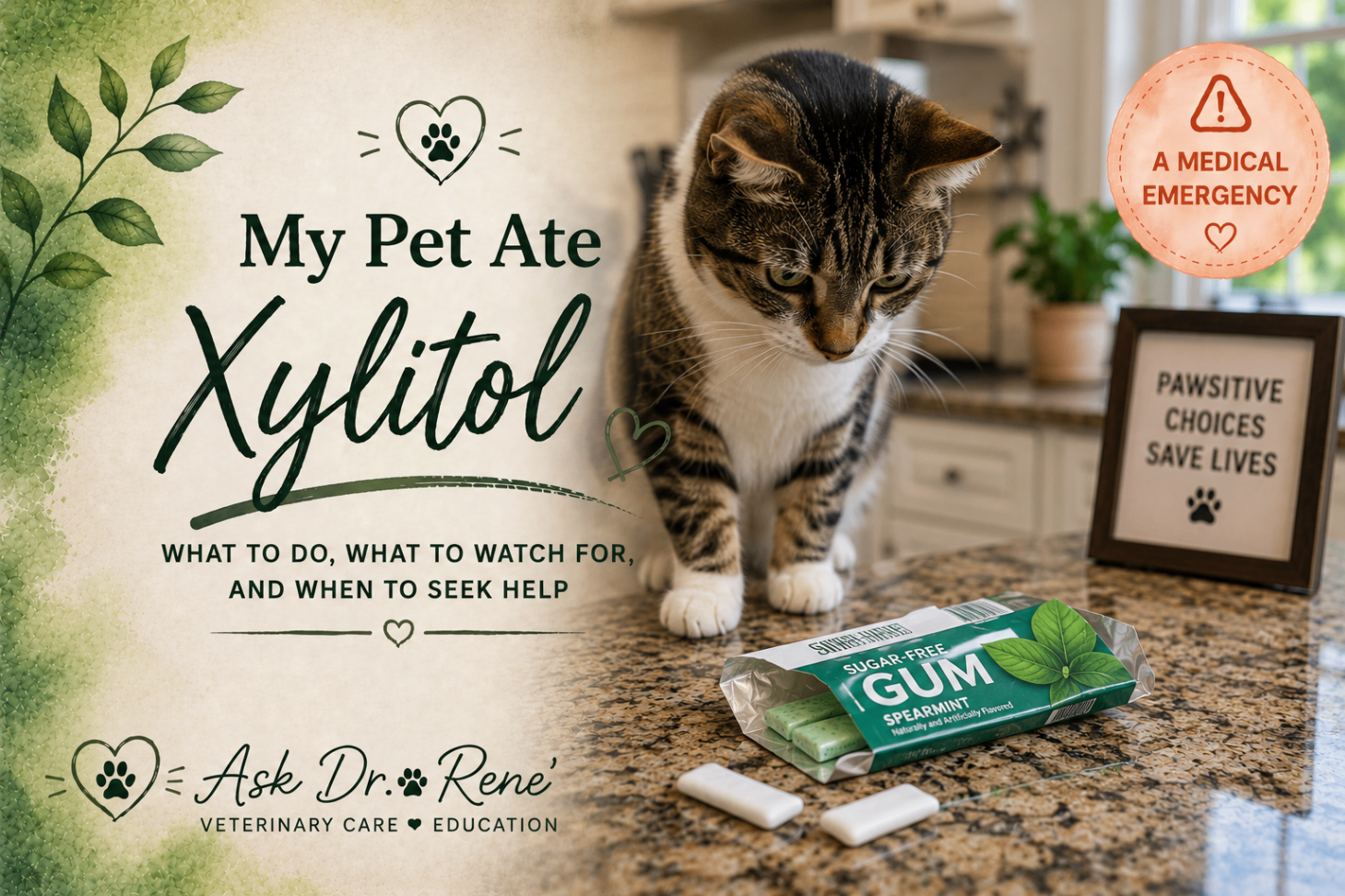
Your dog just got into a pack of sugar-free gum, breath mints, candy, toothpaste, or peanut butter. You check the ingredient list and see a word you hoped would not be there: Xylitol.
This is not an exposure where I recommend waiting to see what happens.
Xylitol can cause a dog's blood sugar to fall dangerously low, sometimes very quickly. At higher doses, it may also cause severe liver injury or liver failure. If your dog has eaten a product containing xylitol — sometimes labeled birch sugar — contact your veterinarian, an emergency veterinary hospital, or an animal poison-control service immediately.
Even when your dog looks completely normal, treatment may be needed before symptoms begin.
What Is Xylitol?
Xylitol is a sugar alcohol used to sweeten products without regular sugar. It is generally safe for people, but dogs metabolize it very differently.
Products that may contain xylitol include: sugar-free chewing gum, breath mints, sugar-free candy, some peanut and nut butters, protein bars and powders, toothpaste and oral-care products, mouthwash, cough drops, gummy vitamins, melatonin and other supplements, some liquid medications, baked goods, sauces, syrups, jams, and desserts, nasal sprays, and certain personal-care products.
Manufacturers may list xylitol as birch sugar on the ingredient label. Birch sugar and xylitol are the same substance.
Do not assume that a product is safe simply because it says "natural," "low carbohydrate," "keto," or "sugar-free."
Why Is Xylitol Dangerous to Dogs?
When a person consumes xylitol, it has little effect on insulin production. In dogs, xylitol may trigger a rapid and excessive release of insulin. Insulin moves glucose out of the bloodstream, which can cause the dog's blood sugar to drop to a dangerously low level. This is called hypoglycemia.
Low blood sugar deprives the brain and other organs of the glucose they need to function. Affected dogs may become weak, disoriented, uncoordinated, tremorous, or develop seizures.
At higher doses, xylitol may also cause acute liver injury. Liver damage does not always occur alongside low blood sugar, so a normal glucose reading does not necessarily eliminate every concern after a significant exposure.
Exactly How Much Xylitol Is Dangerous?
Xylitol toxicity is dose-dependent, meaning the risk is based on: the amount of xylitol consumed, your dog's body weight, the concentration of xylitol in the product, and how long ago the exposure occurred.
Veterinary toxicology references generally associate approximately 0.1 gram of xylitol per kilogram of body weight (100 mg/kg) with a risk of hypoglycemia, and approximately 0.5 gram per kilogram (500 mg/kg) with a risk of severe liver injury or liver failure. These are not "safe versus dangerous" dividing lines — they are treatment thresholds used to help veterinarians and toxicologists evaluate risk. Individual dogs may respond differently, and the actual amount consumed is often uncertain.
Approximate concerning amounts by body weight:
Estimates only. Individual dogs vary, and package concentrations differ widely. Always call a veterinarian or poison-control service.
These calculations are only estimates and should not be used to decide that an exposure is safe without veterinary guidance.
How Much Xylitol Is in One Piece of Gum?
This is where evaluating these cases becomes difficult. The amount of xylitol can vary dramatically between brands, between flavors made by the same brand, between gum, mints, candies, and supplements, and depending on whether xylitol is the primary sweetener or one of several sweeteners.
Some gums and mints may contain only a small amount, while others may contain close to a gram or more per piece. In certain products, one piece of gum could place a small dog within the potentially toxic range. The package may list xylitol as an ingredient without stating exactly how many milligrams are present in each piece, and manufacturers may change formulations over time. That is why the safest response is to call for professional guidance rather than trying to estimate the dose from the ingredient list alone.
Does the Ingredient Order Tell Me How Much Xylitol Is Present?
It can offer a clue, but it does not provide a reliable dose. Ingredients are generally listed in descending order by weight. If xylitol is listed first, the product may contain a relatively large amount; if it appears near the end, the concentration may be lower.
However, the ingredient order does not tell you how many milligrams are in each piece, whether your dog consumed whole or partial pieces, whether the formulation has recently changed, or whether xylitol is also present in a coating or filling. Do not use the ingredient order alone to decide whether your dog needs treatment.
Signs of Xylitol Poisoning
Signs of low blood sugar may develop rapidly — sometimes within 10–60 minutes — although onset can be delayed for several hours depending on the product. Possible symptoms include vomiting, sudden tiredness, weakness, stumbling or appearing "drunk," loss of coordination, shaking or tremors, confusion, collapse, seizures, and coma.
If liver injury develops, you may also notice continued vomiting, refusal to eat, severe lethargy, yellow gums/skin/eyes, bruising, bleeding, black stool, a swollen or painful abdomen, and collapse. Do not wait for these signs before seeking help. A dog may look normal while the xylitol is being absorbed.
What Should I Do Right Now?
1. Take the product away. Prevent your dog from eating anything else and collect any remaining gum, candy, supplements, medication, or packaging.
2. Check the ingredient list for xylitol or birch sugar, and take a clear photograph of the front and back of the package.
3. Estimate the amount consumed — how many pieces are missing, whether wrappers were swallowed, whether the container was previously opened, and approximately when the exposure occurred. Do not delay your call while trying to make the estimate perfect.
4. Know your dog's weight. The veterinarian or toxicologist will use it to calculate the possible dose.
5. Call immediately — your regular veterinarian, the nearest emergency veterinary hospital, or an animal poison-control service. Provide the product name, ingredient list, amount missing, time of exposure, and your dog's weight.
Should I Make My Dog Vomit?
Do not induce vomiting unless a veterinarian or veterinary toxicologist specifically instructs you to do so. Vomiting may be useful when the exposure was recent and the dog is still fully alert, but attempting it at home may be unsafe if a dog is weak, sleepy or difficult to awaken, stumbling, tremoring, seizing, having difficulty swallowing, or already vomiting repeatedly. A dog experiencing hypoglycemia may be at increased risk of inhaling vomit into the lungs.
Unlike many other toxins, activated charcoal does not reliably bind xylitol and is not routinely useful for uncomplicated xylitol ingestion.
Should I Rub Corn Syrup or Honey on My Dog's Gums?
Corn syrup or honey may temporarily raise blood sugar in a symptomatic dog, but it is not a substitute for veterinary treatment. Do not pour liquid into the mouth of a weak, unconscious, trembling, or seizing dog because it may be inhaled into the lungs.
A veterinary professional may occasionally advise placing a small amount on the gums while the dog is being transported. Follow their instructions and proceed directly to the hospital. Even if the dog seems to improve afterward, the effect may be brief — blood sugar can fall again, and liver injury may still develop.
What Will the Veterinarian Do?
Treatment depends on the estimated dose, the product involved, the time since exposure, and whether symptoms have begun. Your veterinarian may recommend inducing vomiting when safe and appropriate, checking blood glucose immediately, baseline bloodwork, placing an intravenous catheter, giving intravenous dextrose, starting IV fluids, monitoring blood glucose repeatedly, monitoring potassium and other electrolytes, checking liver enzymes, monitoring bilirubin and clotting ability, giving liver-supportive medications, treating tremors or seizures, and hospitalizing your dog for continued observation.
Dogs at risk for hypoglycemia may need glucose monitoring for approximately 12–24 hours or longer. Dogs exposed to a potentially liver-toxic dose may require monitoring and repeat laboratory testing for several days. The exact plan should be individualized for the patient.
My Dog's Blood Sugar Is Normal. Does That Mean We Are Safe?
Not necessarily. A normal blood-glucose result may mean the xylitol has not yet been fully absorbed, the product releases xylitol slowly, or the exposure was too small to cause hypoglycemia. Liver injury remains a concern after a higher dose. One normal value shortly after ingestion does not always rule out later complications. Your veterinarian will decide how long monitoring should continue based on the estimated dose and product.
What Is the Prognosis?
The prognosis is usually excellent when treatment begins before severe symptoms develop. Dogs treated promptly for hypoglycemia often recover completely. The prognosis becomes more guarded when a dog develops repeated seizures, severe or prolonged hypoglycemia, significant liver injury, abnormal blood clotting, or acute liver failure. The most important factor owners can control is how quickly they seek help.
Frequently Asked Questions
- My dog swallowed sugar-free gum, but I don't know whether it contains xylitol. What should I do?
Find the package and check the ingredients. If the package is unavailable or the ingredients are uncertain, call your veterinarian or an animal poison-control service. Do not assume all sugar-free gum is harmless.
- My dog ate regular gum without xylitol. Is that still a problem?
Gum without xylitol is less likely to cause poisoning, but the gum and wrappers may still cause gastrointestinal upset or, rarely, an obstruction — especially if a small dog consumed many pieces. Other ingredients may also present concerns.
- Is xylitol dangerous to cats?
Dogs are the species most clearly recognized as being at risk for xylitol-induced hypoglycemia and liver injury. Cats are less likely to eat sweetened products and have not demonstrated the same well-established sensitivity. However, any suspected ingestion should still be discussed with a veterinarian because the product may contain other toxic ingredients.
- Can dogs eat peanut butter?
Many peanut butters are safe for dogs in moderation, but owners should check the ingredient list every time. Avoid any product containing xylitol or birch sugar.
- My dog ate the gum several hours ago and seems normal. Is it too late to call?
No. Symptoms can be delayed, and liver injury may occur later. Call immediately and provide the most accurate timeline possible.
- Can I monitor my dog at home?
Only if a veterinarian or veterinary toxicologist has evaluated the specific exposure and advised that home monitoring is appropriate.
How to Prevent Xylitol Poisoning
Most xylitol exposures happen because a dog accesses an everyday item the owner did not recognize as dangerous. To reduce the risk: keep gum and mints in closed cabinets; do not leave purses, backpacks, coat pockets, or luggage within reach; check peanut butter and nut-butter labels before giving them to your dog; store toothpaste, mouthwash, vitamins, and supplements securely; check the inactive ingredients in liquid and chewable medications; teach children never to share gum or sugar-free candy with pets; warn visitors and houseguests about xylitol; and recheck labels when purchasing a familiar product because formulations can change.
The Bottom Line
Xylitol ingestion should always be taken seriously. Approximately 100 mg/kg may cause dangerous hypoglycemia, while doses around 500 mg/kg or higher have been associated with severe liver injury. However, owners often cannot determine the true dose because xylitol concentrations vary widely and may not be disclosed on the package.
Do not wait for weakness, stumbling, tremors, or seizures. Low blood sugar may develop within minutes, and a dog can appear normal during the early stages of poisoning. Save the packaging, estimate how much is missing, and contact a veterinarian or animal poison-control service immediately. Fast treatment gives your dog the best opportunity for a complete recovery.
References
- Merck Veterinary Manual — Xylitol Toxicosis in Dogs
- U.S. Food and Drug Administration — Paws Off Xylitol; It's Dangerous for Dogs
- ASPCA Animal Poison Control Center — The Hiding Places and Pet Dangers of Xylitol
- Pet Poison Helpline — Xylitol Poisoning in Dogs
Educational only. This article is not a substitute for veterinary care. If your pet is unwell, please contact your veterinarian.
Keep reading
My Dog Ate Chocolate: How Much Is Dangerous and What Should I Do?
If your dog ate chocolate, don't panic—but don't ignore it either. Learn which types of chocolate are most dangerous, how toxicity is calculated, what symptoms to watch for, and when to seek emergency veterinary care.
Read ToxicitiesMy Dog Ate Grapes or Raisins: How Dangerous Is It and What Should I Do?
If your dog ate grapes or raisins, don't wait for symptoms before calling your veterinarian. Unlike many toxins, grape poisoning is unpredictable, and even small amounts can lead to life-threatening kidney failure in some dogs. Learn what to do immediately and why early treatment is so important.
Read ToxicitiesMy Dog Put a Toad in Their Mouth! A Veterinarian Explains What to Do
If your dog picked up or licked a toad, don't panic—but act quickly. Learn how to flush your dog's mouth safely, recognize the signs of toad poisoning, and know when emergency veterinary care is needed.
ReadKeep learning with Dr. Rene'
Browse the library, search another topic, or ask a question of your own.
Continue your journey
Loved this? Here's what to do next.
Every visit is a chance to understand your pet a little better. Pick your next step.
Explore the Learning Center
Browse evidence-based articles about symptoms, diseases, medications, treatments, preventive care, and more.
Explore ArticlesWatch Dr. Rene'
Prefer to watch instead of read? Explore practical veterinary education videos from Dr. Rene'.
Watch VideosGet Free Resources
Explore practical veterinary guides, checklists, and tools designed to help pet owners feel more informed and prepared.
Browse Free ResourcesProducts I Recommend
Browse pet products, supplies, and everyday essentials selected and recommended by Dr. Rene'.
See My Recommendations