My Dog Put a Toad in Their Mouth! A Veterinarian Explains What to Do
If your dog picked up or licked a toad, don't panic—but act quickly. Learn how to flush your dog's mouth safely, recognize the signs of toad poisoning, and know when emergency veterinary care is needed.
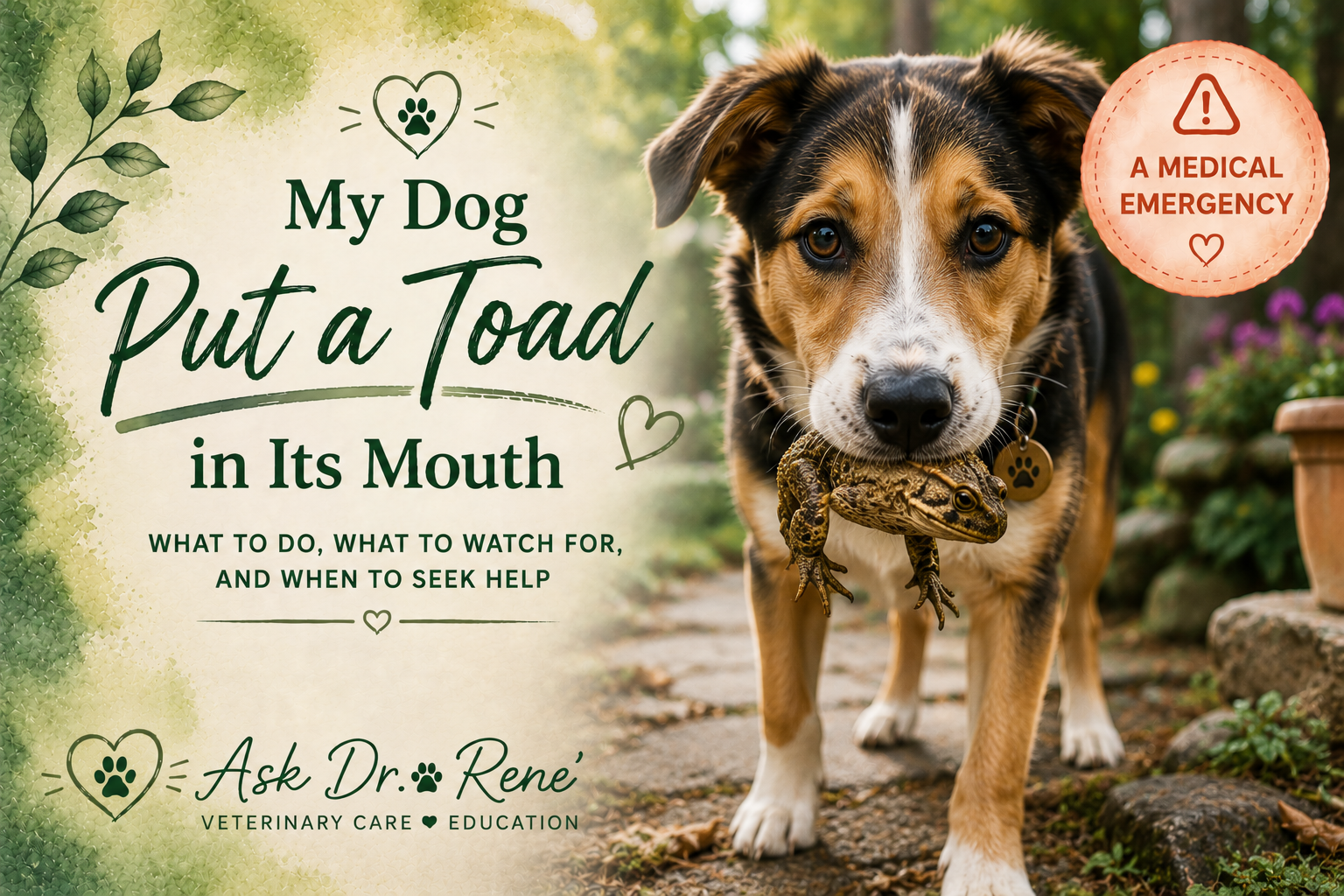
It's a warm evening, your dog darts into the yard, and suddenly they're shaking their head, drooling excessively, and pawing frantically at their mouth.
You rush over and see the culprit—a toad.
If this has happened to your dog, don't panic, but don't ignore it either.
Many dogs experience only temporary mouth irritation after mouthing a common backyard toad. However, certain species produce powerful toxins that can affect the heart and nervous system, making rapid treatment essential.
The good news is that knowing what to do in the first few minutes can make a tremendous difference.
Why Are Dogs So Interested in Toads?
Dogs investigate the world with their mouths.
Toads move slowly, hop unpredictably, and are often active at dawn, dusk, or after rain—the exact times many dogs are outside.
When threatened, toads defend themselves by releasing a thick, milky toxin from glands located behind their eyes and along their backs.
If that toxin contacts your dog's mouth, gums, or tongue, it is absorbed quickly through the moist tissues.
Frogs vs. Toads: What's the Difference?
This is one of the biggest misconceptions I see.
Frogs
Most frogs are relatively harmless.
A dog that mouths a frog may experience: mild drooling, temporary foaming at the mouth, occasional vomiting, and brief mouth irritation. Serious poisoning from frogs is uncommon in North America.
Toads
Toads are different.
Many common backyard toads cause painful irritation of the mouth and excessive drooling.
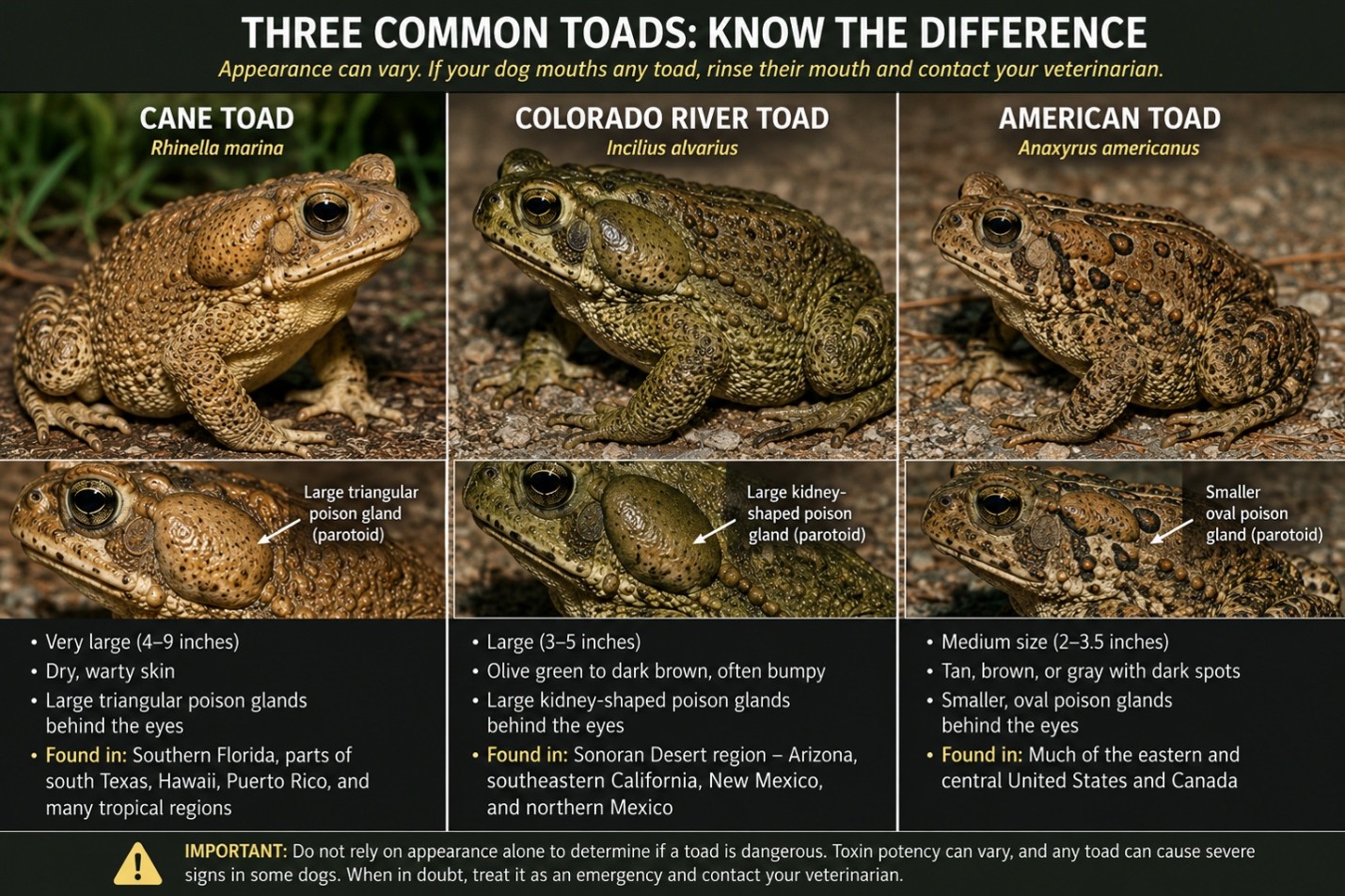
However, certain species—including the Cane Toad (Rhinella marina) and the Colorado River (Sonoran Desert) Toad (Incilius alvarius)—produce potent toxins capable of causing life-threatening poisoning.
These species are found primarily in specific regions of the United States and other parts of the world, but because people travel and relocate, veterinarians always consider the possibility based on where the exposure occurred.
What Happens When a Dog Is Exposed?
Toad toxins are absorbed almost immediately through the mouth.
The toxins may affect: the mouth, the nervous system, the heart, and blood pressure.
Symptoms often begin within minutes.
What Should I Do Immediately?
Step 1: Stay calm.
Most dogs recover well with prompt care.
Step 2: Rinse your dog's mouth immediately.
This is the single most important first-aid step.
Using a gentle stream of cool running water: flush the mouth continuously for 5–10 minutes. Aim the water from the back corner of the mouth toward the front or side so it flows out of the mouth rather than down the throat. Wipe away thick, sticky saliva if needed.
Avoid forcing water directly into your dog's throat, as this increases the risk of aspiration.
Step 3: Call your veterinarian.
Even if your dog seems better after rinsing, contact your veterinarian for guidance.
If you know or suspect the exposure involved a Cane Toad or Colorado River Toad—or if your dog develops neurologic signs—seek emergency veterinary care immediately.
Symptoms of Toad Poisoning
Signs often develop within minutes.
Common symptoms include: excessive drooling, foaming at the mouth, bright red gums, pawing at the mouth, vomiting, and head shaking.
More severe poisoning may cause: tremors, weakness, difficulty walking, dilated pupils, abnormal heart rhythm, collapse, seizures, and difficulty breathing.
These dogs require immediate emergency treatment.
Should I Make My Dog Vomit?
No.
The toxin is absorbed through the tissues of the mouth—not the stomach.
Making your dog vomit will not remove the toxin and may make matters worse.
Your priority should be thoroughly rinsing the mouth and seeking veterinary advice.
How Will My Veterinarian Treat My Dog?
Treatment depends on the severity of exposure.
Your veterinarian may recommend: continued mouth flushing, intravenous fluids, oxygen therapy if needed, anti-seizure medications, medications to control abnormal heart rhythms, blood pressure monitoring, electrocardiogram (ECG) monitoring, and hospitalization for observation.
Many dogs recover completely with prompt treatment.
Can I Identify the Toad?
If it can be done safely, taking a photograph of the toad may help your veterinarian understand the potential risk.
However, do not spend valuable time trying to catch or identify the animal if your dog is showing serious symptoms.
Treat your dog first.
Frequently Asked Questions
My dog is drooling but otherwise acting normal. Is that okay?
It may simply be irritation from a common backyard toad. However, because symptoms can progress quickly, contact your veterinarian for advice.
My dog licked the toad but didn't bite it. Can they still be poisoned?
Yes. Simply licking or mouthing a toxic toad can expose your dog to its defensive secretions.
Should I give my dog milk or bread?
No. Neither neutralizes the toxin. The best first aid is flushing the mouth thoroughly with running water.
My dog swallowed the toad. Is that worse?
Potentially. Swallowing the toad can result in additional toxin exposure and increases the need for immediate veterinary evaluation.
Prevention
The best prevention is reducing opportunities for encounters.
Supervise dogs outdoors, especially at dawn, dusk, and after rain.
Keep yards free of standing water when possible.
Bring pet food and water bowls indoors overnight.
Teach a reliable "leave it" command.
Use a flashlight when letting dogs outside after dark.
Dr. Rene's Clinical Pearls
🐸 Mouth flushing saves valuable time. The sooner the toxin is removed from the mouth, the less can be absorbed. When owners ask me what they can do immediately at home, flushing the mouth is always my first recommendation.
🐸 Most backyard toads aren't deadly—but they still deserve respect. Many dogs experience only excessive drooling and mouth irritation. The challenge is that you can't always tell which species your dog encountered, so it's safest to contact your veterinarian.
🐸 Don't waste time searching the internet while your dog is seizing. If your dog develops tremors, seizures, collapse, or difficulty breathing, head to the nearest emergency veterinary hospital immediately.
🐸 Dogs rarely learn their lesson. Many dogs will happily investigate the same toad again the next evening. If your yard has frequent toads, close supervision is your best prevention.
🐸 The first few minutes matter most. Prompt mouth rinsing followed by veterinary guidance can significantly improve the outcome in many cases.
The Bottom Line
Most dogs that put a common backyard toad in their mouth experience excessive drooling, foaming, and temporary mouth irritation. However, some toad species produce toxins that can rapidly affect the heart and nervous system, making them true veterinary emergencies.
If your dog mouths a toad, rinse the mouth thoroughly with running water for 5–10 minutes, contact your veterinarian, and seek emergency care immediately if your dog develops tremors, seizures, collapse, or difficulty breathing.
Quick action can make all the difference.
References
- Merck Veterinary Manual — Toad Poisoning in Dogs and Cats
- Pet Poison Helpline — Toad Toxicity in Dogs
- ASPCA Animal Poison Control Center — Amphibian and Toad Toxicity Resources
- Gwaltney-Brant SM, ed. Veterinary Toxicology. Elsevier.
Educational only. This article is not a substitute for veterinary care. If your pet is unwell, please contact your veterinarian.
Keep reading
My Dog Ate a Mushroom in the Yard! A Veterinarian Explains What You Need to Know
If your dog ate a wild mushroom, don't wait to see if symptoms develop. Learn why mushroom poisonings are unpredictable, what to do immediately, which signs require emergency care, and how veterinarians diagnose and treat mushroom toxicity.
Read ToxicitiesMy Dog Ate Grapes or Raisins: How Dangerous Is It and What Should I Do?
If your dog ate grapes or raisins, don't wait for symptoms before calling your veterinarian. Unlike many toxins, grape poisoning is unpredictable, and even small amounts can lead to life-threatening kidney failure in some dogs. Learn what to do immediately and why early treatment is so important.
Read ToxicitiesMy Dog Ate Chocolate: How Much Is Dangerous and What Should I Do?
If your dog ate chocolate, don't panic—but don't ignore it either. Learn which types of chocolate are most dangerous, how toxicity is calculated, what symptoms to watch for, and when to seek emergency veterinary care.
ReadKeep learning with Dr. Rene'
Browse the library, search another topic, or ask a question of your own.
Continue your journey
Loved this? Here's what to do next.
Every visit is a chance to understand your pet a little better. Pick your next step.
Explore the Learning Center
Browse evidence-based articles about symptoms, diseases, medications, treatments, preventive care, and more.
Explore ArticlesWatch Dr. Rene'
Prefer to watch instead of read? Explore practical veterinary education videos from Dr. Rene'.
Watch VideosGet Free Resources
Explore practical veterinary guides, checklists, and tools designed to help pet owners feel more informed and prepared.
Browse Free ResourcesProducts I Recommend
Browse pet products, supplies, and everyday essentials selected and recommended by Dr. Rene'.
See My Recommendations