
My Cat Ate a Lily: Every Minute Counts
If your cat chewed a lily, licked lily pollen, or drank water from a vase containing lilies, don't wait for symptoms. True lilies can cause sudden kidney failure in cats, and treatment is most effective before signs of illness appear. Learn what to do immediately and why every minute matters.

By Dr. Rene' Holt
If your cat chewed a lily, licked pollen off their fur, or even drank water from a vase containing lilies, this is a true veterinary emergency.
Don't wait for vomiting.
Don't wait for your cat to seem sick.
Don't assume they only took a tiny bite.
With lily poisoning, your cat may appear completely normal while serious kidney damage is already beginning.
The good news is that cats treated immediately often recover very well. The longer treatment is delayed, however, the greater the risk of permanent kidney failure and death.
If you think your cat has been exposed to a lily, contact your veterinarian or an emergency veterinary hospital right away.
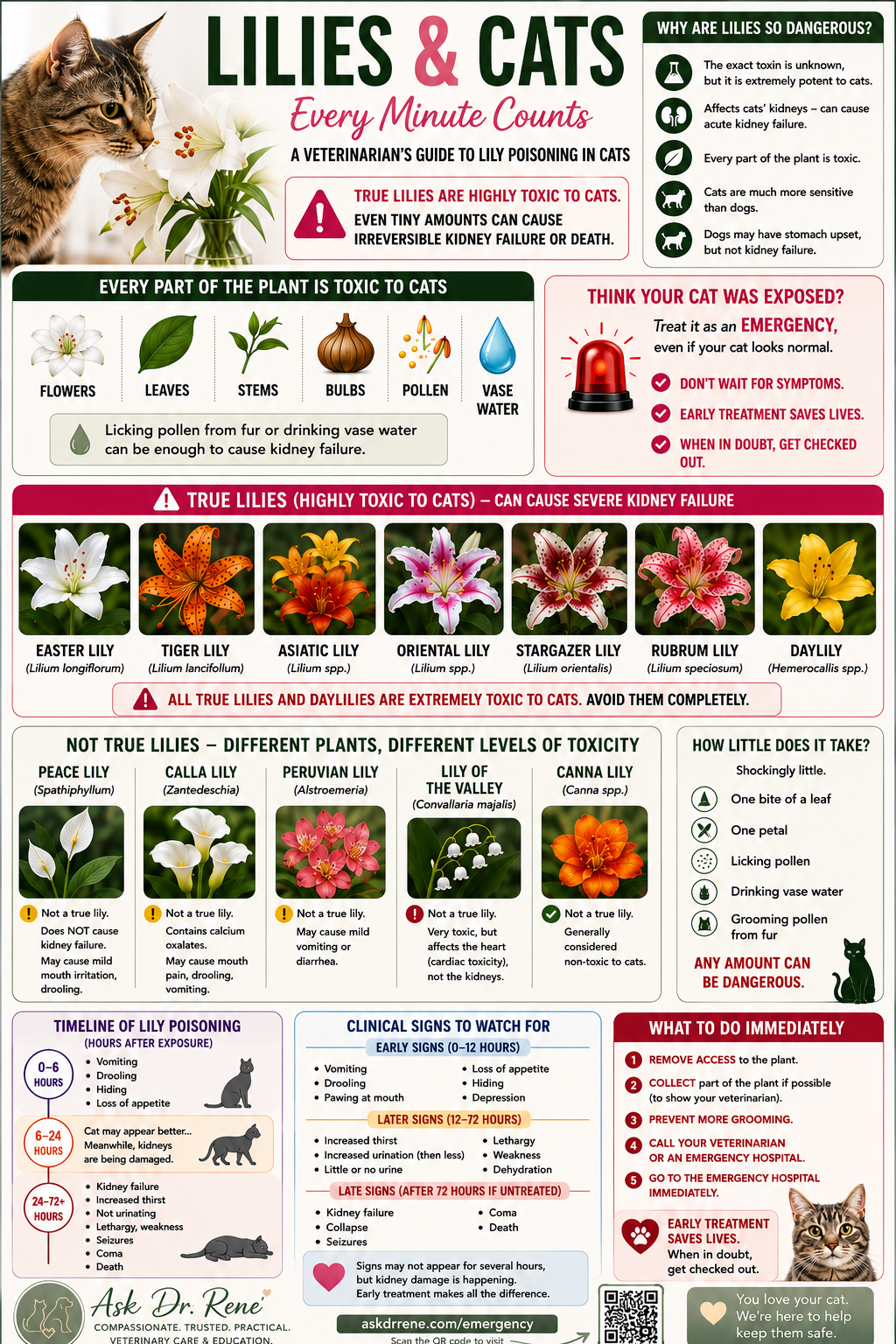
Why Are Lilies So Dangerous?
True lilies are one of the most dangerous plants a cat can encounter.
Every part of the plant is considered toxic, including:
- Leaves
- Petals
- Stems
- Pollen
- Vase water
It doesn't take much.
Even grooming pollen off their fur or taking a few bites from a leaf can be enough to cause severe kidney damage.
One of the most frustrating things about lily toxicity is that we still don't know exactly which toxin causes the damage, but we do know the kidneys are extremely sensitive to it.
Which Lilies Are Dangerous?
The following are considered highly toxic to cats:
- Easter Lily
- Tiger Lily
- Asiatic Lily
- Oriental Lily
- Stargazer Lily
- Daylilies (Hemerocallis species)
These can cause acute kidney failure.
What About Peace Lilies?
This is one of the biggest areas of confusion.
Despite the name, Peace Lilies are not true lilies.
They can still cause:
- Mouth pain
- Drooling
- Pawing at the mouth
- Vomiting
However, they do not cause the severe kidney failure associated with true lilies.
If you're unsure what type of plant your cat encountered, bring a photo or a sample with you to the veterinary clinic.
What Should I Do Immediately?
If the exposure happened recently:
- Call your veterinarian immediately.
- Call the nearest emergency veterinary hospital if your clinic is closed.
- Keep your cat away from the plant.
- Bring the plant (or a photo) if possible.
- Do not wait for symptoms.
- Do not try home remedies unless directed by a veterinarian.
Time matters.
What Signs Might My Cat Develop?
Early signs often begin within a few hours and may include:
- Vomiting
- Drooling
- Decreased appetite
- Hiding
- Lethargy
As kidney damage progresses, cats may develop:
- Increased thirst
- Increased urination
- Dehydration
- Weakness
- Bad breath
- Mouth ulcers
- Little or no urine production
- Collapse
Unfortunately, once severe kidney failure develops, treatment becomes much more difficult.
How Is Lily Poisoning Diagnosed?
Diagnosis is often based on:
- A known or suspected lily exposure
- Physical examination
- Bloodwork to evaluate kidney values
- Urinalysis
Because bloodwork may still appear normal early after exposure, your veterinarian may recommend repeating tests over the next several days.
How Is It Treated?
Treatment is most successful when started before kidney damage develops.
Depending on when your cat was exposed, your veterinarian may recommend:
- Inducing vomiting (if appropriate)
- Activated charcoal in some situations
- Intravenous fluids for 48–72 hours
- Frequent monitoring of kidney values
- Monitoring urine production
- Supportive medications for nausea and appetite
Hospitalization is often necessary.
Can My Cat Recover?
Yes—but timing is everything.
Cats treated within the first several hours after exposure often recover completely.
Cats that develop severe kidney failure have a much more guarded prognosis and may require intensive care.
That's why immediate treatment offers the best chance for a full recovery.
How Can I Prevent Lily Poisoning?
The safest choice is simple:
Never bring true lilies into a home with cats.
This includes:
- Bouquets
- Holiday flowers
- Funeral arrangements
- Garden cuttings
If someone sends flowers to your home, always check the arrangement carefully before placing it where your cat has access.
Frequently Asked Questions
- My cat only licked the pollen. Is that dangerous?
Yes. Cats groom themselves, and pollen on their fur can be swallowed during grooming. This is enough to warrant immediate veterinary attention.
- My cat drank the vase water but didn't eat the plant.
Vase water from arrangements containing true lilies is considered potentially toxic. Contact your veterinarian immediately.
- My cat seems completely normal. Can I wait?
No. Many cats appear perfectly healthy during the early stages of poisoning. Waiting for symptoms can allow kidney damage to progress.
- Should I make my cat vomit at home?
No. Cats are difficult to safely induce vomiting at home, and many home remedies can do more harm than good. Contact a veterinarian immediately for guidance.
- Are dogs affected the same way?
No. Dogs may develop stomach upset after eating lilies, but they do not develop the severe kidney failure seen in cats after exposure to true lilies.
Key Takeaways
- True lilies are among the most dangerous plants for cats.
- Every part of the plant—including pollen and vase water—can be toxic.
- Cats may appear normal even while kidney damage is occurring.
- Early treatment dramatically improves the chances of recovery.
- Never wait for symptoms before seeking veterinary care.
Dr. Rene's Tip
One of the hardest conversations I have is with owners who didn't realize a beautiful bouquet could be deadly. Every spring and around holidays like Easter and Mother's Day, I see well-meaning families bring lilies into their homes without knowing the risk. If you share your home with a cat, my advice is simple: skip the lilies entirely. There are plenty of beautiful, pet-friendly flowers that don't carry this risk. It's one of the easiest ways to prevent a heartbreaking emergency.
Educational only. This article is not a substitute for veterinary care. If your pet is unwell, please contact your veterinarian.
Keep reading
My Dog Ate Chocolate: How Much Is Dangerous and What Should I Do?
If your dog ate chocolate, don't panic—but don't ignore it either. Learn which types of chocolate are most dangerous, how toxicity is calculated, what symptoms to watch for, and when to seek emergency veterinary care.
Read ToxicitiesMy Dog Ate Grapes or Raisins: How Dangerous Is It and What Should I Do?
If your dog ate grapes or raisins, don't wait for symptoms before calling your veterinarian. Unlike many toxins, grape poisoning is unpredictable, and even small amounts can lead to life-threatening kidney failure in some dogs. Learn what to do immediately and why early treatment is so important.
Read ToxicitiesMy Dog Put a Toad in Their Mouth! A Veterinarian Explains What to Do
If your dog picked up or licked a toad, don't panic—but act quickly. Learn how to flush your dog's mouth safely, recognize the signs of toad poisoning, and know when emergency veterinary care is needed.
ReadKeep learning with Dr. Rene'
Browse the library, search another topic, or ask a question of your own.
Continue your journey
Loved this? Here's what to do next.
Every visit is a chance to understand your pet a little better. Pick your next step.
Explore the Learning Center
Browse evidence-based articles about symptoms, diseases, medications, treatments, preventive care, and more.
Explore ArticlesWatch Dr. Rene'
Prefer to watch instead of read? Explore practical veterinary education videos from Dr. Rene'.
Watch VideosGet Free Resources
Explore practical veterinary guides, checklists, and tools designed to help pet owners feel more informed and prepared.
Browse Free ResourcesProducts I Recommend
Browse pet products, supplies, and everyday essentials selected and recommended by Dr. Rene'.
See My Recommendations