My Dog Chewed a Vape Pen (Part 2): The Timeline of Nicotine Poisoning and When Symptoms Begin
How quickly does nicotine poisoning develop after a dog chews a vape pen? Learn the minute-by-minute timeline of nicotine toxicity, why symptoms can worsen rapidly, what affects severity, and why waiting to "see what happens" can be dangerous.
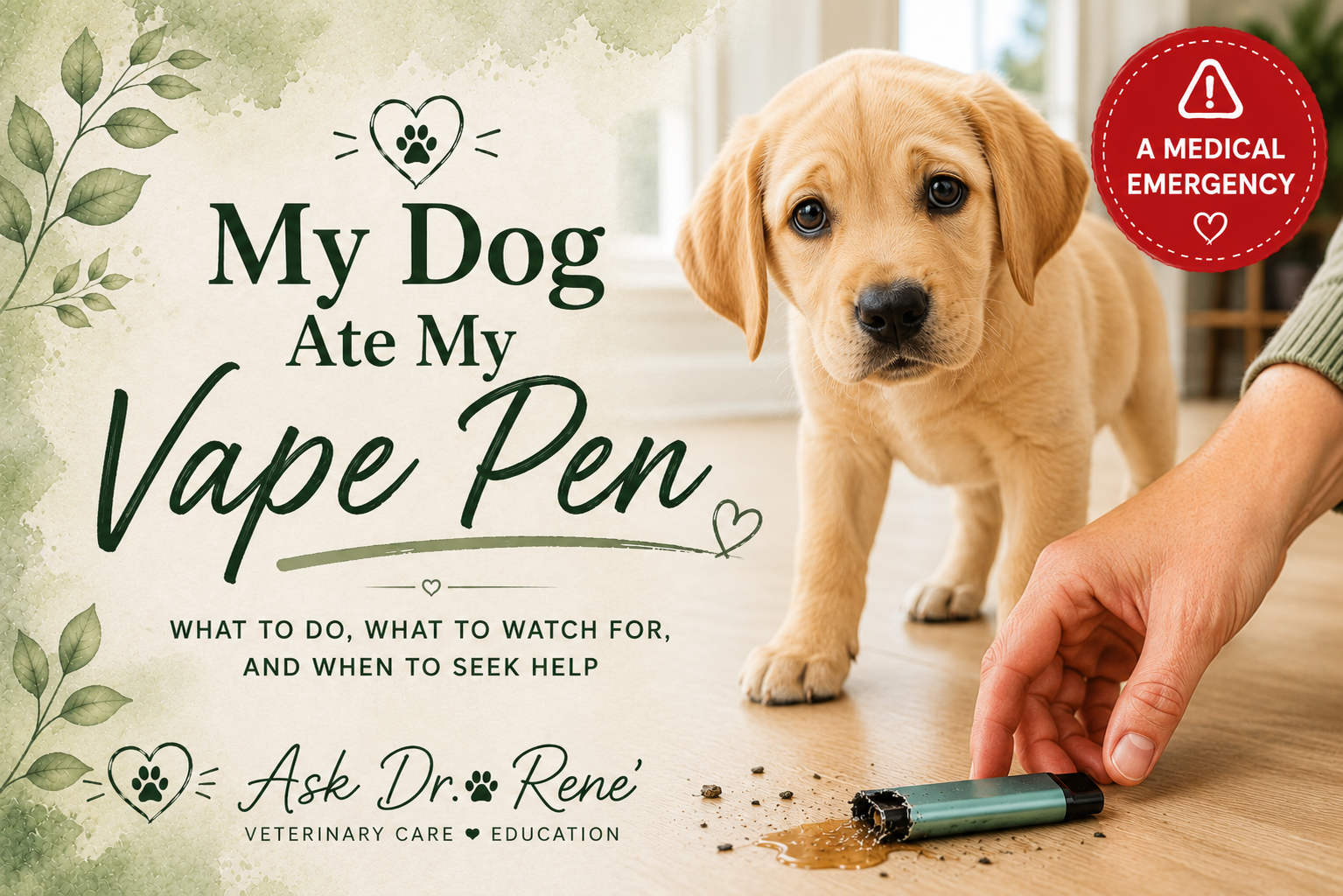
The Timeline of Nicotine Poisoning: What Happens Minute by Minute?
One of the most dangerous things about nicotine poisoning is how quickly it develops.
Unlike toxins such as raisins or certain medications, where it may take hours before obvious signs appear, nicotine is rapidly absorbed through the tissues of the mouth, stomach, and intestines.
That means a dog that seems perfectly normal immediately after chewing a vape pen can become critically ill in a surprisingly short amount of time.
Every dog is different. The exact timeline depends on:
- The amount of nicotine consumed
- The concentration of the nicotine liquid
- Your dog's size
- Whether the nicotine reservoir was punctured
- Whether your dog vomited shortly after exposure
- Whether food was already in the stomach
Think of the timeline below as a general guide rather than a rigid schedule.
The First 15 Minutes
Some dogs show no signs at all during the first few minutes.
Others begin drooling almost immediately if nicotine liquid has contacted the tissues of the mouth.
Because nicotine is irritating, your dog may:
- Paw at their mouth
- Lip smack
- Drool excessively
- Shake their head
- Gag
- Spit out pieces of the device
If the vape liquid has a sweet or fruity flavor, some dogs may actually continue chewing it instead of spitting it out, increasing the amount of nicotine they absorb.
Even if your dog appears normal, this is the time to call your veterinarian. Waiting for symptoms to develop may mean losing the opportunity for safer, earlier treatment.
15–30 Minutes
As nicotine begins entering the bloodstream, the nervous system becomes overstimulated.
This is when many owners notice the first obvious changes.
Your dog may suddenly become:
- Restless
- Unable to settle down
- Hyperactive
- Anxious
- Trembly
- More vocal than usual
Some dogs begin vomiting during this stage.
Why does nicotine cause vomiting?
This is actually one of the body's protective responses.
Nicotine stimulates receptors in the brain that activate the vomiting center. At the same time, it irritates the lining of the stomach.
In many cases, vomiting helps remove some of the nicotine before additional absorption can occur.
While that may sound beneficial, vomiting does not mean your dog is "getting it all out." Enough nicotine may have already been absorbed to cause significant poisoning.
30–60 Minutes
This is when many dogs begin looking obviously ill.
Common signs include:
- Repeated vomiting
- Excessive drooling
- Panting
- Tremors
- Dilated pupils
- Elevated heart rate
- High blood pressure
- Muscle twitching
Owners often describe their dog as looking "panicked" or "unable to get comfortable."
Some dogs pace continuously.
Others seem startled by normal sounds or movements because nicotine has made their nervous system unusually sensitive.
This is also the stage when we may begin seeing more serious complications in dogs that have ingested large amounts of nicotine.
1–2 Hours
As nicotine continues affecting the nervous system, the body's response may begin to change.
Remember the light switch analogy?
Earlier, nicotine held the switch firmly in the "on" position.
Eventually, the nervous system becomes exhausted.
Instead of overstimulation, we begin seeing weakness.
Your dog may develop:
- Difficulty standing
- Weakness
- Poor coordination
- Muscle tremors
- Collapse
Some dogs experience seizures during this stage.
Others develop abnormal heart rhythms that require immediate medical intervention.
Breathing may also become more difficult as the muscles involved in respiration are affected.
2–6 Hours
This is often when dogs with severe poisoning are at their sickest.
Without treatment, complications may include:
- Severe tremors
- Seizures
- Respiratory failure
- Dangerous heart rhythm abnormalities
- Coma
Fortunately, many dogs receiving prompt veterinary care are already being closely monitored during this period, allowing complications to be recognized and treated quickly.
6–24 Hours
If your dog has received appropriate treatment and no major complications have developed, this is often when you'll begin seeing encouraging improvement.
Many dogs become:
- More alert
- Less nauseated
- Interested in food again
- Better able to walk
- More interactive with their family
Not every dog recovers at the same pace, but steady improvement is exactly what we hope to see.
Beyond 24 Hours
The good news is that most dogs who survive the initial stages of nicotine poisoning recover very well.
Many are acting almost completely normal within a day.
Others need another day or two before their energy levels fully return.
Your veterinarian will make sure your dog is stable before sending them home.
Why Some Dogs Become Sick Faster Than Others
One of the questions I hear most often is:
"My neighbor's dog chewed a vape pen and was fine. Why is my dog so sick?"
There isn't one simple answer.
Several factors influence how severely a dog is affected.
Size Matters
A Chihuahua and a Great Dane chewing the same vape device are not receiving the same effective dose.
Smaller dogs receive much more nicotine relative to their body weight, making severe poisoning much more likely.
The Type of Vape Matters
Not all vape products contain the same amount of nicotine.
Some disposable devices contain significantly higher concentrations than others.
Nicotine salt formulations can deliver particularly high doses in very small volumes.
Did the Reservoir Break?
A dog that simply carried a vape pen around the house is very different from one that punctured the nicotine chamber and swallowed the liquid inside.
One small puncture can dramatically increase the amount of nicotine absorbed.
Did Your Dog Vomit?
Early vomiting may reduce the amount of nicotine that remains in the stomach.
However, vomiting is not a guarantee that your dog avoided poisoning.
Enough nicotine may already have entered the bloodstream before vomiting occurred.
Pre-Existing Medical Conditions
Dogs with underlying heart disease, respiratory disease, or neurologic disorders may have a harder time tolerating nicotine poisoning.
Age also matters.
Puppies and senior dogs often have less physiologic reserve than healthy adult dogs.
Why "Waiting to See" Can Be So Dangerous
When owners call my clinic, they'll sometimes say:
"He's acting perfectly normal right now."
I understand why that's reassuring.
Unfortunately, it's also one of the reasons nicotine poisoning can catch people off guard.
There is often a window of time between the exposure and the onset of severe symptoms.
If we wait until a dog is actively seizing or struggling to breathe before seeking help, we've missed the opportunity to intervene earlier—when treatment is often simpler and safer.
That's why veterinarians recommend calling immediately after the exposure, not after your dog becomes critically ill.
From My Exam Room
One of the hardest conversations I have is with an owner who says:
"I saw him chewing it an hour ago, but he seemed fine, so I thought I'd watch him."
I completely understand why people make that decision. If your dog is wagging their tail and acting normal, it's natural to hope everything will be okay.
But nicotine doesn't always announce itself right away.
Some of the sickest dogs I've treated looked perfectly normal when the exposure first happened.
That's why I never base my recommendation on how your dog looks in the first few minutes.
I base it on what they were exposed to.
If there's a reasonable chance your dog got into nicotine, I'd much rather evaluate them early than try to catch up after serious symptoms begin.
Educational only. This article is not a substitute for veterinary care. If your pet is unwell, please contact your veterinarian.
Next in this series
Nicotine & Vape Toxicity Learning Series · Part 2 of 5
Part 3: My Dog Chewed a Vape Pen (Part 3): Recognizing the Signs of Nicotine Poisoning
What does nicotine poisoning look like in dogs? Learn how nicotine affects the brain, heart, muscles, lungs, digestive system, and behavior, why symptoms change over time, and when emergency veterinary care is needed.
Continue readingKeep reading
My Dog Chewed a Vape Pen (Part 3): Recognizing the Signs of Nicotine Poisoning
What does nicotine poisoning look like in dogs? Learn how nicotine affects the brain, heart, muscles, lungs, digestive system, and behavior, why symptoms change over time, and when emergency veterinary care is needed.
Read ToxicitiesMy Dog Chewed a Vape Pen (Part 5): What Happens at the Veterinary Hospital? Treatment, Recovery, and Going Home After Nicotine Poisoning
Wondering what happens after your dog chews a vape pen? Learn how veterinarians diagnose nicotine poisoning, when blood work and X-rays are needed, how nicotine toxicity is treated, what happens if a battery was swallowed, and what to expect during recovery at home.
Read ToxicitiesMy Dog Chewed a Vape Pen: The Complete Veterinarian's Guide to Nicotine Poisoning, Batteries, and Vape Device Injuries
Did your dog chew a vape pen or nicotine vape? Learn why vape devices are veterinary emergencies, how nicotine poisoning develops, the dangers of lithium batteries and swallowed plastic, and why immediate treatment is so important.
ReadKeep learning with Dr. Rene'
Browse the library, search another topic, or ask a question of your own.
Continue your journey
Loved this? Here's what to do next.
Every visit is a chance to understand your pet a little better. Pick your next step.
Explore the Learning Center
Browse evidence-based articles about symptoms, diseases, medications, treatments, preventive care, and more.
Explore ArticlesWatch Dr. Rene'
Prefer to watch instead of read? Explore practical veterinary education videos from Dr. Rene'.
Watch VideosGet Free Resources
Explore practical veterinary guides, checklists, and tools designed to help pet owners feel more informed and prepared.
Browse Free ResourcesProducts I Recommend
Browse pet products, supplies, and everyday essentials selected and recommended by Dr. Rene'.
See My Recommendations