My Dog Chewed a Vape Pen: The Complete Veterinarian's Guide to Nicotine Poisoning, Batteries, and Vape Device Injuries
Did your dog chew a vape pen or nicotine vape? Learn why vape devices are veterinary emergencies, how nicotine poisoning develops, the dangers of lithium batteries and swallowed plastic, and why immediate treatment is so important.
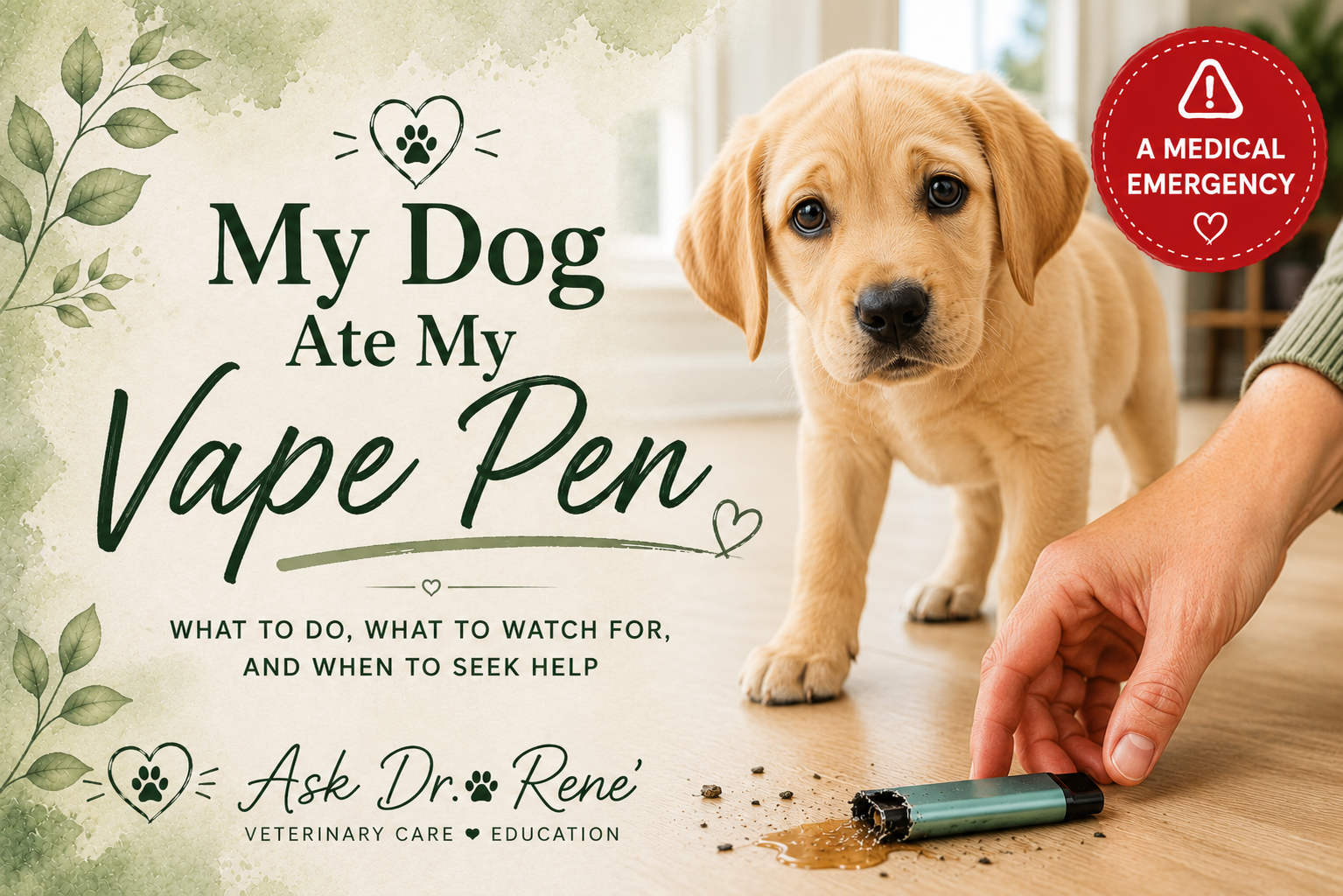
My Dog Chewed a Vape Pen: The Complete Veterinarian's Guide to Nicotine Poisoning, Batteries, and Vape Device Injuries
🚨 Emergency At-a-Glance
Is this an emergency?
Yes. Any dog that has chewed, punctured, or swallowed part of a vape pen should be evaluated by a veterinarian immediately.
Can this wait until tomorrow?
No. Nicotine poisoning can develop within minutes, and swallowed batteries can begin causing severe tissue damage very quickly.
Should I make my dog vomit?
Only if your veterinarian specifically instructs you to do so. Depending on what your dog chewed and whether they're already showing signs of poisoning, inducing vomiting may not be safe.
Will my dog recover?
Many dogs recover completely with prompt treatment. The sooner treatment begins, the better the prognosis.
Dr. Rene's Take
I'll admit something that surprised me early in my career.
The first time I treated a dog that had chewed up a vape pen, my biggest concern wasn't actually the nicotine—it was whether the dog had swallowed pieces of plastic or metal that might cause an intestinal blockage.
Then I started researching the nicotine concentration in modern vape products.
What I found completely changed the way I approach these cases.
Many vape devices contain highly concentrated nicotine solutions. Some disposable vapes contain as much nicotine as multiple packs of cigarettes. Suddenly, the biggest danger wasn't the plastic housing—it was the tiny amount of liquid inside.
As vaping has become increasingly common, I've started seeing more pets exposed to disposable vapes, refillable cartridges, nicotine pods, and e-cigarettes. Unfortunately, many owners don't realize these devices can become life-threatening emergencies within a very short period of time.
The purpose of this guide is to help you understand all of the risks associated with vape pens—not just nicotine poisoning—and explain why immediate veterinary care is so important.
Why Vape Pens Can Be So Dangerous
One of the biggest misconceptions is that a vape pen is dangerous only if a dog swallows the entire device.
In reality, there are three separate emergencies we worry about.
1. Nicotine Poisoning
This is usually the greatest concern.
If a dog punctures the nicotine reservoir, the liquid can be absorbed rapidly through the mouth, stomach, and intestines.
Unlike many toxins that take hours before signs appear, nicotine can begin affecting the body within 15 to 60 minutes, and sometimes even sooner.
2. Lithium Battery Injuries
Many disposable vape pens contain lithium-ion batteries.
If swallowed or punctured, these batteries can:
- Burn the mouth
- Burn the esophagus
- Burn the stomach
- Become lodged in the digestive tract
- Leak irritating chemicals
Battery injuries are completely different from nicotine poisoning and often require emergency imaging or endoscopy.
3. Foreign Body Obstruction
Dogs don't always stop with the nicotine.
Many happily chew apart the plastic casing, mouthpiece, metal components, or rubber seals.
These pieces can become lodged in the stomach or intestines, creating a second emergency that may require endoscopy or surgery.
Sometimes a dog is dealing with all three problems at the same time.
Understanding Nicotine
Nicotine is a naturally occurring chemical found in tobacco plants.
It acts directly on the nervous system by attaching to specialized receptors throughout the brain, muscles, heart, and other organs.
One way I explain nicotine poisoning to owners is to imagine a light switch.
Normally, your nervous system turns signals on and off exactly when it needs to.
Nicotine is like someone flipping that light switch on and holding it there.
At first, everything becomes overstimulated.
Nerves fire rapidly.
The heart beats faster.
Muscles twitch.
The digestive tract becomes overactive.
Then, after that period of overstimulation, the nervous system begins to fatigue.
The receptors stop responding normally.
Instead of being overstimulated, the body starts shutting down.
This is why dogs with nicotine poisoning often appear to go through two different stages of illness.
Why Are Dogs More Sensitive Than People?
Dogs don't understand that a vape pen isn't food.
They chew it.
They puncture the reservoir.
They swallow concentrated nicotine liquid all at once.
Humans who vape are exposed to nicotine in much smaller amounts over time.
Dogs often receive a massive dose within just a few seconds.
Small dogs and puppies are especially vulnerable because it takes much less nicotine to make them seriously ill.
Why Modern Vape Pens Worry Me More Than Cigarettes
Years ago, veterinarians were more likely to see dogs chew traditional cigarettes.
While cigarettes certainly contain nicotine, today's vape products often contain much higher concentrations.
Many disposable vape devices contain nicotine salts, which allow manufacturers to deliver much larger amounts of nicotine in a very small volume.
That means a tiny amount of leaked vape liquid may contain enough nicotine to make a dog critically ill.
This surprises many owners because the device itself looks so small.
Types of Vape Products Dogs May Chew
Not every exposure involves the same product.
Dogs may chew:
- Disposable vape pens
- Rechargeable vape devices
- Nicotine pods
- Refill cartridges
- Bottles of vape liquid
- Nicotine pouches
- Nicotine gum
- Nicotine lozenges
- THC vape cartridges
- CBD vape cartridges
Each product carries different risks depending on its ingredients.
One of the first questions I'll ask is:
"Exactly what kind of vape product was it?"
The answer helps determine whether we're primarily worried about nicotine, THC, battery injury, or multiple toxins at once.
How Dogs Usually Get Into Vape Pens
One thing I've learned over the years is that dogs are incredibly resourceful.
They don't target vape pens because they smell like nicotine.
They target them because they're covered in the scent of the person who uses them.
Some of the most common situations include:
A vape left on a coffee table.
A disposable vape dropped in the yard.
A teenager's backpack.
A purse sitting on the floor.
A jacket pocket.
A center console in the car.
A nightstand beside the bed.
A guest's luggage during the holidays.
Dogs investigate with their mouths.
Unfortunately, that's all it takes.
What Happens After My Dog Chews a Vape Pen?
One of the most dangerous things about nicotine poisoning is how quickly everything can change.
Many owners tell me:
"He seemed completely fine at first."
That's common.
Once the nicotine begins to absorb, however, signs often develop rapidly.
Within minutes, your dog may begin drooling, vomiting, trembling, or acting unusually restless.
If enough nicotine is absorbed, those early signs can progress to muscle tremors, weakness, collapse, seizures, abnormal heart rhythms, and difficulty breathing.
This rapid progression is exactly why we consider vape exposures emergencies rather than "wait and see" situations.
From My Exam Room
One of the biggest surprises for owners is learning that I'm often just as concerned about what's inside the vape pen as I am about the vape pen itself.
When I hear that a dog chewed one, my mind immediately starts asking several questions:
Was it a nicotine vape or a THC vape?
Was the nicotine reservoir punctured?
Could a battery have been swallowed?
Are any pieces of the device missing?
How long ago did this happen?
Those answers help determine how we approach treatment and what complications we need to prepare for.
The sooner we can answer those questions, the sooner we can focus on helping your dog recover.
Educational only. This article is not a substitute for veterinary care. If your pet is unwell, please contact your veterinarian.
Next in this series
Nicotine & Vape Toxicity Learning Series · Part 1 of 5
Part 2: My Dog Chewed a Vape Pen (Part 2): The Timeline of Nicotine Poisoning and When Symptoms Begin
How quickly does nicotine poisoning develop after a dog chews a vape pen? Learn the minute-by-minute timeline of nicotine toxicity, why symptoms can worsen rapidly, what affects severity, and why waiting to "see what happens" can be dangerous.
Continue readingKeep reading
My Dog Chewed a Vape Pen (Part 4): The Hidden Danger of Swallowed Batteries and Broken Vape Devices
Nicotine isn't the only danger when a dog chews a vape pen. Learn why swallowed lithium-ion batteries, plastic, and metal pieces can cause life-threatening injuries, how veterinarians diagnose battery ingestion, and when endoscopy or surgery may be needed.
Read ToxicitiesMy Dog Chewed a Vape Pen (Part 2): The Timeline of Nicotine Poisoning and When Symptoms Begin
How quickly does nicotine poisoning develop after a dog chews a vape pen? Learn the minute-by-minute timeline of nicotine toxicity, why symptoms can worsen rapidly, what affects severity, and why waiting to "see what happens" can be dangerous.
Read ToxicitiesMy Dog Chewed a Vape Pen (Part 5): What Happens at the Veterinary Hospital? Treatment, Recovery, and Going Home After Nicotine Poisoning
Wondering what happens after your dog chews a vape pen? Learn how veterinarians diagnose nicotine poisoning, when blood work and X-rays are needed, how nicotine toxicity is treated, what happens if a battery was swallowed, and what to expect during recovery at home.
ReadKeep learning with Dr. Rene'
Browse the library, search another topic, or ask a question of your own.
Continue your journey
Loved this? Here's what to do next.
Every visit is a chance to understand your pet a little better. Pick your next step.
Explore the Learning Center
Browse evidence-based articles about symptoms, diseases, medications, treatments, preventive care, and more.
Explore ArticlesWatch Dr. Rene'
Prefer to watch instead of read? Explore practical veterinary education videos from Dr. Rene'.
Watch VideosGet Free Resources
Explore practical veterinary guides, checklists, and tools designed to help pet owners feel more informed and prepared.
Browse Free ResourcesProducts I Recommend
Browse pet products, supplies, and everyday essentials selected and recommended by Dr. Rene'.
See My Recommendations