My Dog Chewed a Vape Pen (Part 3): Recognizing the Signs of Nicotine Poisoning
What does nicotine poisoning look like in dogs? Learn how nicotine affects the brain, heart, muscles, lungs, digestive system, and behavior, why symptoms change over time, and when emergency veterinary care is needed.
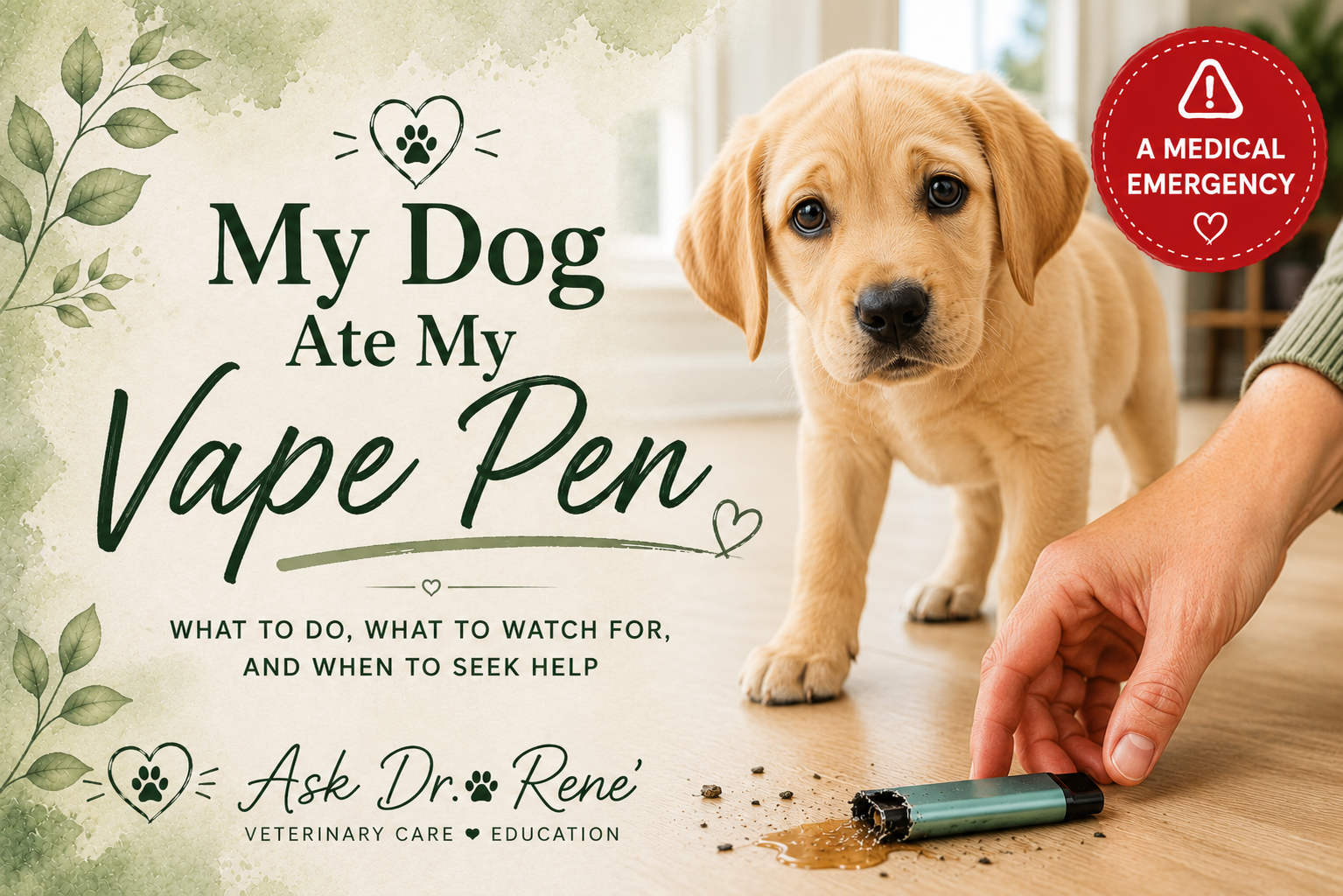
Recognizing Nicotine Poisoning: What Happens Inside Your Dog's Body?
One of the reasons nicotine poisoning can be so frightening is that it doesn't affect just one organ.
Nicotine travels throughout the bloodstream and interacts with receptors located all over the body.
That's why a single toxin can cause problems with:
- The brain
- The heart
- Blood pressure
- The lungs
- The muscles
- The digestive tract
- The bladder
Some dogs develop only mild stomach upset.
Others experience neurologic symptoms, abnormal heart rhythms, or difficulty breathing.
The exact signs depend on how much nicotine was absorbed, how quickly it entered the body, and how your dog's nervous system responds.
Let's look at each body system individually.
Neurologic Signs: Why Dogs Tremble, Stagger, and Seize
The nervous system is usually the first place nicotine makes itself known.
Remember the light switch analogy from earlier?
Nicotine essentially flips the switch on and refuses to let go.
The brain becomes overstimulated.
Nerves fire rapidly.
Muscles receive far more signals than they're supposed to.
Early neurologic signs often include:
- Restlessness
- Hyperactivity
- Anxiety
- Excessive alertness
- Startling easily
- Pacing
- Inability to settle
Many owners describe their dog as looking like they "can't relax."
As nicotine continues affecting the nervous system, those constant signals begin overwhelming the body.
That's when we may start seeing:
- Muscle twitching
- Tremors
- Weakness
- Poor coordination
- Wobbling
- Falling over
In severe cases, the abnormal nerve activity becomes so intense that it triggers seizures.
Fortunately, seizures are not the most common outcome, but they are one of the reasons we take nicotine exposures so seriously.
Gastrointestinal Signs: Why Vomiting Happens So Quickly
Vomiting is often one of the earliest signs owners notice.
There are actually two reasons nicotine causes vomiting.
First, nicotine directly irritates the lining of the stomach.
Second, it stimulates the vomiting center within the brain.
It's almost as though the body recognizes something dangerous has entered the digestive tract and tries to remove it as quickly as possible.
Along with vomiting, dogs may also develop:
- Drooling
- Lip smacking
- Gagging
- Nausea
- Decreased appetite
- Diarrhea
Although early vomiting may remove some nicotine, it rarely removes all of it.
That's why veterinary evaluation is still necessary, even if your dog vomits immediately after chewing the vape.
Heart and Blood Pressure Changes
Nicotine doesn't only stimulate the brain.
It also stimulates the cardiovascular system.
During the early stages of poisoning, many dogs develop:
- A rapid heart rate
- Elevated blood pressure
- Restlessness caused by increased adrenaline release
Owners sometimes notice that their dog's heart seems to be "racing."
As poisoning progresses, however, the opposite can happen.
The heart may begin slowing down.
Abnormal heart rhythms can develop.
Blood pressure may become unstable.
These changes are one of the reasons hospitalized dogs often have their heart rhythm and blood pressure monitored throughout treatment.
Muscle Problems
Because nerves communicate directly with muscles, nicotine poisoning often produces obvious muscle abnormalities.
Dogs may develop:
- Muscle fasciculations (small muscle twitches)
- Tremors
- Muscle stiffness
- Weakness
- Difficulty standing
As poisoning becomes more severe, muscles can actually become exhausted from receiving constant stimulation.
Owners sometimes mistake this weakness for exhaustion or sleepiness, when in reality it's part of the poisoning process.
Respiratory Signs: Why Breathing Can Become Dangerous
Breathing depends on muscles.
Those muscles depend on nerves.
When nicotine disrupts the communication between them, breathing can become affected.
You may notice:
- Rapid breathing
- Panting
- Labored breathing
- Increased respiratory effort
In severe poisoning, paralysis of the muscles responsible for breathing can occur.
Fortunately, this is uncommon with prompt treatment, but it's one of the reasons nicotine poisoning can become life-threatening.
Dogs experiencing significant respiratory compromise may require oxygen therapy and intensive monitoring.
Eye Changes
Owners are often surprised when I examine their dog's eyes after a nicotine exposure.
Nicotine commonly causes:
- Dilated pupils
- Increased sensitivity to light
- An unusually alert or startled appearance
Some dogs seem to stare into space.
Others appear unusually aware of every movement around them.
These changes occur because nicotine is stimulating parts of the nervous system that control the eyes and the pupils.
Behavioral Changes
Sometimes the most dramatic signs aren't physical—they're behavioral.
Owners often tell me:
"He just isn't acting like himself."
That observation is incredibly important.
Some dogs become:
- Extremely anxious
- Restless
- Unable to settle
- Hyperactive
- Vocal
- Clingy
Others become:
- Quiet
- Withdrawn
- Depressed
- Less responsive
Every dog responds differently.
The important thing is recognizing that any sudden behavioral change after chewing a vape pen deserves immediate veterinary attention.
Why Symptoms Sometimes Seem to Change
One of the most confusing parts of nicotine poisoning is that dogs don't always keep getting more stimulated.
Instead, they often appear to go through two distinct phases.
Phase One: Overstimulation
During this stage, nerves are firing constantly.
Dogs may be:
- Hyperactive
- Trembling
- Vomiting
- Pacing
- Restless
- Panting
- Phase Two: Exhaustion
Eventually, those overstimulated nerve receptors stop functioning normally.
Now dogs may:
- Weak
- Quiet
- Unable to stand
- Slow to respond
- Difficult to wake
Owners sometimes think their dog is finally "getting better" because they've stopped pacing.
Unfortunately, that's not always the case.
Sometimes the nervous system is simply transitioning into a much more dangerous stage of poisoning.
Does the Amount of Nicotine Matter?
Absolutely.
A dog that licks the outside of a vape pen may experience no symptoms at all.
A dog that punctures the nicotine reservoir and swallows the concentrated liquid may become critically ill.
The severity of poisoning depends on several factors:
- Your dog's body weight
- The nicotine concentration
- The amount absorbed
- How quickly treatment begins
- Whether vomiting occurred
- Whether additional toxins were present
Unfortunately, it's often impossible to know exactly how much nicotine a dog consumed.
That's one of the reasons veterinarians recommend treating every confirmed or suspected nicotine exposure seriously.
From My Exam Room
One of the things I tell owners most often is this:
Don't focus on just one symptom.
I've had owners call because their dog "only vomited once."
Others because their dog was "just acting weird."
Some noticed only tremors.
Others only drooling.
The truth is, nicotine poisoning doesn't read the textbook.
No two dogs present exactly the same way.
That's why I'm much more interested in what your dog had access to than whether they have every symptom on a checklist.
If I know a dog chewed a vape pen, I'm already thinking several steps ahead, even if they're only showing one mild sign when they walk through the door.
Educational only. This article is not a substitute for veterinary care. If your pet is unwell, please contact your veterinarian.
Next in this series
Nicotine & Vape Toxicity Learning Series · Part 3 of 5
Part 4: My Dog Chewed a Vape Pen (Part 4): The Hidden Danger of Swallowed Batteries and Broken Vape Devices
Nicotine isn't the only danger when a dog chews a vape pen. Learn why swallowed lithium-ion batteries, plastic, and metal pieces can cause life-threatening injuries, how veterinarians diagnose battery ingestion, and when endoscopy or surgery may be needed.
Continue readingKeep reading
My Dog Chewed a Vape Pen (Part 2): The Timeline of Nicotine Poisoning and When Symptoms Begin
How quickly does nicotine poisoning develop after a dog chews a vape pen? Learn the minute-by-minute timeline of nicotine toxicity, why symptoms can worsen rapidly, what affects severity, and why waiting to "see what happens" can be dangerous.
Read ToxicitiesMy Dog Chewed a Vape Pen (Part 5): What Happens at the Veterinary Hospital? Treatment, Recovery, and Going Home After Nicotine Poisoning
Wondering what happens after your dog chews a vape pen? Learn how veterinarians diagnose nicotine poisoning, when blood work and X-rays are needed, how nicotine toxicity is treated, what happens if a battery was swallowed, and what to expect during recovery at home.
Read ToxicitiesMy Dog Chewed a Vape Pen (Part 4): The Hidden Danger of Swallowed Batteries and Broken Vape Devices
Nicotine isn't the only danger when a dog chews a vape pen. Learn why swallowed lithium-ion batteries, plastic, and metal pieces can cause life-threatening injuries, how veterinarians diagnose battery ingestion, and when endoscopy or surgery may be needed.
ReadKeep learning with Dr. Rene'
Browse the library, search another topic, or ask a question of your own.
Continue your journey
Loved this? Here's what to do next.
Every visit is a chance to understand your pet a little better. Pick your next step.
Explore the Learning Center
Browse evidence-based articles about symptoms, diseases, medications, treatments, preventive care, and more.
Explore ArticlesWatch Dr. Rene'
Prefer to watch instead of read? Explore practical veterinary education videos from Dr. Rene'.
Watch VideosGet Free Resources
Explore practical veterinary guides, checklists, and tools designed to help pet owners feel more informed and prepared.
Browse Free ResourcesProducts I Recommend
Browse pet products, supplies, and everyday essentials selected and recommended by Dr. Rene'.
See My Recommendations