
Allergy Learning Center · Part 13
Do Omega-3 Fatty Acids Really Help Dogs with Allergies?
What the Research Says About Fish Oil, Dosing, and What You Should Expect
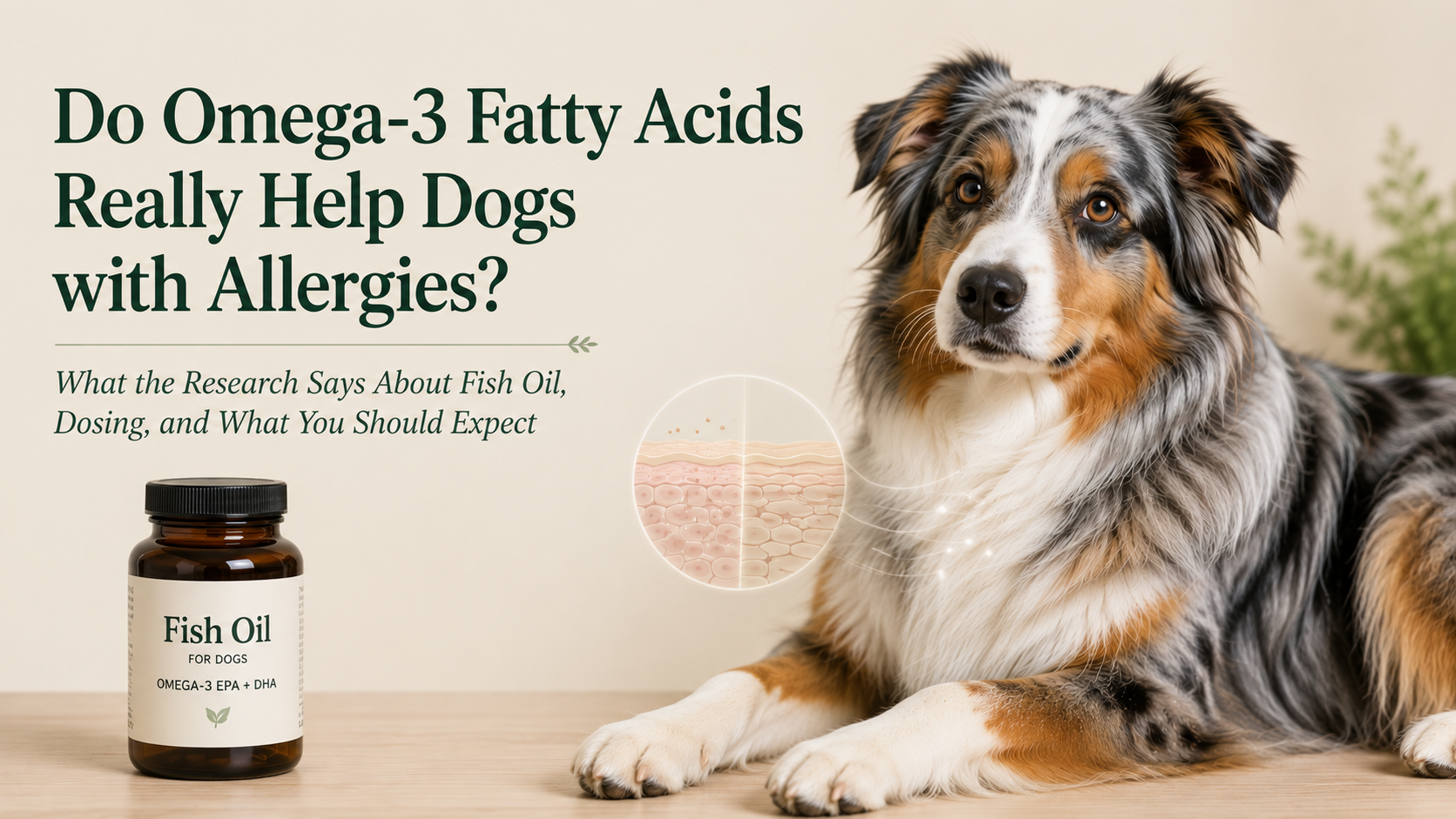
Omega-3 fatty acids won't cure your dog's allergies—but they can help reduce inflammation, support a healthier skin barrier, and improve skin and coat health when used as part of a complete allergy management plan.
About an 8 minute read
"Should I Give My Dog Fish Oil?"
This is one of my favorite questions because the answer is:
Usually...yes.
But probably not for the reason many people think.
Some owners expect fish oil to completely eliminate their dog's allergies.
Others assume it's just another supplement that doesn't really do anything.
The truth is somewhere in between.
Omega-3 fatty acids are among the most researched nutritional supplements in veterinary medicine, and there is good evidence that they can benefit dogs with allergic skin disease.
The key is understanding what they can—and can't—do.
What Are Omega-3 Fatty Acids?
Omega-3 fatty acids are healthy fats that play an important role in many body systems, including:
- The skin
- The immune system
- Joints
- The heart
- The brain
For dogs with allergies, the two most important omega-3 fatty acids are:
- EPA (eicosapentaenoic acid)
- DHA (docosahexaenoic acid)
These are found primarily in marine sources such as fish oil.
How Do Omega-3 Fatty Acids Help Allergies?
When the skin is chronically inflamed, the body produces inflammatory chemicals that contribute to redness, itching, and irritation.
Omega-3 fatty acids become incorporated into cell membranes over time.
As they do, they help shift the body toward producing less inflammatory signaling molecules.
The result isn't the complete elimination of inflammation.
Instead, it's a gradual reduction in the intensity of the inflammatory response.
For many dogs, this means:
- Healthier skin
- Better skin barrier function
- Less inflammation
- Improved coat quality
- Sometimes reduced itching
An Easy Way to Think About It
Imagine inflammation is a campfire.
Steroids dump a bucket of water on the flames.
Apoquel quiets one of the people throwing logs on the fire.
Cytopoint blocks one of the people shouting "Add more wood!"
Omega-3 fatty acids slowly make the firewood itself burn less intensely.
It's a slower process—but over time, it can make a meaningful difference.
What Does the Research Show?
Unlike many supplements marketed for pets, omega-3 fatty acids have been studied extensively.
Research suggests they can:
- Improve skin barrier function.
- Reduce inflammatory skin changes.
- Improve coat quality.
- Decrease itching in some dogs.
- Reduce the amount of other medications needed in certain patients.
It's important to remember that responses vary.
Some dogs improve noticeably.
Others experience more subtle benefits.
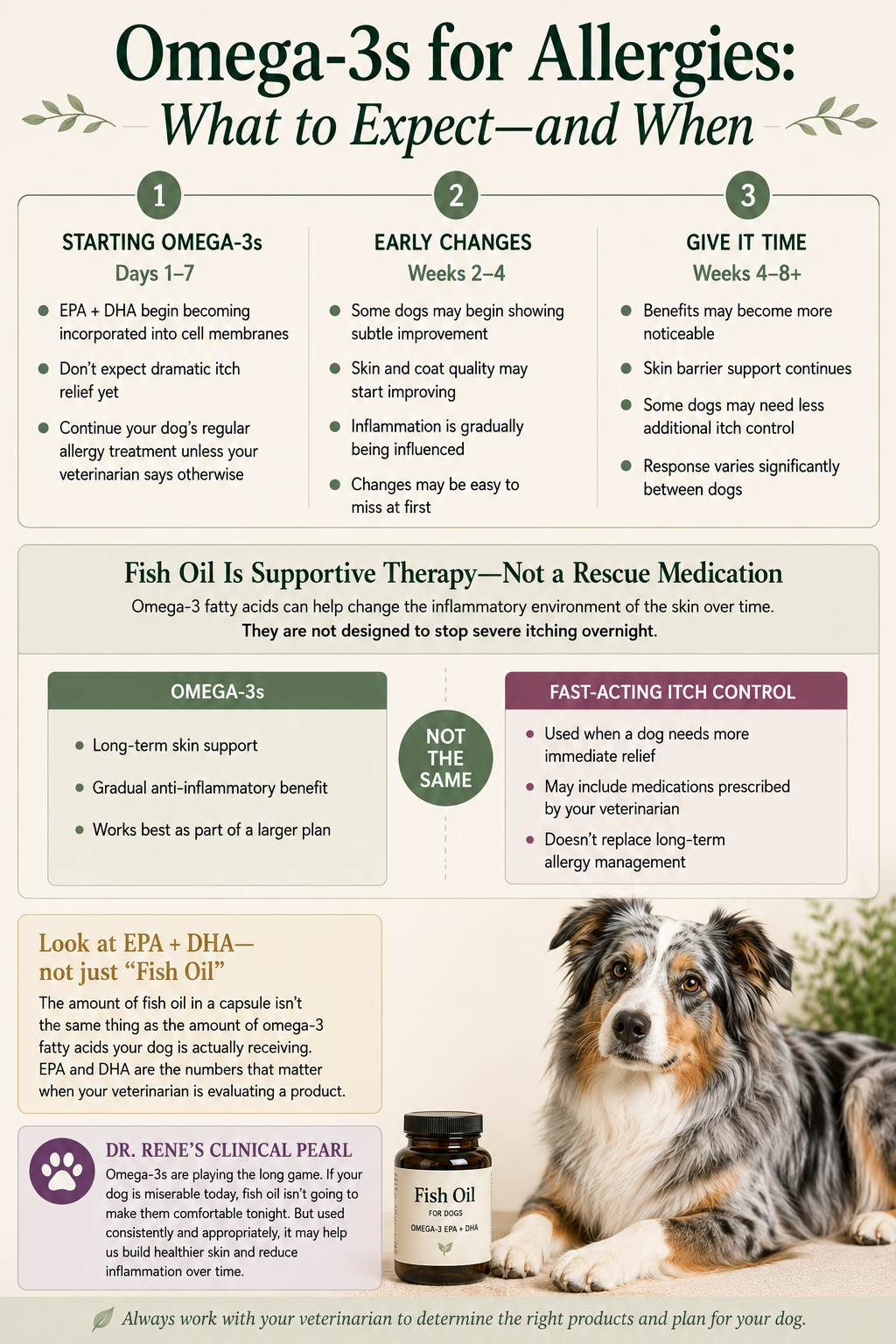
How Long Does It Take to Work?
One of the biggest reasons owners become disappointed is unrealistic expectations.
Omega-3 fatty acids are not fast.
Unlike Apoquel or Cytopoint, which often begin helping within days, omega-3 fatty acids usually require:
- Several weeks before subtle improvement
- Two to three months before full benefit is appreciated
This is because the fatty acids must gradually become incorporated into the skin and immune cells.
Consistency matters.
Dosing Matters More Than the Label
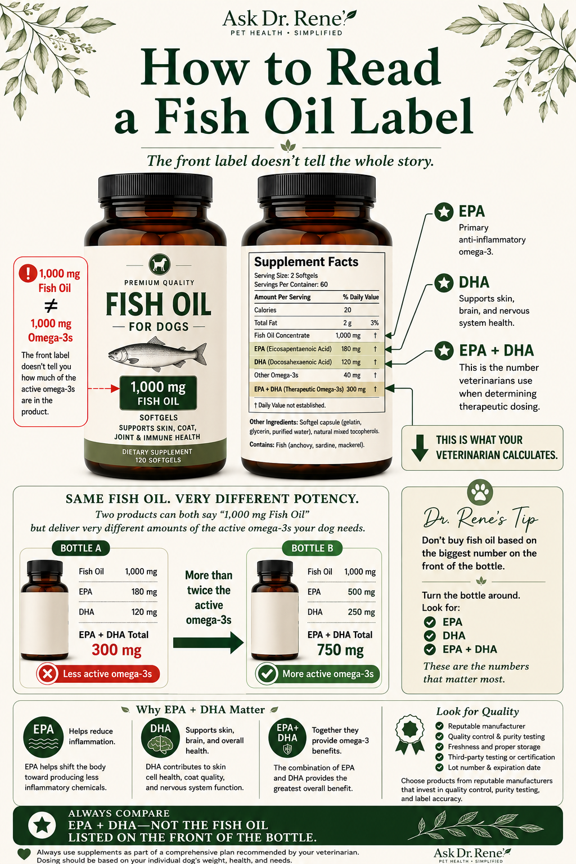
One of the biggest misconceptions is that all fish oil products are the same.
They're not.
The important numbers are EPA and DHA, not simply the amount of fish oil listed on the bottle.
Two products may both contain 1,000 mg of fish oil but provide very different amounts of EPA and DHA.
That's why veterinarians calculate the dose based on the EPA + DHA content, not the size of the capsule.
More Isn't Always Better
Because omega-3 fatty acids are generally considered safe, some owners assume that giving extra must be even better.
Unfortunately, that's not true.
Excessive supplementation can contribute to:
- Gastrointestinal upset
- Weight gain
- Changes in blood clotting
- Excess calorie intake
More isn't necessarily more effective.
The goal is the right dose, not the highest dose.
Choosing a High-Quality Product
Not all supplements are created equally.
Fish oil products vary tremendously in:
- Purity
- Concentration
- Freshness
- Manufacturing quality
- Independent testing
This is one reason I recommend choosing products from companies that invest in quality control and research rather than simply buying the least expensive option.
A high-quality supplement is more likely to provide the amount of EPA and DHA listed on the label and less likely to contain contaminants.
My Preferred Products
One question I receive frequently is:
"Which fish oil do you recommend?"
I generally recommend products from manufacturers with strong quality-control standards and veterinary research behind them.
Some of the products I commonly discuss with owners include:
- Welactin®
- Nordic Naturals Omega-3 Pet
- Nutramax® fish oil products
The best choice depends on your dog's size, medical history, diet, and any other health conditions.
Can Dogs Eat Fish Instead?
Owners sometimes ask if feeding salmon or sardines provides the same benefit.
Fresh fish can certainly contribute omega-3 fatty acids to the diet.
However, it's difficult to consistently achieve therapeutic EPA and DHA levels through fish alone.
For dogs needing allergy support, a veterinary-recommended supplement is usually a more reliable option.
Questions I Encourage Every Owner to Ask
If you're considering fish oil, ask your veterinarian:
- Does my dog need an omega-3 supplement?
- What EPA and DHA dose do you recommend?
- Which product do you trust?
- How long should we continue it before deciding if it's helping?
- Could fish oil reduce my dog's need for other medications?
The Bottom Line
Omega-3 fatty acids are among the best-researched nutritional supplements available for dogs with allergic skin disease.
They don't cure allergies or provide rapid itch relief, but they can help support healthier skin, reduce inflammation, and improve overall skin and coat health when used consistently.
The greatest benefits come when omega-3 fatty acids are part of a comprehensive allergy management plan that also addresses infections, flea control, skin care, and any medications your dog may need.
Key Takeaways
- Omega-3 fatty acids help reduce inflammation but do not cure allergies.
- EPA and DHA are the most important components of fish oil.
- Benefits usually take weeks to months, not days.
- Dose should be based on EPA + DHA, not the total amount of fish oil.
- High-quality supplements are worth the investment.
- Omega-3s work best as part of a complete allergy management plan.
References & Further Reading
- Miller J, Simpson A, Bloom P, et al. 2023 AAHA Management of Allergic Skin Diseases in Dogs and Cats Guidelines. J Am Anim Hosp Assoc. 2023;59(6):255–284. doi:10.5326/JAAHA-MS-7396
- Olivry T, DeBoer DJ, Favrot C, Jackson HA, Mueller RS, Nuttall T, Prélaud P; International Committee on Allergic Diseases of Animals. Treatment of canine atopic dermatitis: 2015 updated guidelines from the International Committee on Allergic Diseases of Animals (ICADA). BMC Vet Res. 2015;11:210. PMID: 26276051
- Mueller RS, Fieseler KV, Fettman MJ, et al. Effect of omega-3 fatty acids on canine atopic dermatitis. J Small Anim Pract. 2004;45(6):293–297. PMID: 15206474
- Sævik BK, Bergvall K, Holm BR, et al. A randomized, controlled study to evaluate the steroid sparing effect of essential fatty acid supplementation in the treatment of canine atopic dermatitis. Vet Dermatol. 2004;15(3):137–145. PMID: 15214949
Next in this series
Canine Allergy Learning Center · Part 13 of 23
Part 14: Allergy Testing for Dogs: What It Can—and Can't—Tell You
Allergy testing doesn't diagnose allergies. It identifies environmental allergens so an individualized immunotherapy plan can be created for a dog already diagnosed with atopic dermatitis.
Continue readingContinue Learning
Apoquel®: Everything Pet Owners Should Know
How Apoquel works, how fast it controls itching, side effects, and safety questions owners ask most.
Read articleCytopoint®: Everything Pet Owners Should Know
How Cytopoint works, how long it lasts, its safety profile, and when veterinarians recommend it.
Read articleWhy Benadryl® Usually Doesn't Work for Itchy Dogs
Why antihistamines disappoint for chronic canine allergies, and when they genuinely do help.
Read articleWhy Does My Dog Keep Getting Skin Infections?
Bacterial and yeast skin infections — why they recur, and how they fit into the larger allergy plan.
Read article