
Allergy Learning Center · Part 7
Why Does My Dog Keep Getting Skin Infections?
Understanding Bacterial and Yeast Skin Infections in Dogs
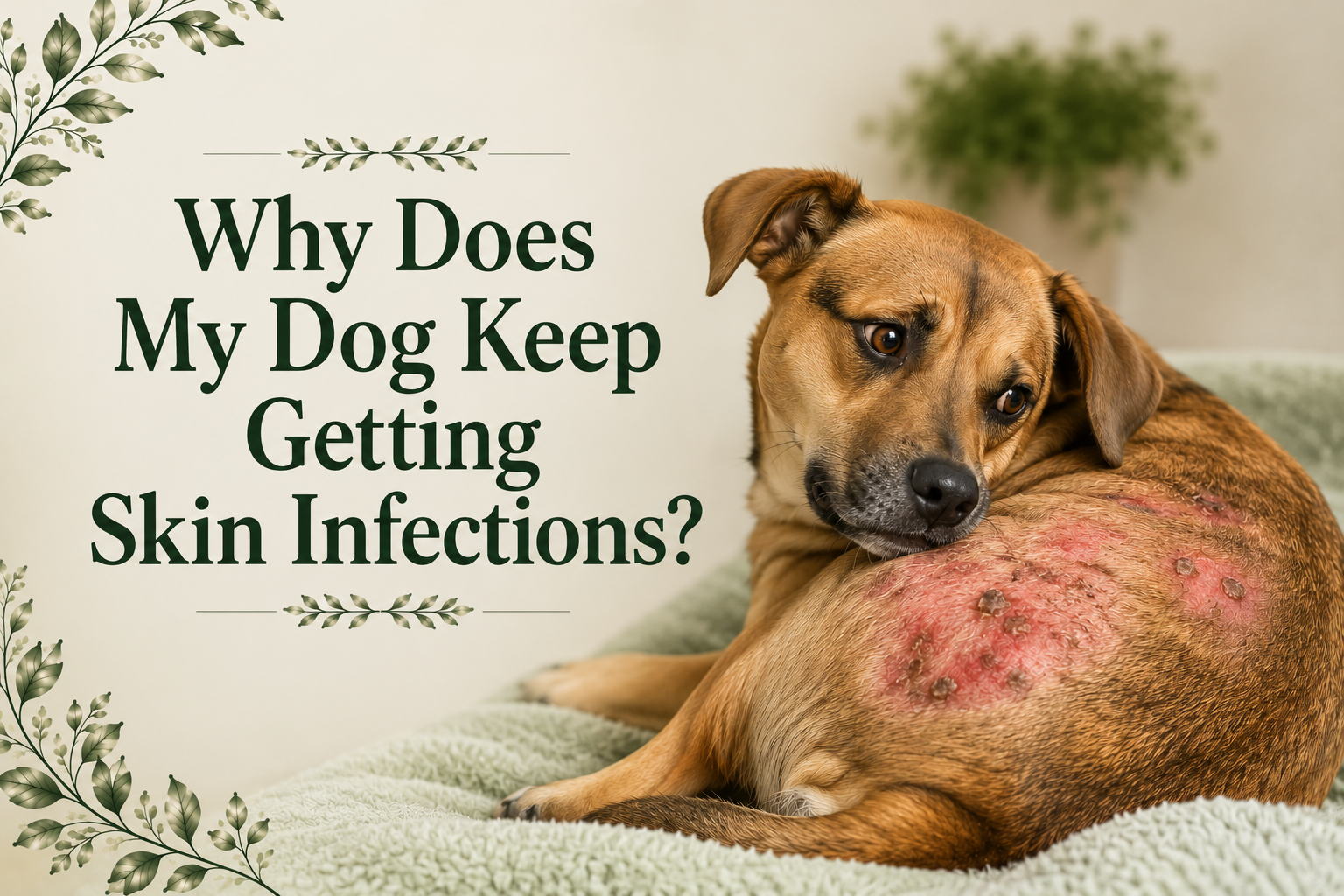
Skin infections are often a symptom of an underlying problem—not the primary disease. Understanding what's causing the infection is the first step toward lasting relief.
About a 9 minute read
"He Keeps Getting Another Skin Infection."
This is something I hear almost every day.
A dog finishes antibiotics.
The skin looks better.
Everyone is relieved.
Then...
A few weeks later...
The bumps are back.
The itching returns.
The odor comes back.
The infection seems to have "returned."
So owners naturally ask:
"Why do the antibiotics keep wearing off?"
The answer is usually surprising.
Most skin infections aren't the primary problem.
They're often the result of something else that's damaging the skin.
Until that underlying cause is addressed, the infections are likely to return.
Healthy Skin Is an Amazing Barrier
Your dog's skin does much more than simply cover the body.
Healthy skin:
- Keeps bacteria where they belong
- Prevents moisture loss
- Blocks allergens
- Protects against infection
- Supports a healthy population of normal microorganisms
Think of healthy skin like a brick wall.
The skin cells are the bricks.
Natural oils act like mortar holding everything together.
When that wall becomes damaged, bacteria and yeast find an opportunity to move in.
Pyoderma: A Bacterial Skin Infection
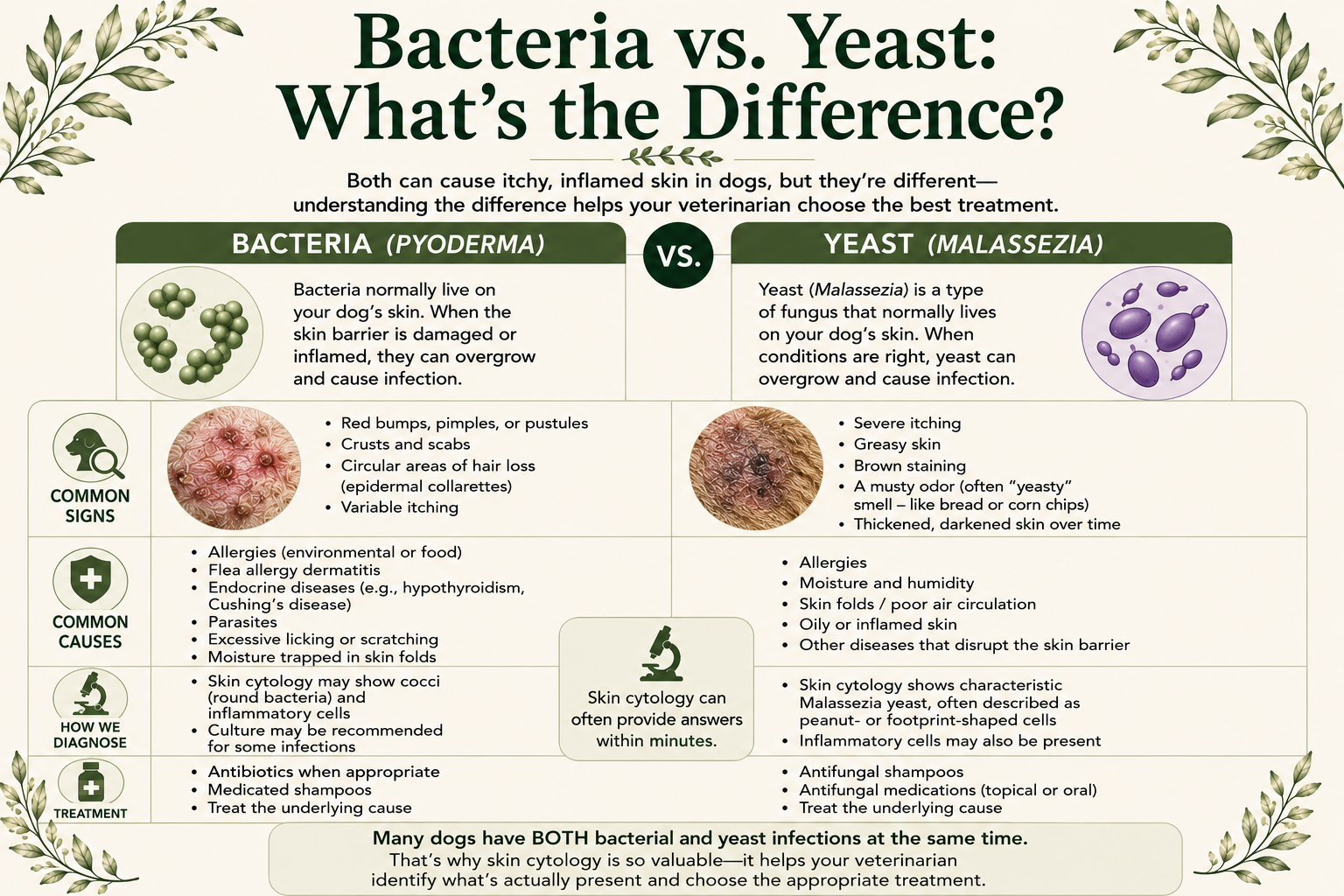
The medical term pyoderma simply means a bacterial skin infection.
It can range from mild surface infections to deeper infections involving hair follicles and the deeper layers of skin.
Common signs include:
- Red bumps
- Pimples
- Pustules
- Crusts
- Circular areas of hair loss (epidermal collarettes)
- Draining sores
- Itching
- Hair loss
Many dogs also develop an unpleasant odor as the infection progresses.
What Causes Pyoderma?
Bacteria rarely invade healthy skin.
Instead, something weakens the skin barrier first.
Common underlying causes include:
- Environmental allergies
- Flea allergy dermatitis
- Food allergies
- Endocrine diseases (such as hypothyroidism or Cushing's disease)
- Parasites
- Excessive licking or scratching
- Moisture trapped within skin folds
The bacteria are taking advantage of damaged skin—not causing the original problem.
Yeast Skin Infections
Yeast infections are a little different.
The yeast most commonly involved, Malassezia, normally lives on healthy canine skin.
When inflammation changes the skin's environment, yeast begins multiplying much faster than normal.
This leads to:
- Severe itching
- Greasy skin
- Thickened skin
- Brown staining
- A musty odor
- Dark pigmentation over time
Many owners describe the smell as similar to bread or corn chips.
Mixed Infections
Many dogs don't have just bacteria.
And they don't have just yeast.
They have both.
These are called mixed infections, and they're especially common in dogs with chronic allergic skin disease.
The bacteria and yeast feed off the same damaged skin barrier, making each other more difficult to eliminate.
That's one reason why some infections require multiple medications or longer treatment plans.
How Veterinarians Tell the Difference
Fortunately, we don't have to guess.
One of the most valuable tools in veterinary dermatology is skin cytology.
Your veterinarian gently collects a sample from the skin using clear tape, a cotton swab, or a microscope slide.
The sample is stained and examined under the microscope.
Within minutes, we can often determine whether we're dealing with:
- Bacteria
- Yeast
- Both
- Inflammatory cells
- Occasionally parasites
That information allows us to choose the most appropriate treatment instead of simply guessing.
When Antibiotics Help
Antibiotics are excellent medications when a bacterial infection is truly present.
They can eliminate bacteria, reduce inflammation caused by infection, and help damaged skin heal.
When they're used appropriately, they are an important part of veterinary medicine.
When Antibiotics Don't Help
Antibiotics do not treat:
- Yeast infections
- Allergies
- Itching caused by environmental allergens
- Food allergies
- Flea allergy dermatitis
- Anxiety-related licking
If the underlying disease isn't addressed, antibiotics may temporarily improve the infection—but the problem often returns.
Can Skin Infections Be Prevented?
In many dogs...
Yes.
But prevention focuses on protecting the skin—not simply treating infections.
Depending on your dog's underlying condition, prevention may include:
- Allergy management
- Flea prevention
- Medicated shampoos
- Prompt treatment of ear infections
- Weight management to reduce skin fold disease
- Regular veterinary rechecks for chronic skin disease
When the underlying cause is controlled, infections become much less common.
Early treatment is usually simpler, less expensive, and more comfortable for your dog.
The Bottom Line
Skin infections are among the most common reasons dogs visit the veterinarian, but they're rarely the entire story.
Healthy skin naturally contains bacteria and yeast. Problems develop when allergies, parasites, hormonal disease, or other conditions damage the skin's protective barrier and allow those organisms to overgrow.
Understanding whether your dog has bacteria, yeast, or both helps guide treatment—but lasting success depends on identifying the underlying cause.
Treating the infection is important.
Treating why the infection developed is what leads to long-term improvement.
Key Takeaways
- Skin infections are usually secondary to another underlying problem.
- Pyoderma is a bacterial skin infection.
- Yeast infections require different treatment than bacterial infections.
- Many dogs have mixed infections involving both bacteria and yeast.
- Skin cytology helps veterinarians identify the correct treatment.
- Antibiotics are extremely helpful for bacterial infections but do not treat allergies or yeast.
- Preventing future infections means treating the underlying disease—not just the infection.
Worried About Your Dog's Skin?
Recurrent skin infections almost always have an underlying cause worth identifying.
Schedule an educational consultation with Dr. Rene'.
Work With Dr. Rene'References & Further Reading
- Miller J, Simpson A, Bloom P, et al. 2023 AAHA Management of Allergic Skin Diseases in Dogs and Cats Guidelines. J Am Anim Hosp Assoc. 2023;59(6):255–284. doi:10.5326/JAAHA-MS-7396
- Loeffler A, Cain CL, Ferrer L, et al. Antimicrobial use guidelines for canine pyoderma by the International Society for Companion Animal Infectious Diseases (ISCAID). Vet Dermatol. 2025;36(3):234–282. PMID: 40338805
- Bond R, Morris DO, Guillot J, et al. Biology, diagnosis and treatment of Malassezia dermatitis in dogs and cats: Clinical Consensus Guidelines of the World Association for Veterinary Dermatology. Vet Dermatol. 2020;31(1):28–74. PMID: 31957204
- Santoro D, Marsella R, Pucheu-Haston CM, Eisenschenk MNC, Nuttall T, Bizikova P. Review: Pathogenesis of canine atopic dermatitis: skin barrier and host-micro-organism interaction. Vet Dermatol. 2015;26(2):84-e25. PMID: 25683702
Next in this series
Canine Allergy Learning Center · Part 7 of 23
Part 8: Why Do Steroids Work So Well—And Why Don't Veterinarians Want to Depend on Them?
Understanding prednisone, dexamethasone, and steroid injections for dogs with allergies — why they work so fast, and why repeated use carries risk.
Continue readingContinue Learning
Why Did My Dog Suddenly Develop a Hot Spot?
Acute moist dermatitis can appear overnight — here's why it spreads so fast.
Read articleWhy Does My Dog Keep Licking Their Feet?
Constant licking of the feet has several causes — allergies are only one of them.
Read articleWhy Does My Dog Keep Getting Ear Infections?
Recurring ear infections are usually a symptom of an underlying problem — most often allergies.
Read article