Allergy Learning Center · Part 4
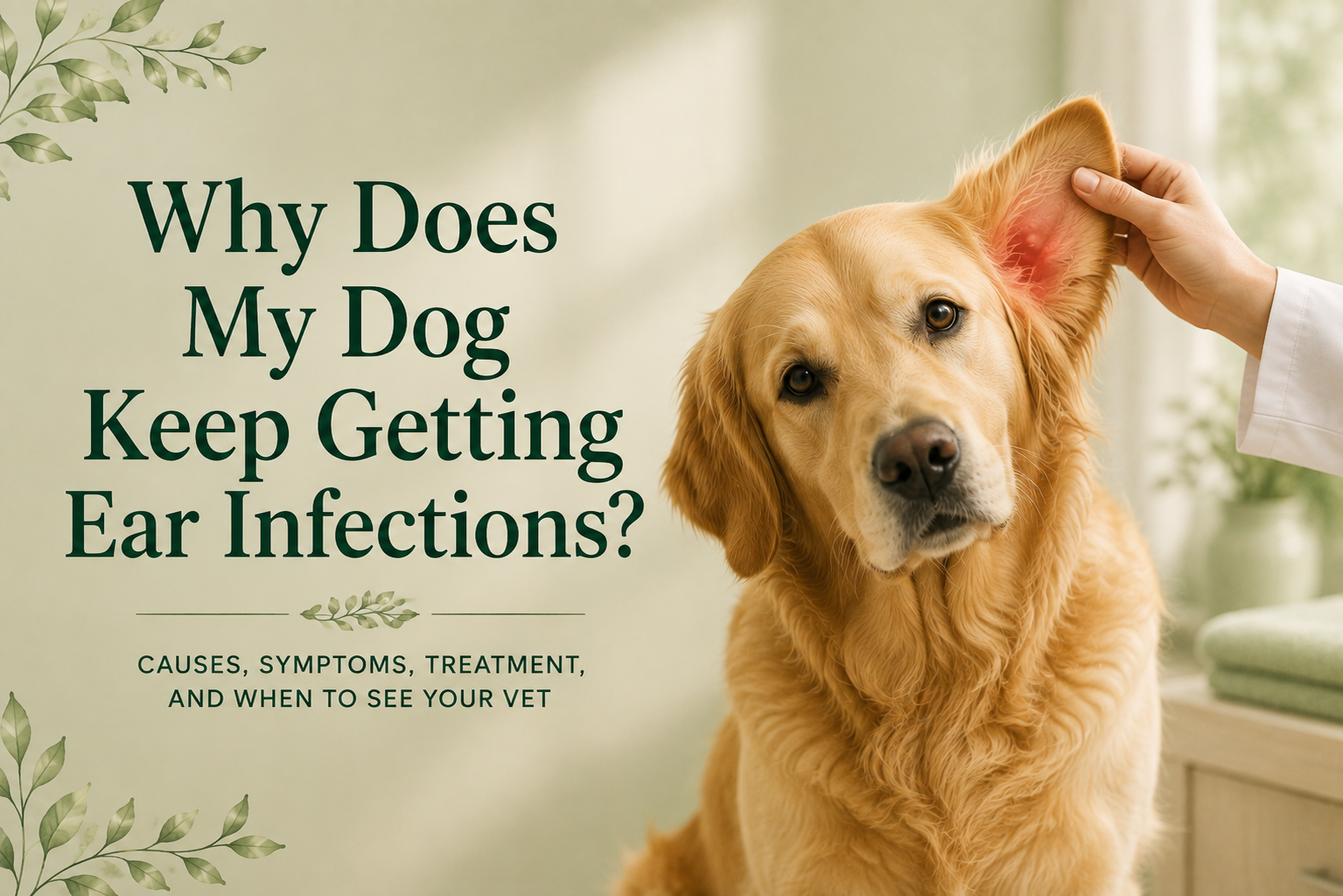
Why Does My Dog Keep Getting Ear Infections?
Causes, Symptoms, Treatment, and When to See Your Veterinarian
Understanding Why Ear Infections Return Again and Again
Recurring ear infections are rarely "just bad luck." Most are a symptom of an underlying problem that needs to be identified and treated.
About a 9 minute read
"We Just Finished Antibiotics...Why Is It Back?"
This is probably one of the most common questions I hear in veterinary medicine.
A dog comes in with another painful ear infection.
The owner sighs and says:
"This is the fourth one this year."
Or...
"The medication worked...but two months later it's infected again."
Here's the important thing to understand:
Ear infections are usually a symptom—not the disease itself.
Most recurring ear infections happen because something continues to create the perfect environment for bacteria or yeast to grow.
Until that underlying cause is identified, the infections often keep returning.
What Is an Ear Infection?
The medical term for an outer ear infection is otitis externa.
A healthy ear contains:
- Healthy skin
- Small amounts of wax
- Tiny numbers of naturally occurring bacteria
- Small populations of normal yeast
These organisms normally live together in balance.
Problems begin when the ear canal becomes inflamed.
Once inflammation starts:
- The canal swells.
- Wax production increases.
- Moisture becomes trapped.
- Airflow decreases.
Suddenly, bacteria and yeast have the perfect environment to multiply.
The result?
An ear infection.
Allergies: The Number One Cause
By far, the most common reason dogs develop recurring ear infections is allergic skin disease.
Remember...
The ear canal is simply an extension of the skin.
If your dog's skin is inflamed because of allergies...
Their ears are often inflamed too.
Every allergy flare creates:
- Increased inflammation
- Increased wax production
- Swelling
- More moisture
Eventually bacteria and yeast take advantage of those changes.
The infection is secondary.
The allergy came first.
Yeast: The Opportunist
Owners often hear:
"Your dog has yeast."
That makes it sound like yeast suddenly appeared.
It didn't.
Yeast normally lives on healthy skin.
When inflammation changes the environment, yeast simply overgrows.
Common signs include:
- Brown discharge
- Strong odor
- Greasy debris
- Constant scratching
- Head shaking
Many owners describe the odor as similar to bread or corn chips.
Bacterial Ear Infections
Bacteria behave much the same way.
Healthy ears naturally contain bacteria.
Inflammation changes the environment.
The bacteria multiply.
Now the ear becomes:
- Painful
- Red
- Swollen
- Filled with discharge
Some bacterial infections become resistant when they're repeatedly treated without addressing the underlying cause.
That's why your veterinarian may recommend ear cytology to identify exactly what's growing before selecting medication.
Why Ear Anatomy Matters
Dogs don't have ear canals like people.
A dog's ear canal is shaped like an L.
Instead of traveling straight inward...
The canal goes:
Down...
Then inward.
That unique shape makes it much easier for wax, debris, moisture, and infection to become trapped.
Once swelling develops, the ear loses much of its natural ability to clean itself.
Does Swimming Cause Ear Infections?
Sometimes.
Swimming increases moisture inside the ear canal.
Moisture can contribute to infections in dogs already prone to ear disease.
However...
Healthy ears usually tolerate swimming very well.
If your dog develops infections every summer after spending time in the pool or lake, swimming may be contributing—but it usually isn't the whole story.
Why Do Ear Infections Keep Coming Back?
Recurring ear infections usually happen because the underlying problem has never been fully controlled.
Common reasons include:
- Environmental allergies
- Food allergies
- Chronic yeast overgrowth
- Resistant bacteria
- Ear canal narrowing from chronic inflammation
- Foreign material
- Polyps or masses
- Excessive hair in some breeds
The infection goes away.
The inflammation stays.
Soon...
The next infection begins.
How Veterinarians Figure It Out
Treating the infection is only the beginning.
Your veterinarian may recommend:
- Ear cytology
- Otoscopic examination
- Allergy evaluation
- Food elimination trial
- Ear culture (for resistant infections)
- Imaging in severe chronic cases
Each test answers a different question.
The goal isn't simply to treat today's infection.
The goal is to prevent the next one.
Can I Prevent Ear Infections?
Often...
Yes.
But prevention depends on treating the underlying cause—not just the infection itself.
Control Allergies
For many dogs, preventing ear infections starts with controlling allergic skin disease.
When allergies remain uncontrolled, inflammation continues inside the ear canal, creating the perfect environment for future infections.
Long-term allergy management is often the single most important step in preventing recurrent ear disease.
Clean the Ears Correctly
Routine ear cleaning can remove excess wax, allergens, and debris before they cause problems.
However...
Cleaning too often—or using harsh cleaners—can actually irritate the ear canal.
Your veterinarian can recommend the right cleaner and cleaning schedule for your dog's ears.
Dry the Ears After Swimming
Dogs that swim frequently may benefit from veterinarian-approved drying ear cleansers.
These products help remove excess moisture before yeast and bacteria have a chance to multiply.
Never place anything into an ear that is painful or actively infected without first having your veterinarian examine it.
Finish Every Medication
Even if the ear appears normal...
Finish every prescribed medication exactly as directed.
Many infections improve before they're fully eliminated.
Avoid Cotton Swabs
Cotton swabs should never be inserted deep into your dog's ear canal.
Because the ear canal turns sharply, swabs often push debris farther down instead of removing it.
Instead, use veterinarian-approved ear cleaners with cotton balls or gauze to gently wipe the visible portion of the ear.
Watch for Early Warning Signs
Early treatment usually means:
- Less pain
- Easier treatment
- Faster recovery
- Lower chance of chronic ear disease
Contact your veterinarian if you notice:
- Head shaking
- Ear scratching
- Redness
- Bad odor
- Brown, yellow, or bloody discharge
- Pain when touching the ears
- Head tilt
- Loss of balance
These signs may indicate a more severe infection or involvement of the middle or inner ear.
Chronic Ear Infections Require a Long-Term Plan
If your dog has experienced multiple ear infections within a year, it's time to think beyond another bottle of ear medication.
Long-term management may include:
- Allergy treatment
- Routine ear maintenance
- Periodic ear cytology
- Recheck examinations
- Identifying individual allergy triggers
- Preventive ear cleaning when appropriate
Many dogs with chronic ear disease can enjoy healthy, comfortable ears for years when the underlying cause is properly managed.
The Bottom Line
Recurring ear infections are usually a sign that something deeper is happening.
In most dogs, allergies create chronic inflammation inside the ear canal. That inflammation allows yeast and bacteria—which normally live harmlessly in the ear—to overgrow and cause infection.
Treating the infection is important, but it's only one piece of the puzzle.
The long-term solution is identifying and managing the underlying cause so the ear canal can return to a healthy, balanced environment.
When allergies, infections, anatomy, and ear care are addressed together, many dogs can break the cycle of recurring ear infections and enjoy healthy, comfortable ears for years to come.
Key Takeaways
- Ear infections are usually a symptom, not the primary disease.
- Allergies are the most common cause of recurring ear infections in dogs.
- Yeast and bacteria normally live in healthy ears but overgrow when inflammation changes the ear's environment.
- A dog's L-shaped ear canal traps moisture and debris more easily than a human ear.
- Floppy ears and swimming may contribute but rarely cause infections by themselves.
- Treating the underlying allergy is often the key to preventing future ear infections.
- Recurrent ear infections deserve a diagnostic plan—not just repeated medication.
References & Further Reading
- Miller J, Simpson A, Bloom P, et al. 2023 AAHA Management of Allergic Skin Diseases in Dogs and Cats Guidelines. J Am Anim Hosp Assoc. 2023;59(6):255–284. doi:10.5326/JAAHA-MS-7396
- Nuttall T. Managing recurrent otitis externa in dogs: what have we learned and what can we do better? J Am Vet Med Assoc. 2023;261(S1):S10–S22. PMID: 37019436
- Bond R, Morris DO, Guillot J, et al. Biology, diagnosis and treatment of Malassezia dermatitis in dogs and cats: Clinical Consensus Guidelines of the World Association for Veterinary Dermatology. Vet Dermatol. 2020;31(1):28–74. PMID: 31957204
- Hensel P, Santoro D, Favrot C, Hill P, Griffin C. Canine atopic dermatitis: detailed guidelines for diagnosis and allergen identification. BMC Vet Res. 2015;11:196. PMID: 26260508
Next in this series
Canine Allergy Learning Center · Part 4 of 23
Part 5: Why Does My Dog Keep Licking Their Feet?
Allergies, yeast, pain, foreign bodies, and anxiety all cause paw licking. Learn what the pattern of licking tells your veterinarian.
Continue reading