
Allergy Learning Center · Part 17
Why Flea Prevention Is One of the Most Important Allergy Treatments Your Dog Will Ever Receive
Understanding Flea Allergy Dermatitis and Why One Flea Can Cause Weeks of Itching

Many owners assume fleas can't be causing their dog's itching because they don't see any. In reality, flea allergy dermatitis is one of the most common—and most preventable—causes of chronic itching in dogs.
About an 8 minute read
"But I Don't See Any Fleas."
If I had a dollar for every time I've heard this...
I'd probably retire a little earlier.
One of the most common conversations I have goes something like this:
"There's no way it's fleas."
"Why?"
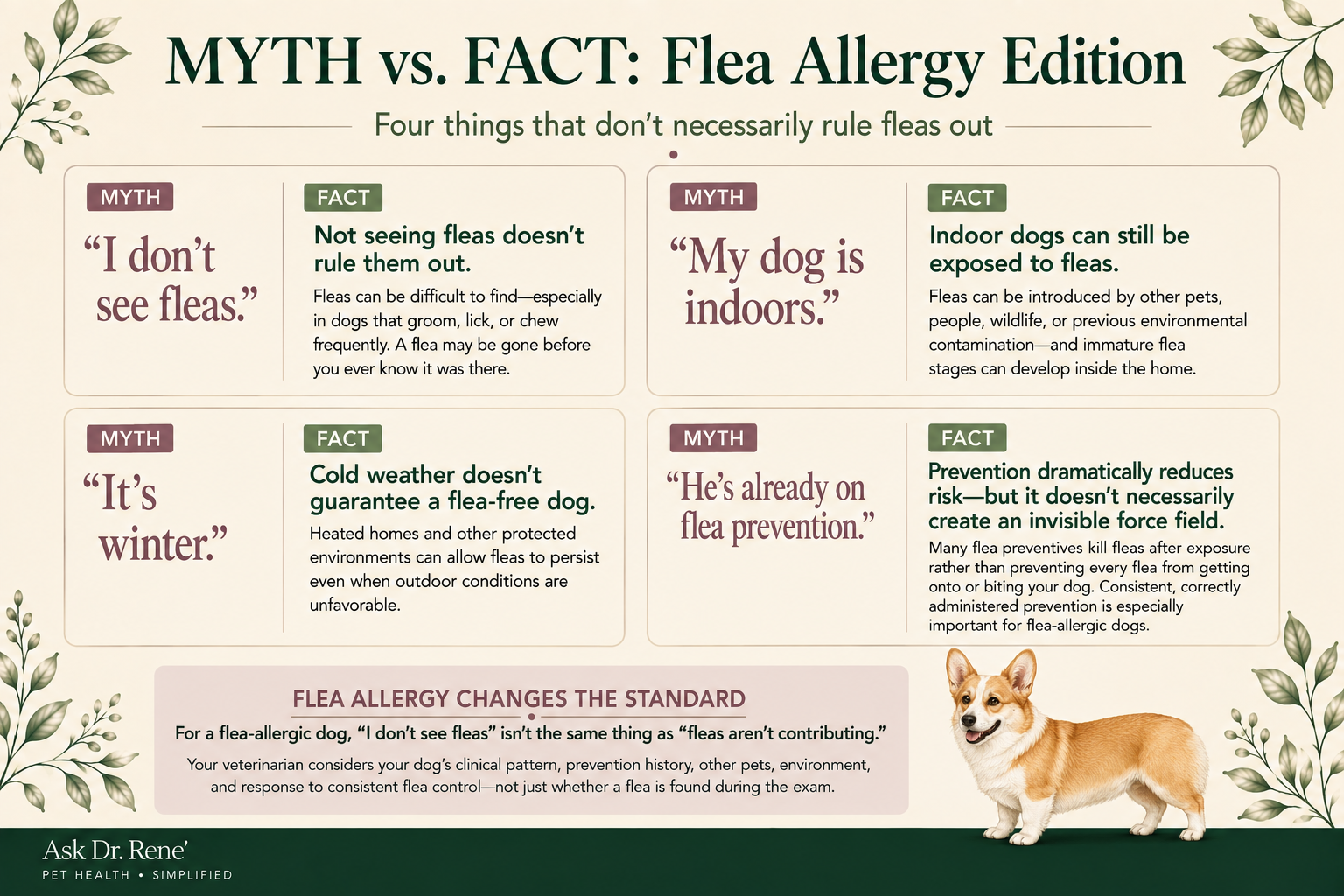
"Because I've never seen one."
Here's the surprising truth:
Most owners of dogs with flea allergy dermatitis never actually see a flea.
That's because fleas are very good at hiding.
And in many allergy dogs...
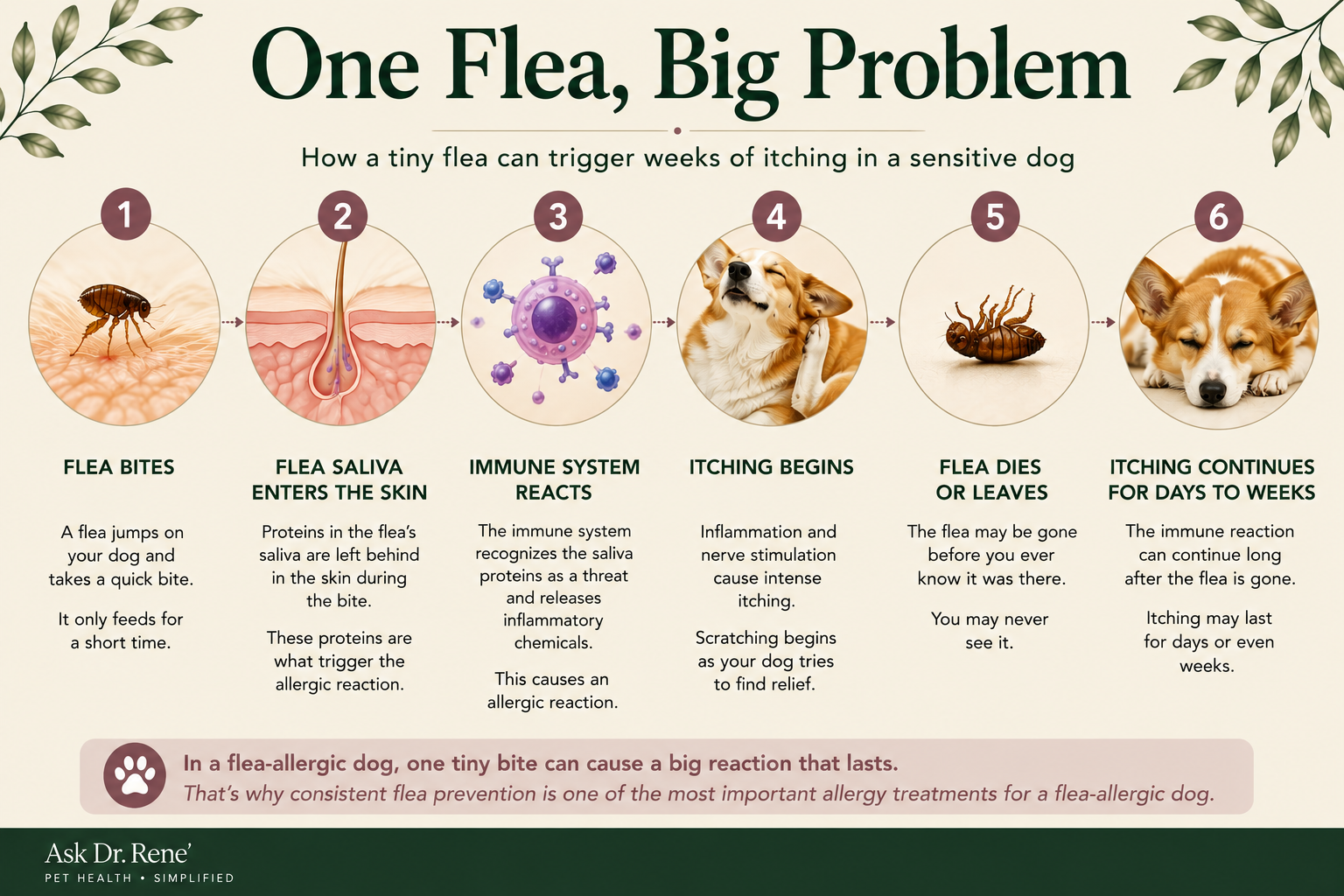
It only takes one flea bite to cause weeks of itching.
Why We Still Recommend Flea Prevention Even If We Don't Find Fleas
One of the biggest misunderstandings about flea allergy is believing that your veterinarian must find a flea during the examination to make the diagnosis.
That's simply not how flea allergy dermatitis works.
In reality, veterinarians diagnose flea allergy using the same approach we use for many other diseases—we put the entire picture together.
We consider:
- Your dog's history.
- Where your dog is itchy.
- The appearance of the skin.
- Whether there are hot spots or secondary infections.
- Whether flea prevention has been used consistently.
- How your dog responds to treatment.
Finding an adult flea during a single appointment is certainly helpful.
But not finding one does not rule flea allergy out.
Many flea-allergic dogs remove fleas through grooming long before their owners ever notice them.
Others are bitten outdoors by a flea that never stays on the dog long enough to be discovered.
That's why we often recommend strict flea prevention even when no fleas are seen during the examination.
We're treating the biology—not just what we happen to see that day.
What Is Flea Allergy Dermatitis?
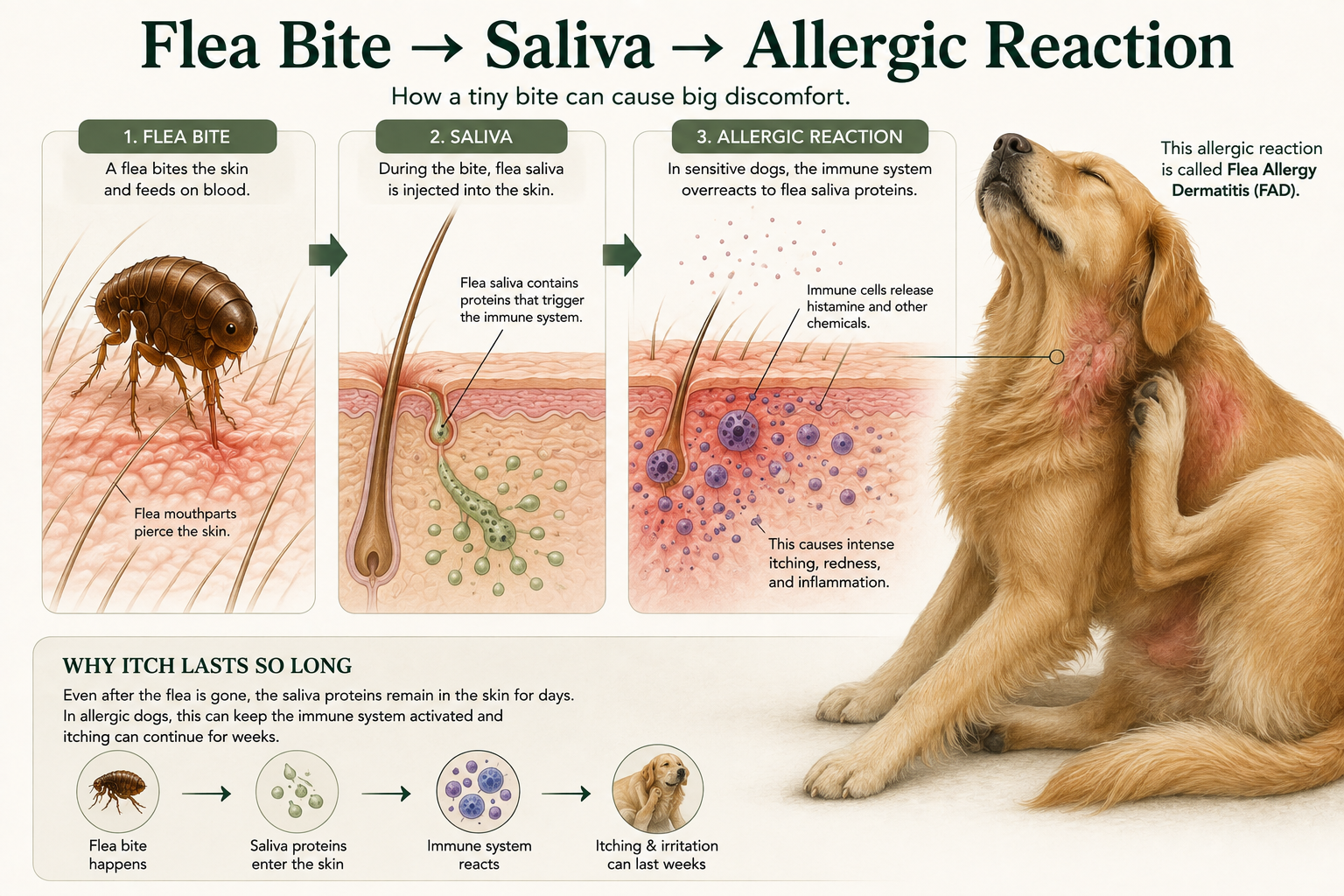
Flea Allergy Dermatitis (FAD) is one of the most common allergic skin diseases seen in dogs. It is one of the three types of allergies in dogs.
Unlike dogs that simply have fleas...
Dogs with flea allergy dermatitis have an allergic reaction every time they're bitten.
The flea feeds for only a short time.
But the allergic reaction can continue for days or even weeks.
Why One Flea Can Cause So Much Trouble
This is one of the hardest concepts for owners to believe.
Imagine someone with a peanut allergy.
They don't have to eat an entire jar of peanut butter.
One tiny exposure can trigger a significant reaction.
Flea allergy works much the same way.
The flea doesn't need to stay on your dog.
It simply has to bite.
Once flea saliva enters the skin, the immune system can remain activated long after the flea is gone.
An Easy Way to Think About It
Imagine someone pricks your finger with a tiny needle.
The needle is gone in seconds.
But your finger may stay sore afterward.
With flea allergy dermatitis, the flea disappears...
The immune reaction stays.
Where Do Fleas Usually Bite?
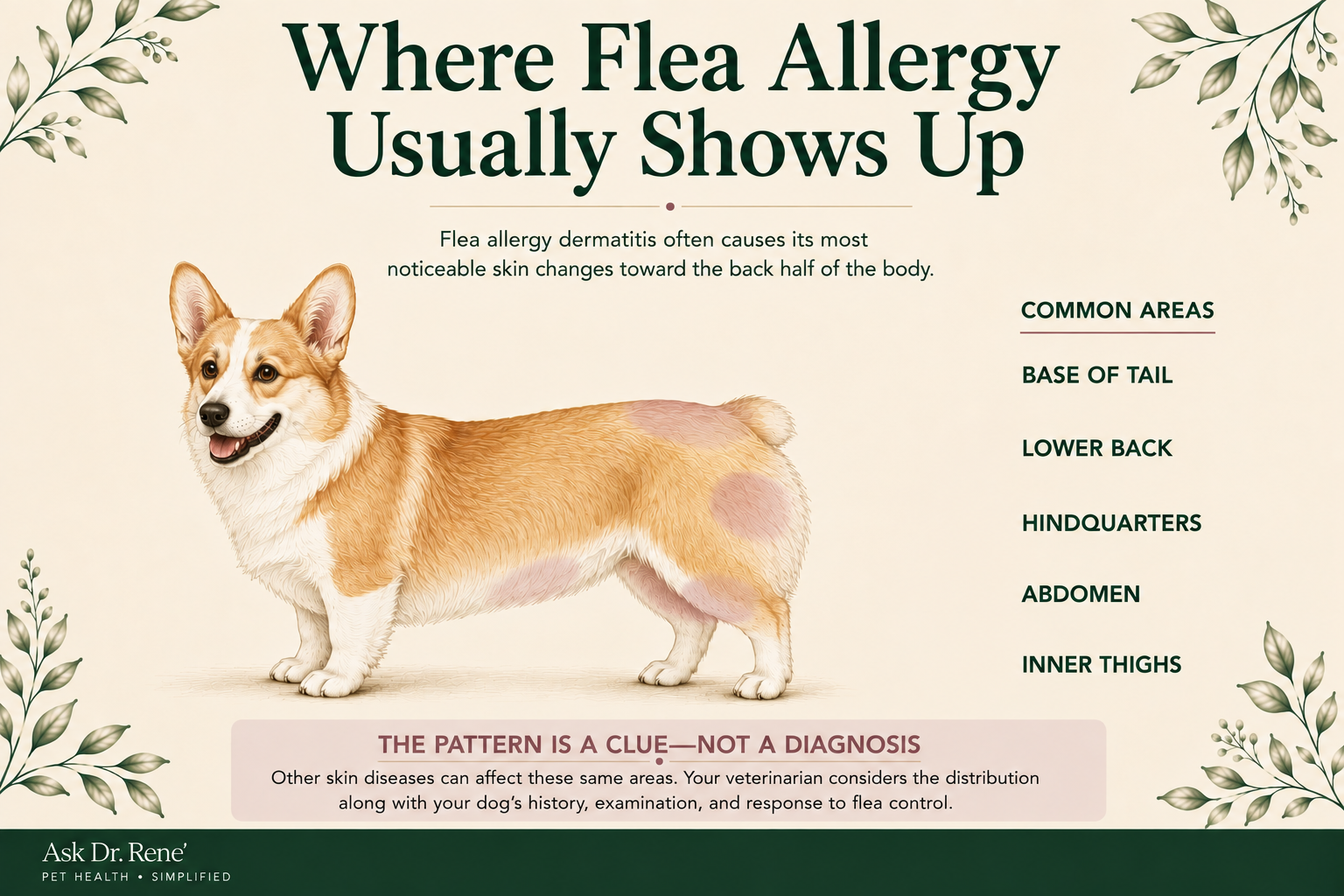
Flea allergy dermatitis has a very characteristic pattern.
Many dogs develop itching around:
- Base of the tail
- Lower back
- Hindquarters
- Abdomen
- Inner thighs
As the condition progresses, scratching and chewing can spread to other areas, and hot spots or secondary skin infections often follow.
Recognizing this pattern often provides an important clue during the physical examination. The pattern is a clue—not a diagnosis. Other skin diseases can affect these same areas, so distribution is interpreted alongside your dog's history, physical examination, flea-control history, and other diagnostic information.
"But My Dog Is on Flea Prevention."
This is another conversation I have almost every day.
Modern flea preventives are excellent.
But no product creates an invisible force field around your dog.
Most flea products work after the flea jumps onto your dog and begins feeding.
That means an allergic dog may still receive a bite before the flea dies.
For most dogs, that bite isn't a problem.
For a dog with flea allergy dermatitis...
It may be enough to trigger another flare.
That doesn't necessarily mean the product failed.
It means the allergy is incredibly sensitive.
Indoor Dogs Get Fleas Too
Another common misconception is that indoor dogs don't need flea prevention.
The truth is...
Fleas don't read house rules.
They can enter your home on:
- Other pets
- People
- Wildlife visiting the yard
- Shoes
- Clothing
Even dogs that spend very little time outdoors can develop flea infestations.
Fleas Don't Take the Winter Off
Depending on where you live, fleas may remain active throughout much of the year.
Even in colder climates, heated homes provide an environment where fleas can survive and reproduce.
Year-round prevention is one of the most effective ways to prevent flea allergy flare-ups.
Why We Treat Every Pet
One of the biggest mistakes I see is treating only the itchy dog.
If there are other dogs or cats in the household, they can continue carrying fleas even if they aren't itchy themselves.
Successful flea control usually means treating every dog and every cat in the home with an appropriate veterinarian-recommended flea preventive.
Don't Forget the Environment
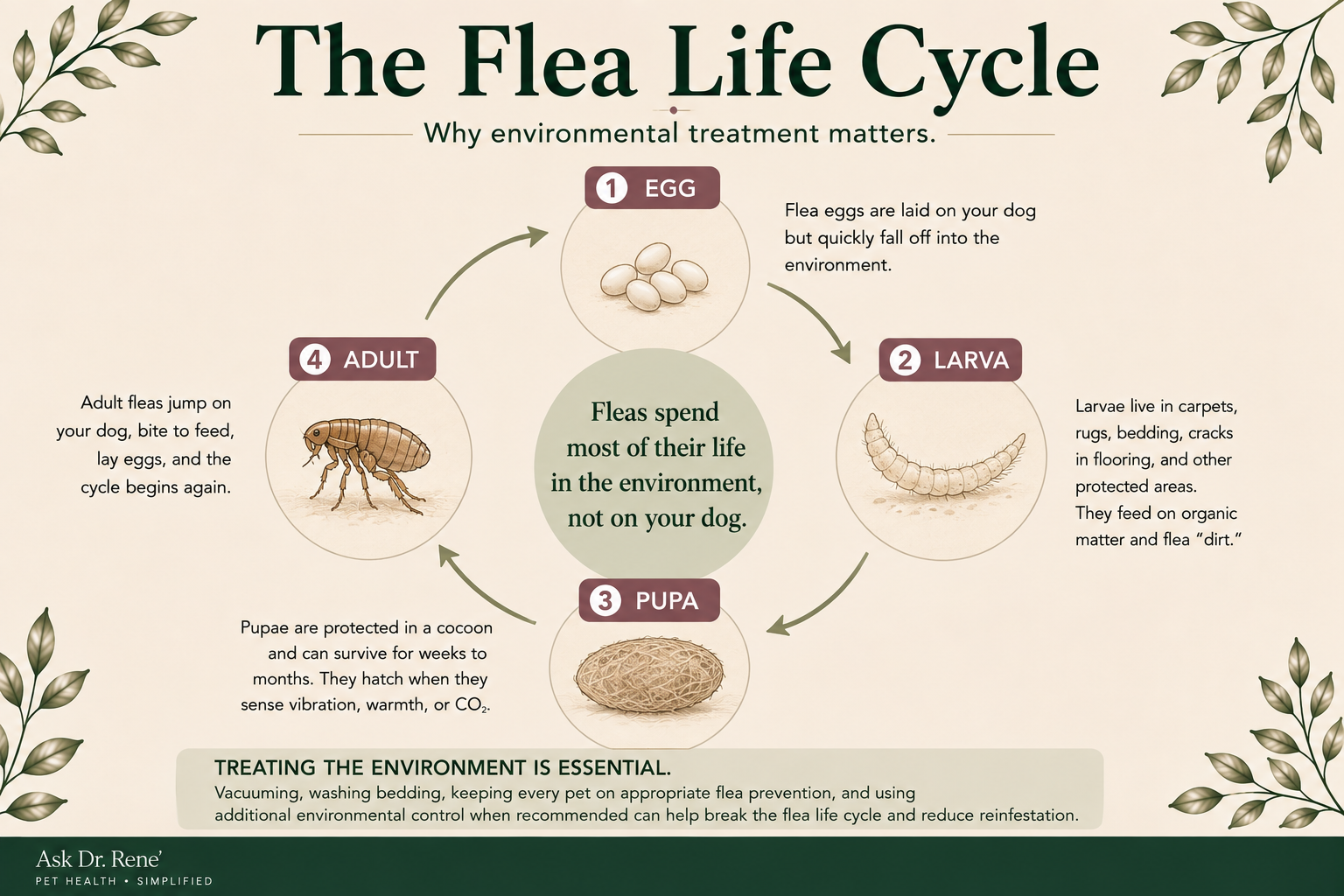
Adult fleas represent only a small portion of the flea life cycle.
Eggs, larvae, and pupae can remain in:
- Carpet
- Upholstery
- Bedding
- Cracks in flooring
- Outdoor shaded areas
That's why flea control sometimes requires more than simply treating the pet.
Vacuuming frequently, washing bedding, and following your veterinarian's recommendations for environmental control can help break the flea life cycle.
If your dog has flea allergy dermatitis, prevention works best when it's consistent year-round. Stopping and starting flea prevention gives fleas another opportunity to trigger allergic flare-ups.
Questions I Encourage Every Owner to Ask
If your dog has chronic itching, ask your veterinarian:
- Could flea allergy dermatitis be contributing?
- What flea preventive do you recommend?
- Should every pet in my household be treated?
- Do I need to treat my home as well?
- How long before we know whether flea allergy is part of the problem?
These signs deserve a complete skin examination and a discussion about flea allergy dermatitis.
What Does Good Flea Control Actually Look Like?
Successful flea prevention isn't simply about killing fleas.
It's about preventing flea bites before they trigger another allergic reaction.
For dogs with flea allergy dermatitis, success often looks like:
- Fewer hot spots.
- Less chewing at the base of the tail.
- Healthier skin.
- Fewer skin infections.
- Less need for antibiotics and steroids.
- Better comfort throughout the year.
The goal isn't just fewer fleas.
The goal is fewer allergy flare-ups.
The Bottom Line
Flea allergy dermatitis is one of the most common and most preventable causes of chronic itching in dogs.
Dogs with this condition aren't reacting to the flea itself—they're reacting to proteins in flea saliva.
Because even a single flea bite can trigger weeks of itching, consistent year-round flea prevention is one of the most important parts of an allergy management plan.
For many dogs, controlling fleas isn't just parasite prevention.
It's allergy treatment.
Key Takeaways
- Flea allergy dermatitis is caused by an allergic reaction to flea saliva.
- One flea bite can trigger days to weeks of itching in a sensitive dog.
- Most owners of flea-allergic dogs never actually see fleas.
- Not finding fleas during an examination does not rule out flea allergy dermatitis.
- Indoor dogs and winter months do not eliminate the risk of flea exposure.
- Every pet in the household should usually be on effective flea prevention.
- Year-round prevention is one of the most effective ways to prevent allergy flare-ups.
References & Further Reading
- Miller J, Simpson A, Bloom P, et al. 2023 AAHA Management of Allergic Skin Diseases in Dogs and Cats Guidelines. J Am Anim Hosp Assoc. 2023;59(6):255–284. doi:10.5326/JAAHA-MS-7396
- Lam A, Yu A. Overview of flea allergy dermatitis. Compend Contin Educ Vet. 2009;31(5):E1–E10. PMID: 19517416
- Carlotti DN, Jacobs DE. Therapy, control and prevention of flea allergy dermatitis in dogs and cats. Vet Dermatol. 2000;11(2):83–98. doi:10.1046/j.1365-3164.2000.00204.x
- Rust MK. The Biology and Ecology of Cat Fleas and Advancements in Their Pest Management: A Review. Insects. 2017;8(4):118. PMID: 29077073
Next in this series
Canine Allergy Learning Center · Part 17 of 23
Part 18: Why Does My Dog Still Have Fleas Even Though They're on Flea Prevention?
Found a flea even though your dog is on flea prevention? Here's how modern flea medications actually work, why occasional fleas may still appear, and when it may signal a real problem.
Continue readingContinue Learning
The Three Types of Allergies in Dogs
Flea allergy, food allergy, and environmental allergy — how veterinarians tell them apart.
Read articleWhy Is My Dog So Itchy?
The science behind allergic skin disease and what happens beneath the surface of the skin.
Read articleHot Spots: Everything You Need to Know
Why acute moist dermatitis appears so suddenly — and why flea allergy is a common trigger.
Read articleSkin Infections: Pyoderma vs. Yeast
Secondary bacterial and yeast infections that often follow allergic flare-ups.
Read article