
Allergy Learning Center · Part 16
Elimination Diet Trials in Dogs: The Only Proven Way to Diagnose a Food Allergy
Why Changing Foods Isn't Enough—and How to Do a Diet Trial Correctly
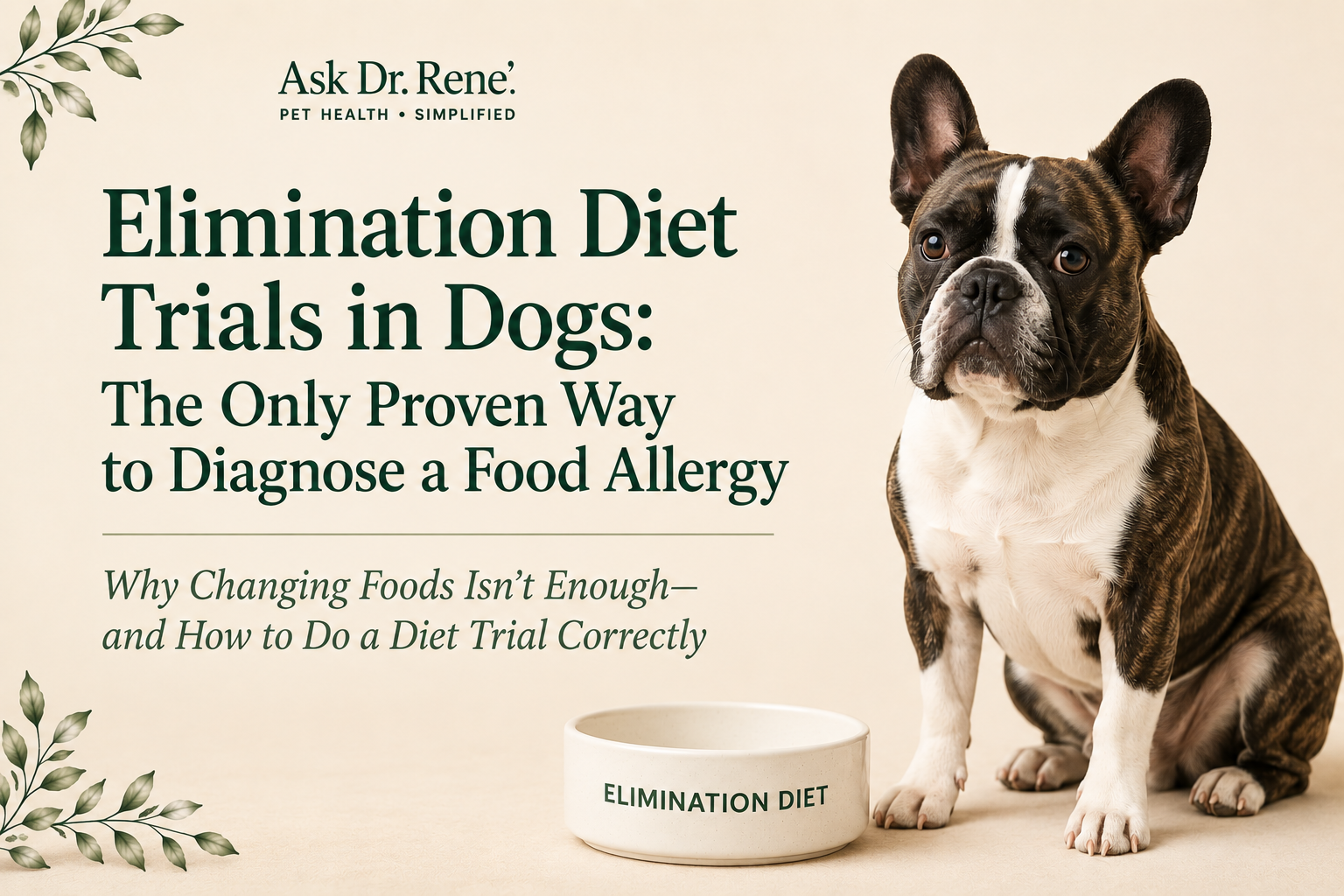
Food allergies are one of the most misunderstood causes of itchy skin in dogs. Learn why blood tests don't diagnose food allergies, how elimination diet trials work, and the common mistakes that cause them to fail.
About a 9 minute read
"Can't We Just Run a Food Allergy Test?"
This is usually the very first question owners ask.
It would certainly make life easier.
Draw a little blood.
Run a test.
Get a list of foods to avoid.
Unfortunately...
That's not how food allergies work.
Despite what many advertisements claim, there is currently no blood test, saliva test, hair test, or skin test that can reliably diagnose food allergies in dogs. If you haven't read it yet, Allergy Testing for Dogs: What It Can—and Can't—Tell You explains what allergy testing is actually used for.
Instead, veterinary dermatologists rely on one proven method:
A properly performed elimination diet trial.
What Is a Food Allergy?
A food allergy occurs when the immune system reacts abnormally to one or more proteins in the diet.
Most food-allergic dogs develop:
- Chronic itching
- Ear infections
- Skin infections
- Paw licking
- Facial rubbing
Some also experience:
- Vomiting
- Diarrhea
- Increased bowel movements
Food allergies can look almost identical to environmental allergies, which is why diagnosis requires a careful process.
Why Can't We Just Change Foods?
This is probably the biggest misconception I hear.
Owners often tell me:
"We've already tried three different foods."
That doesn't necessarily mean a proper food trial has been done.
Switching from one over-the-counter chicken diet to another over-the-counter lamb diet isn't the same as performing a diagnostic elimination diet.
Many commercial diets share ingredients, are manufactured on shared equipment, or contain proteins your dog has eaten before.
A true elimination diet is much more controlled.
The Two Types of Elimination Diets
Hydrolyzed Protein Diets
These diets contain proteins that have been broken into extremely small pieces.
The goal is to make those protein fragments too small for the immune system to recognize as allergens.
Examples include prescription hydrolyzed diets recommended by your veterinarian.
These are often my first choice because they're highly standardized and manufactured to minimize cross-contamination.
Novel Protein Diets
A novel protein diet uses ingredients your dog has never eaten before.
Examples might include:
- Rabbit
- Venison
- Kangaroo
- Alligator
The important part isn't that the protein is unusual.
The important part is that it's truly new for your dog.
If your dog has eaten venison treats before, then venison is no longer a novel protein.
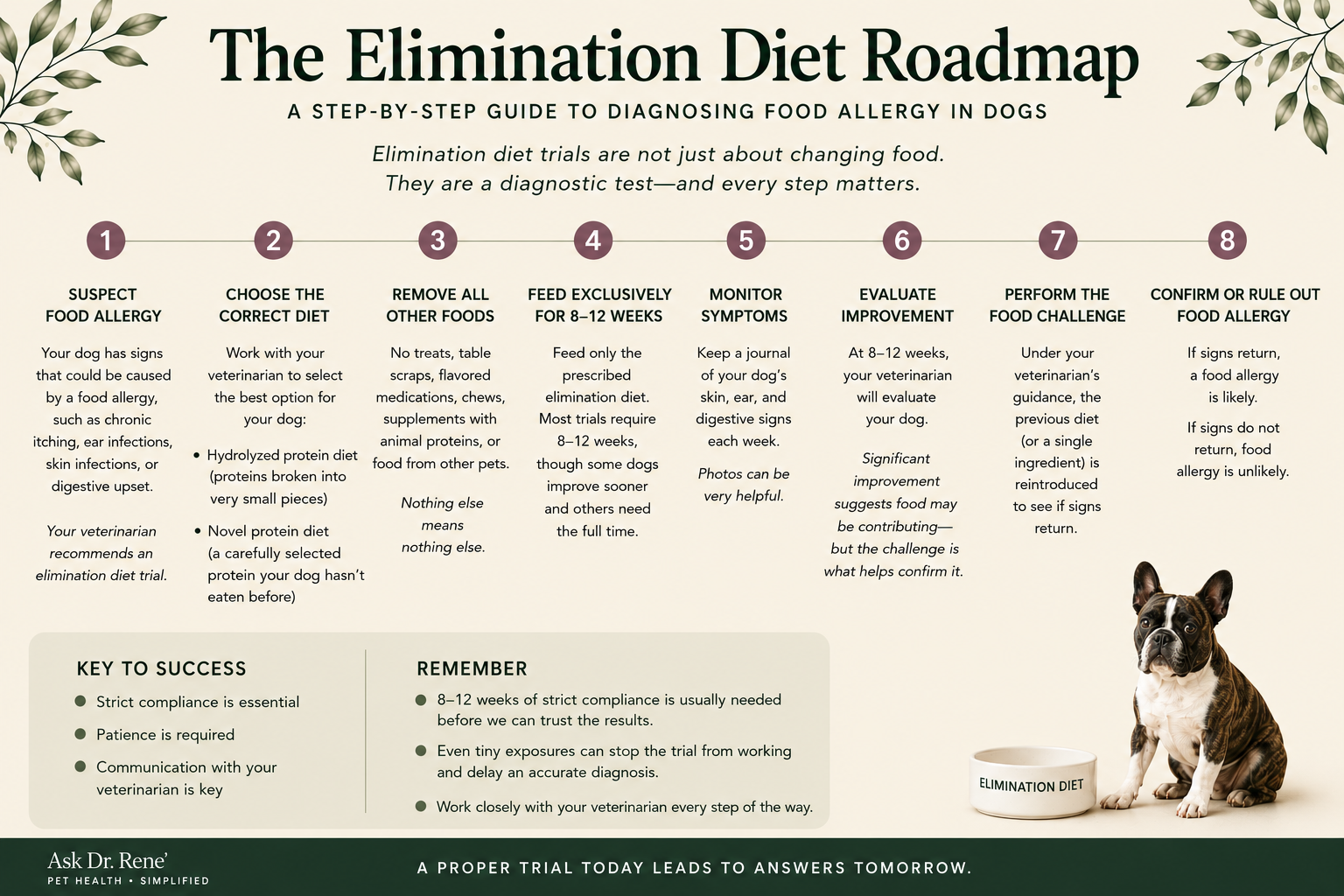
How Long Does an Elimination Diet Take?
One of the hardest parts of a diet trial is patience.
Most elimination diet trials require:
- 8–12 weeks
Some dogs improve sooner.
Others need the full trial period.
Stopping after only two or three weeks often leads to an incomplete answer.
The Hardest Rule
Nothing Else Means Nothing Else
This is where many diet trials fail.
During the trial...
Your dog should eat only the prescribed elimination diet unless your veterinarian specifically recommends otherwise.
That means avoiding:
- Table scraps
- Training treats
- Dental chews
- Flavored medications (when alternatives exist)
- Rawhides
- Pig ears
- Bones
- Flavored toothpaste
- Supplements containing animal proteins
- Food stolen from other pets
Even tiny exposures can invalidate weeks of careful work.
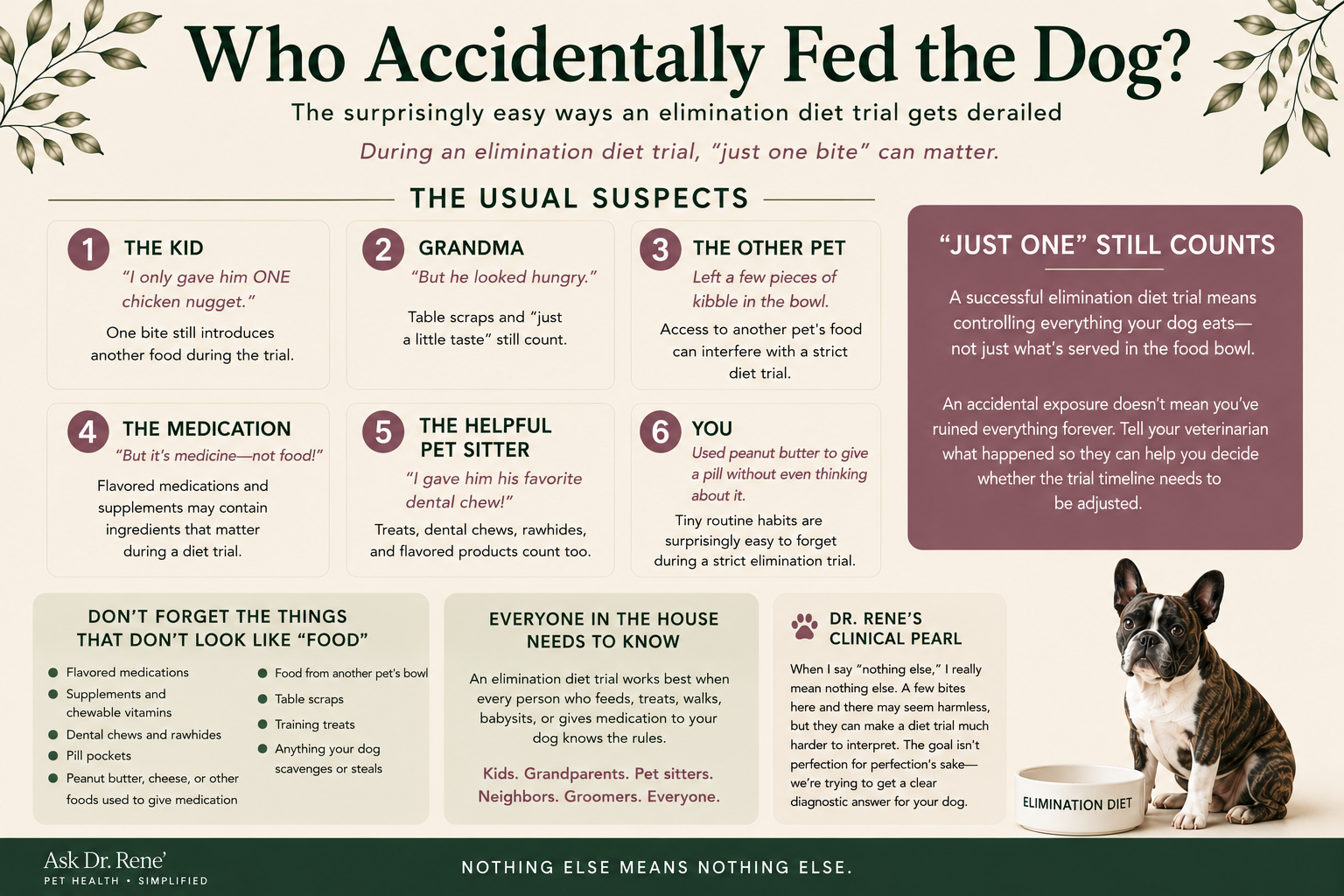
🚦 Can My Dog Have This?
One of the easiest ways to succeed with an elimination diet is to keep this simple rule in mind:
If you're not sure...ask before giving it.
🟢 Usually OK (when approved by your veterinarian)
- Prescription elimination diet
- Fresh water
- Approved hydrolyzed treats (if prescribed)
- Approved novel protein treats (if prescribed)
🟡 Ask Your Veterinarian First
- Heartworm prevention
- Flea and tick prevention
- Prescription medications
- Supplements
- Joint chews
- Dental products
- Pill pockets
- Toothpaste
Many of these products are flavored and may contain proteins that interfere with the diet trial.
🔴 Avoid During the Diet Trial
- Table food
- Commercial treats
- Dental chews
- Rawhides
- Pig ears
- Bones
- Peanut butter (unless specifically approved)
- Cheese
- Leftovers
- Other pets' food
- Food dropped by children
- Anything not specifically included in the diet plan
Remember...
One unauthorized treat can change the results of the entire trial.
An Easy Way to Think About It
Imagine you're taking a pregnancy test.
If someone changes the instructions halfway through, the result may no longer be reliable.
The same is true for an elimination diet.
Every unauthorized treat introduces another variable.
By the end of the trial, we may no longer know whether the diet truly worked.
What Happens If My Dog Improves?
This is where many owners accidentally stop too soon.
Improvement during the diet is encouraging...
But it doesn't confirm a food allergy.
To make the diagnosis, we perform a dietary challenge.
The Food Challenge
Once your dog has improved on the elimination diet, your veterinarian may recommend reintroducing the original food.
If the itching returns after reintroducing the previous diet—and improves again when the elimination diet resumes—that strongly supports the diagnosis of a food allergy.
Without the challenge, we can't confidently say whether the improvement resulted from the diet or from another factor.
Why Would We Intentionally Bring the Allergies Back?
This sounds strange at first.
After all...
Why would we purposely feed something that might make your dog itchy again?
Because medicine depends on evidence.
The challenge confirms that food—not coincidence—caused the improvement.
Although no owner enjoys seeing their dog itch again, this step provides the confidence needed to make lifelong dietary recommendations.
Common Mistakes That Cause Diet Trials to Fail
Most unsuccessful diet trials aren't caused by the diet itself.
They're caused by small, well-intentioned mistakes.
The most common include:
One of the biggest mistakes I see is assuming that because a food says:
- Limited Ingredient
- Grain-Free
- Natural
- Sensitive Skin
...it's automatically appropriate for an elimination diet.
Those are marketing terms.
They do not guarantee the food is suitable for diagnosing a food allergy.
Questions I Encourage Every Owner to Ask
- Why did you choose this diet?
- Should my dog eat a hydrolyzed or novel protein diet?
- Which treats are allowed?
- What about medications and heartworm prevention?
- How long should we continue?
- Will we perform a food challenge afterward?
Sometimes adjustments can be made without starting the trial over.
What Makes a Diet Trial Successful?
A successful elimination diet isn't measured by whether your dog likes the food.
It's measured by whether we obtain a reliable answer.
Success means:
- Every family member understands the rules.
- No unauthorized treats.
- Medications are reviewed.
- The trial lasts the full 8–12 weeks.
- Improvement is documented.
- A proper dietary challenge is completed.
Only then can we confidently determine whether food is contributing to your dog's allergies.
The Bottom Line
An elimination diet trial remains the only scientifically validated method for diagnosing food allergies in dogs.
Although it requires patience, commitment, and attention to detail, it provides information that no blood test, saliva test, hair analysis, or skin test can reliably deliver.
When performed correctly—with the right diet, strict adherence, and a properly timed food challenge—it allows veterinarians to determine whether food truly plays a role in your dog's allergies.
For many dogs, that answer changes the rest of their lives.
Key Takeaways
- Elimination diets are diagnostic tests, not simply new foods.
- Blood, saliva, hair, and skin tests do not reliably diagnose food allergies.
- Hydrolyzed and novel protein diets are the two primary approaches.
- The diet must be followed strictly for 8–12 weeks.
- Unauthorized treats, flavored medications, and table scraps can invalidate the trial.
- A dietary challenge is essential to confirm the diagnosis.
References & Further Reading
- Miller J, Simpson A, Bloom P, et al. 2023 AAHA Management of Allergic Skin Diseases in Dogs and Cats Guidelines. J Am Anim Hosp Assoc. 2023;59(6):255–284. doi:10.5326/JAAHA-MS-7396
- Olivry T, Mueller RS, Prélaud P. Critically appraised topic on adverse food reactions of companion animals (1): duration of elimination diets. BMC Vet Res. 2015;11:225. PMID: 26310322
- Mueller RS, Olivry T, Prélaud P. Critically appraised topic on adverse food reactions of companion animals (2): common food allergen sources in dogs and cats. BMC Vet Res. 2016;12:9. PMID: 26753610
- Mueller RS, Olivry T. Critically appraised topic on adverse food reactions of companion animals (4): can we diagnose adverse food reactions in dogs and cats with in vivo or in vitro tests? BMC Vet Res. 2017;13:275. PMID: 28854915
- Olivry T, Mueller RS. Critically appraised topic on adverse food reactions of companion animals (5): discrepancies between ingredients and labeling in commercial pet foods. BMC Vet Res. 2018;14:24. PMID: 29357847
- Olivry T, Mueller RS. Critically appraised topic on adverse food reactions of companion animals (9): time to flare of cutaneous signs after a dietary challenge in dogs and cats with food allergies. BMC Vet Res. 2020;16:158. PMID: 32448251
Next in this series
Canine Allergy Learning Center · Part 16 of 23
Part 17: Why Flea Prevention Is One of the Most Important Allergy Treatments Your Dog Will Ever Receive
Most owners of flea-allergic dogs never see a flea. Here's why one flea bite can cause weeks of itching, how flea allergy dermatitis is diagnosed, and why year-round prevention is allergy treatment.
Continue readingContinue Learning
The Three Types of Allergies in Dogs
Flea allergy, food allergy, and environmental allergy — how veterinarians tell them apart.
Read articleAllergy Testing: What It Can—and Can't—Tell You
Why environmental allergy testing does not diagnose allergies—and never diagnoses food allergy.
Read articleAllergy Shots for Dogs: Can We Actually Change the Disease?
Allergen-specific immunotherapy and what long-term environmental allergy management looks like.
Read articleWhy Does My Dog Keep Getting Skin Infections?
Secondary bacterial and yeast infections that often accompany allergic skin disease.
Read article