Allergy Learning Center · Part 19
Bathing an Allergy Dog: One of the Most Overlooked Allergy Treatments
How Bathing, Shampoos, Conditioners, Wipes, and Paw Care Can Help Control Allergies
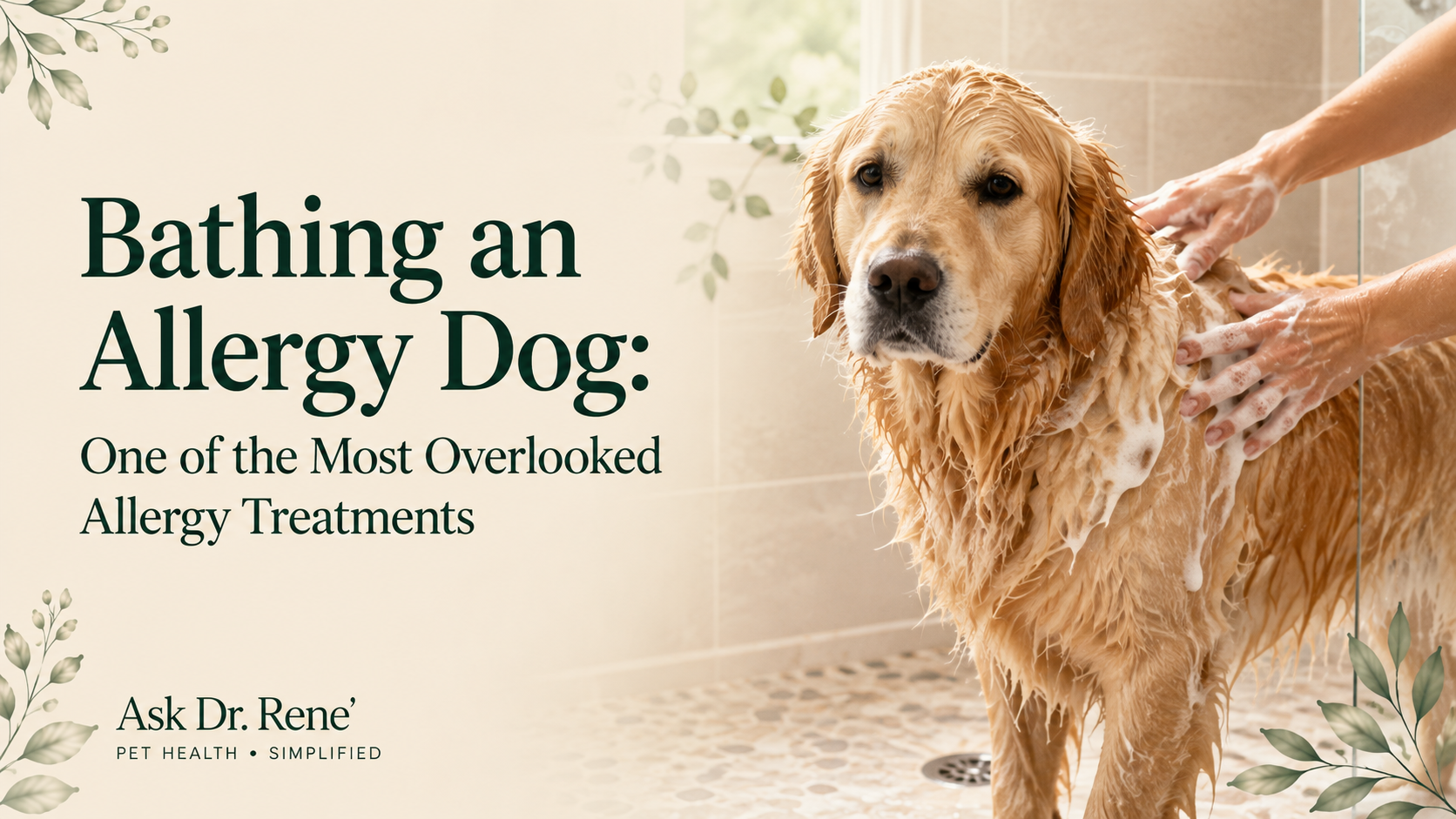
Many owners worry that bathing too often will dry out their dog's skin. In reality, when done correctly, bathing is one of the safest and most effective ways to help manage environmental allergies.
About an 8 minute read
"Am I Bathing My Dog Too Much?"
This is probably the most common bathing question I hear.
Many owners have been told:
"Don't bathe your dog too often—it dries out the skin."
Years ago...
That advice was often true.
Older shampoos could be very harsh and stripping.
Modern veterinary shampoos are different.
In fact...
For many allergy dogs, not bathing often enough causes far more problems than bathing too frequently.
Why Bathing Helps Allergy Dogs
Think about what happens after your dog spends an hour outside.
They roll in the grass.
Walk through weeds.
Lie in pollen.
Run through dust.
Those allergens don't simply disappear when they come back inside.
Many remain trapped within the coat until they're removed.
Bathing physically washes many of those allergens away.
That's one reason bathing is such an important part of managing allergic skin disease.
An Easy Way to Think About It
Imagine someone with seasonal pollen allergies.
If they spent all day outside covered in pollen...
Would it help to take a shower before bed?
Absolutely.
Dogs benefit from the same principle.
Bathing removes allergens before they continue irritating the skin.
The key isn't bathing less.
The key is using the right products.
How Often Should I Bathe My Dog?
There's no single schedule that's right for every dog.
As a general guideline:
- Mild allergies: every 2–4 weeks.
- Moderate allergies: every 1–2 weeks.
- Severe seasonal allergies: sometimes weekly, especially during peak pollen seasons.
The frequency depends on:
- Your dog's skin condition.
- The underlying allergy.
- The shampoo being used.
- Your veterinarian's recommendations.
My Favorite Allergy Bath Routine
One of the questions I get asked most often is:
"If this were your dog, what would you do?"
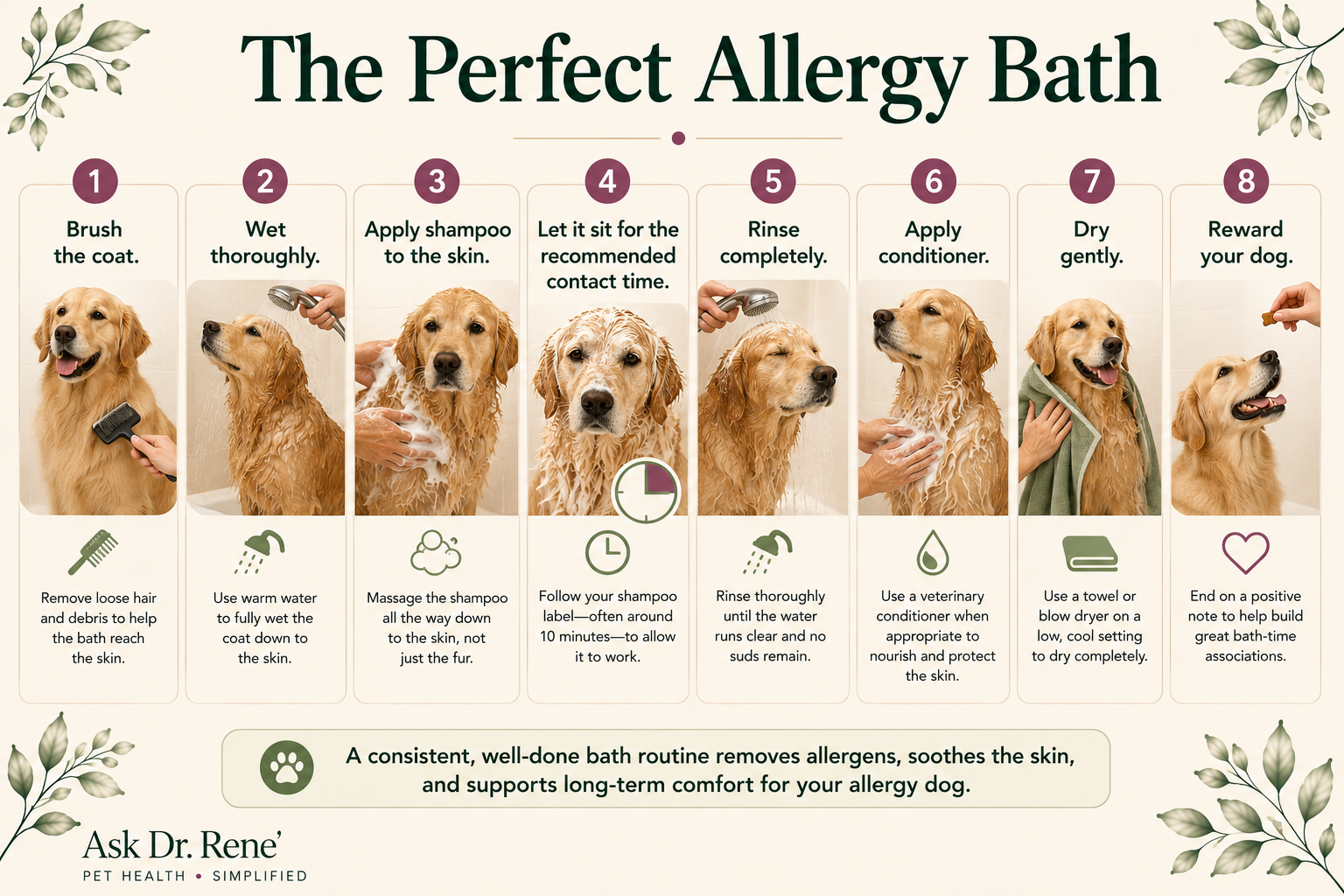
For most dogs with environmental allergies, my routine looks something like this:
During Allergy Season
- Bathe about once a week (or as recommended for your dog's specific condition).
- Use a high-quality veterinary shampoo selected for your dog's skin needs.
- Work the shampoo all the way down to the skin—not just the fur.
- Allow the shampoo to remain on the skin for the recommended contact time (often around 10 minutes, depending on the product).
- Rinse thoroughly.
- Follow with a veterinary conditioner if appropriate to help restore moisture and support the skin barrier.
Between Baths
- Wipe or rinse your dog's feet after walks.
- Clean the belly and lower legs if your dog has been lying in grass or rolling outside.
- Use allergy wipes on the face, paws, or other high-contact areas when needed.
During Heavy Pollen Seasons
If your dog has spent hours hiking, playing at the park, or running through fields, I often recommend an extra rinse or bath—even if it isn't your normal bathing day.
Removing allergens from the coat before they sit on the skin overnight can make a noticeable difference for some dogs.
Remember...
This isn't about making your dog cleaner.
It's about lowering the amount of pollen, dust, mold, and other allergens that stay in contact with the skin.
Choosing the Right Shampoo
Not every shampoo is designed for the same purpose.
Different dogs need different products.
Moisturizing shampoos
Helpful for:
- Dry skin
- Environmental allergies
- Sensitive skin
Antimicrobial shampoos
Designed to help manage:
- Bacterial infections
- Yeast infections
These often contain ingredients such as chlorhexidine, miconazole, ketoconazole, or other veterinarian-recommended antiseptic or antifungal agents. If your dog has recurrent bacterial or yeast skin infections, your veterinarian can guide which product is appropriate.
Medicated shampoos
Some dogs benefit from prescription shampoos specifically designed to address inflammation, infection, or scaling.
Your veterinarian can recommend the most appropriate option for your dog's skin condition.
Don't Skip the Conditioner
This is one of the most overlooked parts of bathing.
Many veterinary conditioners help:
- Restore moisture.
- Support the skin barrier.
- Reduce dryness.
- Improve coat quality.
- Soothe irritated skin.
For many allergy dogs, conditioner is just as important as the shampoo itself.
Let the Shampoo Sit
One of the biggest mistakes I see is rinsing the shampoo off too quickly.
Many medicated shampoos need:
10 minutes of contact time to work effectively.
If you rinse after one or two minutes, the active ingredients may not have enough time to do their job.
Always follow the instructions on the label or your veterinarian's recommendations.
Paw Washing and Paw Soaks
Your dog's feet are constantly collecting allergens.
Every walk through grass, weeds, or pollen-coated sidewalks leaves allergens between the toes and around the paw pads.
For many dogs, simply rinsing or wiping the feet after coming indoors can significantly reduce allergen exposure—one reason constant paw licking often improves with better skin care.
Some veterinarians also recommend medicated paw soaks or antiseptic rinses for dogs with recurrent yeast infections or bacterial infections.
Allergy Wipes
Not every dog needs a full bath.
Between baths, pet-safe allergy wipes can be useful for cleaning:
- Feet
- Legs
- Face
- Belly
These are especially helpful after walks or hikes when your dog has been exposed to large amounts of pollen or grass.
Should I Bathe After Hiking or Playing Outside?
Sometimes...
Yes.
If your dog has severe environmental allergies and spends hours outdoors during peak allergy season, an extra rinse or bath can remove large amounts of pollen before it has time to irritate the skin.
Even a quick rinse with water may help after heavy outdoor exposure.
Can I Use Human Shampoo?
Generally...
No.
Human shampoos are formulated for the pH of human skin, which is different from canine skin.
Using human products regularly can disrupt the skin barrier and contribute to irritation.
It's best to choose shampoos specifically formulated for dogs.
Questions I Encourage Every Owner to Ask
If your dog has allergies, ask your veterinarian:
- Which shampoo is best for my dog's skin?
- How often should I bathe my dog?
- Should I use conditioner?
- Would allergy wipes or paw soaks help?
- Does my dog need a medicated shampoo or simply a moisturizing one?
These signs often indicate that more than routine bathing is needed.
What Does Success Actually Look Like?
A good bathing routine won't cure allergies.
But over time, it often leads to:
- Less pollen on the skin.
- Fewer allergy flare-ups.
- Less foot chewing.
- Healthier skin.
- Fewer skin infections.
- Better response to allergy medications.
- A softer, healthier coat.
Every bath is another opportunity to reduce the amount of allergen sitting on your dog's skin.
The Bottom Line
Bathing is one of the simplest and most effective supportive treatments for dogs with environmental allergies.
When performed regularly with appropriate veterinary shampoos and conditioners, it helps remove allergens, reduce skin irritation, support the skin barrier, and improve overall skin health.
Although bathing won't cure allergies, it can significantly improve comfort and often enhances the effectiveness of other allergy treatments.
Key Takeaways
- Bathing removes allergens from your dog's skin and coat.
- Many allergy dogs benefit from weekly or every-other-week bathing during allergy season.
- Veterinary shampoos are much gentler than older products and are designed for canine skin.
- Conditioners help restore the skin barrier and should not be overlooked.
- Paw rinses, allergy wipes, and paw soaks reduce allergen exposure between baths.
- Proper technique—including adequate shampoo contact time—is just as important as the shampoo itself.
References & Further Reading
- Miller J, Simpson A, Bloom P, et al. 2023 AAHA Management of Allergic Skin Diseases in Dogs and Cats Guidelines. J Am Anim Hosp Assoc. 2023;59(6):255–284. doi:10.5326/JAAHA-MS-7396
- Olivry T, DeBoer DJ, Favrot C, Jackson HA, Mueller RS, Nuttall T, Prélaud P; International Committee on Allergic Diseases of Animals. Treatment of canine atopic dermatitis: 2015 updated guidelines from the International Committee on Allergic Diseases of Animals (ICADA). BMC Vet Res. 2015;11:210. PMID: 26276051
- Taguchi N, Onishi I, Iyori K, Hsiao YH. Preliminary evaluation of a commercial shampoo and fine bubble bathing in the treatment of canine atopic dermatitis: a single-blinded, randomised, controlled study. Vet Dermatol. 2024;35(4):400–407. PMID: 38418417
- Santoro D, Marsella R, Pucheu-Haston CM, Eisenschenk MNC, Nuttall T, Bizikova P. Review: Pathogenesis of canine atopic dermatitis: skin barrier and host-micro-organism interaction. Vet Dermatol. 2015;26(2):84-e25. PMID: 25683702
Next in this series
Canine Allergy Learning Center · Part 19 of 23
Part 20: Environmental Management for Allergy Dogs: How to Reduce Allergens at Home
You can't remove every allergen, but you can lower your dog's allergen load. Washing bedding, vacuuming, HEPA filters, humidity control, paw wiping, and flea prevention all add up.
Continue readingContinue Learning
Why Is My Dog So Itchy?
The science behind allergic skin disease and the skin barrier beneath the surface.
Read articleSkin Infections: Pyoderma vs. Yeast
Secondary bacterial and yeast infections that often follow allergic flare-ups.
Read articleHot Spots: Everything You Need to Know
Why acute moist dermatitis appears so suddenly, and how it's treated.
Read articleOmega-3 Fatty Acids for Skin Health
What the research says about fish oil, dosing, and what to expect.
Read article