Allergy Learning Center · Part 20
Environmental Management for Allergy Dogs: How to Reduce Allergens at Home
Simple Changes That Can Help Your Dog Breathe Easier, Itch Less, and Feel More Comfortable
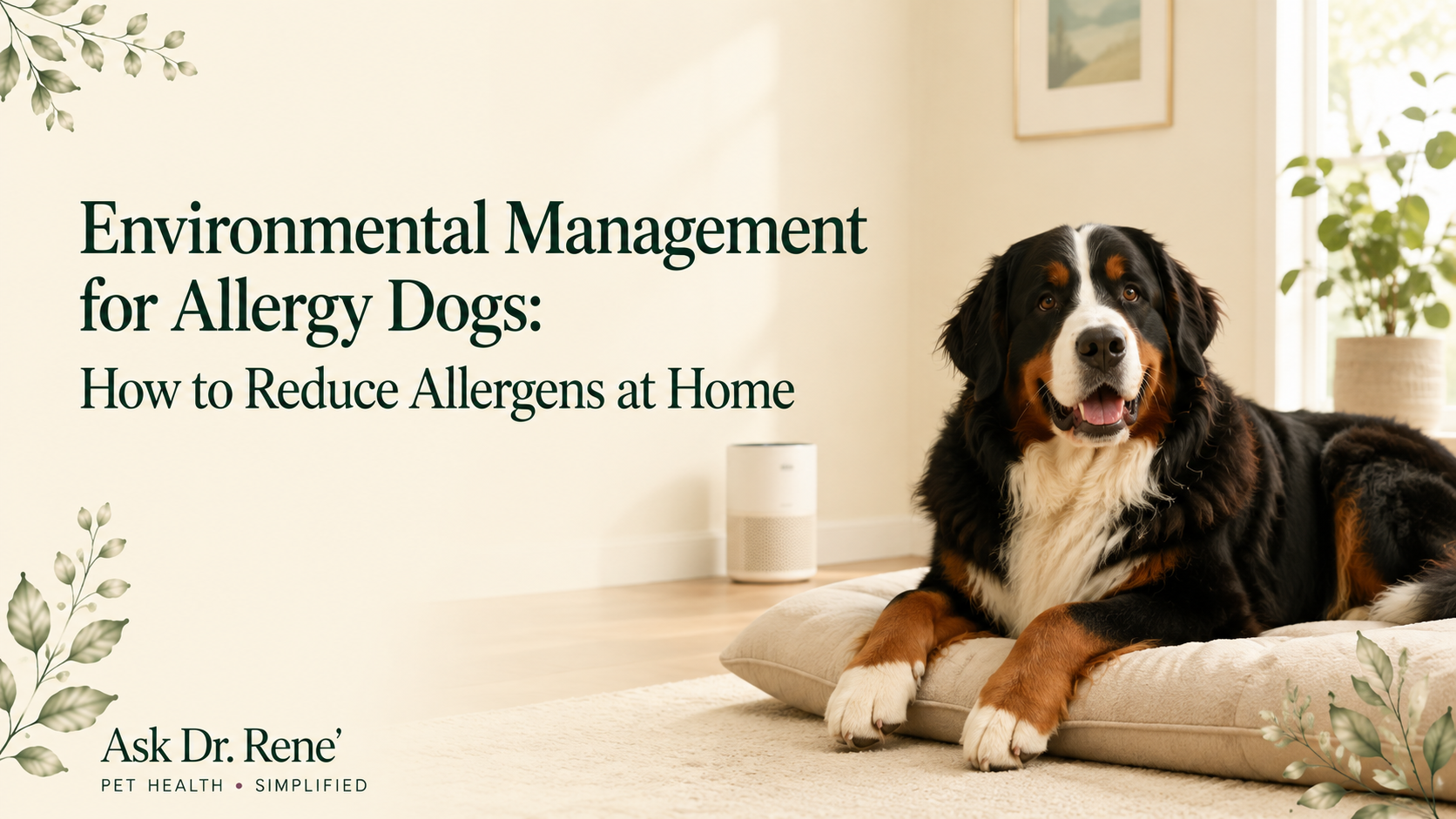
You can't eliminate every allergen from your dog's environment—but you can significantly reduce their exposure. Small changes around your home can make a big difference when combined with a comprehensive allergy treatment plan.
About an 8 minute read
"Can I Do Anything at Home to Help My Allergy Dog?"
Absolutely.
In fact...
Some of the most helpful allergy treatments don't come from a prescription bottle.
Many environmental allergens surround our dogs every day.
They collect in:
- Bedding
- Carpets
- Upholstered furniture
- Grass
- Pollen-coated fur
- Dust
- Air vents
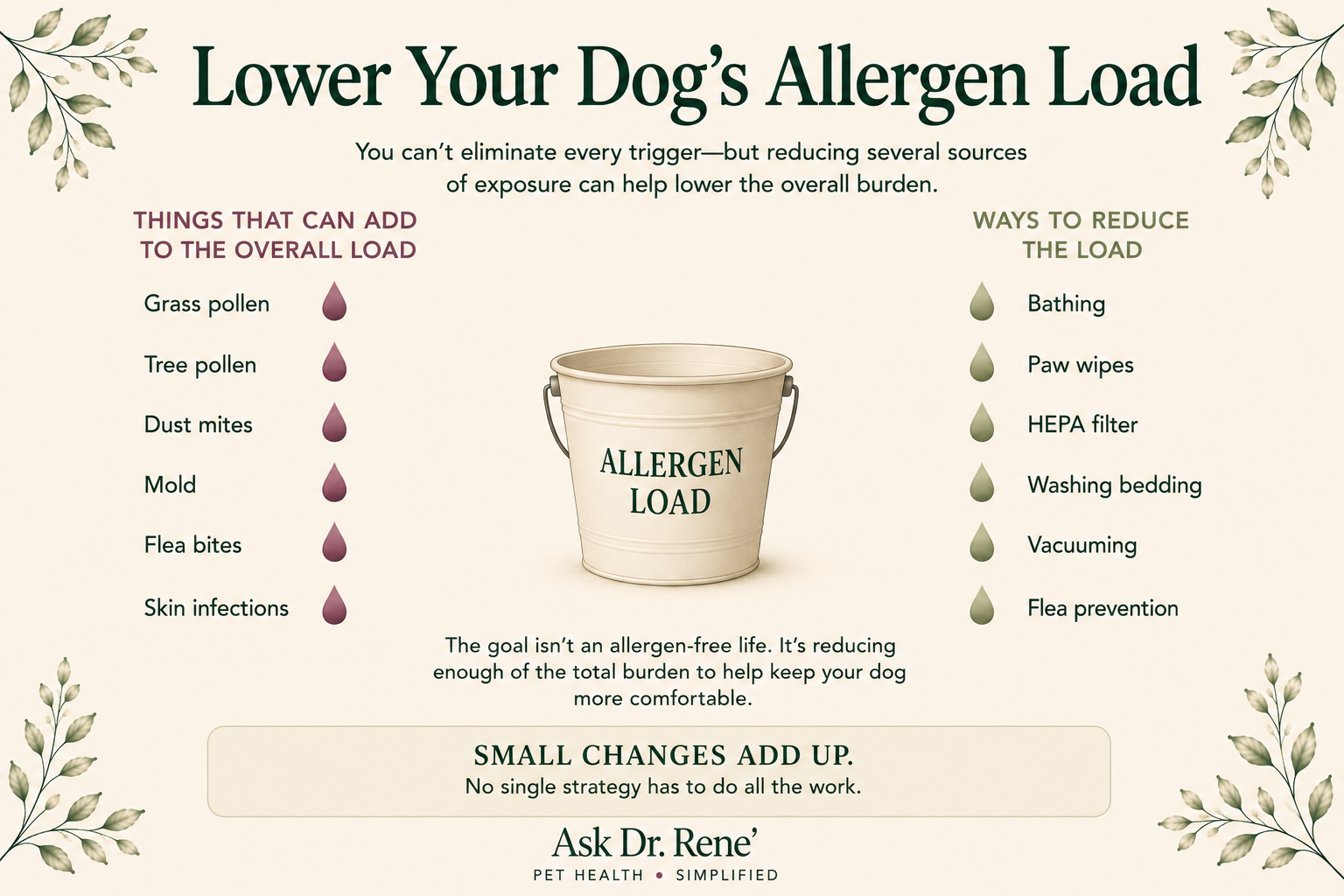
We can't eliminate every allergen.
But we can reduce the amount your dog's immune system has to deal with every day.
Why Environmental Management Matters
No single change is likely to "cure" your dog's allergies.
But when you combine:
- Medication
- Bathing
- Flea prevention
- Skin care
- Environmental management
The improvements often add up.
Think of it as giving your dog's immune system fewer things to react to each day.
An Easy Way to Think About It
Imagine carrying a heavy backpack.
Removing one book doesn't make it empty.
But removing:
- Five books
- Your laptop
- A water bottle
- A pair of shoes
Suddenly the backpack feels much lighter.
Environmental management works the same way.
Each change may be small.
Together they can make a meaningful difference.
Wash Your Dog's Bedding
Your dog's bed collects:
- Pollen
- Dust
- Hair
- Dead skin cells
- Dirt
- Environmental debris
Washing bedding regularly removes many of these allergens before they continue contacting the skin.
I generally recommend washing bedding weekly during peak allergy seasons whenever practical.
Choose fragrance-free detergents whenever possible if your dog has particularly sensitive skin.
Vacuum Frequently
Carpet acts like a giant allergen reservoir.
Dust mites, pollen, dead skin cells, and environmental debris settle into carpet fibers.
Vacuuming regularly helps reduce that allergen load.
If possible:
- Vacuum high-traffic areas several times each week.
- Pay extra attention to rugs and upholstered furniture where your dog spends time.
Consider a HEPA Filter
A high-quality HEPA air purifier won't remove every allergen.
But it can reduce:
- Airborne dust
- Pollen
- Mold spores
- Dander
They're especially helpful in rooms where your dog spends most of their time, such as the bedroom or family room.
Control Indoor Humidity
Dust mites and mold thrive in humid environments.
Keeping indoor humidity at a moderate level (generally around 30–50%) may help reduce their growth.
If you live in a particularly humid climate, a dehumidifier can be a helpful addition to your allergy management plan.
Reduce Grass and Pollen Exposure
Grass pollen is one of the most common environmental allergens affecting dogs.
That doesn't mean your dog can never play outside.
Instead, try to reduce unnecessary exposure.
Helpful strategies include:
- Avoiding freshly mowed lawns when possible.
- Limiting outdoor activity during very high pollen days if your dog's allergies are severe.
- Rinsing or wiping your dog's feet after walks.
- Bathing after heavy outdoor activity during peak allergy season.
For technique and frequency, see bathing an allergy dog.
Wipe the Paws
Every walk brings allergens back into your home.
A simple paw wipe or quick rinse after coming inside removes:
- Grass pollen
- Weed pollen
- Dirt
- Mold spores
For many allergy dogs, this small habit becomes one of the easiest ways to reduce daily allergen exposure.
Don't Forget the Belly
Dogs don't just walk through allergens.
They lie in them.
If your dog enjoys rolling in the grass or relaxing outdoors, gently wiping or rinsing the belly and lower legs after outdoor play can also help.
Keep Up with Flea Prevention
Even if your dog's primary allergy is environmental...
Flea bites add to the overall allergen load.
That's why flea prevention is especially important for dogs with allergies, and why year-round prevention remains an important part of environmental management.
Questions I Encourage Every Owner to Ask
If your dog has environmental allergies, ask your veterinarian:
- Should I bathe my dog more often during allergy season?
- Would a HEPA filter help in my situation?
- How often should I wash bedding?
- Would paw wipes be beneficial?
- Are there certain outdoor activities we should modify during peak pollen seasons?
My Favorite Environmental Routine
If this were my own dog with environmental allergies, my routine would probably look something like this:
Every Day
- Wipe or rinse the feet after walks.
- Check between the toes for redness or debris.
- Keep up with year-round flea prevention.
Every Week
- Wash the dog's bedding.
- Vacuum areas where the dog spends the most time.
- Give a bath if recommended for that dog's allergy plan.
During Heavy Pollen Seasons
- Wipe the belly and legs after outdoor play.
- Consider an extra bath after long hikes or outdoor adventures.
- Keep windows closed on very high pollen days if practical.
- Run a HEPA air purifier in the room where the dog sleeps.
Remember...
You don't have to do everything perfectly.
Doing several small things consistently often produces better results than trying one dramatic change.
The Bottom Line
Environmental management is one of the safest and most effective ways to support dogs with environmental allergies.
While it won't cure allergic disease, reducing your dog's exposure to pollen, dust mites, mold, and other allergens can decrease overall allergen load and improve the effectiveness of other treatments.
Small, consistent habits often produce the biggest long-term results.
Key Takeaways
- You can't eliminate every allergen, but you can reduce your dog's overall allergen load.
- Wash bedding weekly during allergy season.
- Vacuum frequently, especially where your dog spends the most time.
- Consider a HEPA air purifier for commonly used rooms.
- Wipe or rinse paws after walks.
- Rinse the belly after heavy grass exposure.
- Maintain year-round flea prevention.
- Environmental management works best when combined with medical treatment.
References & Further Reading
- Miller J, Simpson A, Bloom P, et al. 2023 AAHA Management of Allergic Skin Diseases in Dogs and Cats Guidelines. J Am Anim Hosp Assoc. 2023;59(6):255–284. doi:10.5326/JAAHA-MS-7396
- Nuttall TJ, Hill PB, Bensignor E, Willemse T. House dust and forage mite allergens and their role in human and canine atopic dermatitis. Vet Dermatol. 2006;17(4):223–235. PMID: 16827665
- Marsella R, De Benedetto A. Update on the role of genetic factors, environmental factors and allergens in canine atopic dermatitis. Vet Dermatol. 2023. PMID: 37840229
- Santoro D, Marsella R, Pucheu-Haston CM, Eisenschenk MNC, Nuttall T, Bizikova P. Review: Pathogenesis of canine atopic dermatitis: skin barrier and host-micro-organism interaction. Vet Dermatol. 2015;26(2):84-e25. PMID: 25683702
Next in this series
Canine Allergy Learning Center · Part 20 of 23
Part 21: How I Build an Allergy Treatment Plan: A Veterinarian's Decision Tree
Every allergy dog is different. How veterinarians evaluate itching, rule out fleas and infections, decide on food trials, and build individualized treatment plans step by step.
Continue readingContinue Learning
Bathing an Allergy Dog: One of the Most Overlooked Allergy Treatments
How bathing removes allergens, why contact time matters, and how conditioners and wipes fit in.
Read articleWhy Flea Prevention Is One of the Most Important Allergy Treatments
Flea allergy dermatitis, the flea life cycle, and why year-round prevention matters.
Read articleThe Three Types of Allergies in Dogs
Environmental, flea, and food allergies — how veterinarians tell them apart.
Read articleWhy Is My Dog So Itchy?
The science behind allergic skin disease and the skin barrier beneath the surface.
Read article