
Recognizing Arthritis: The Signs Your Pet May Be Trying to Tell You
Arthritis rarely announces itself. Learn the quiet changes in movement, behavior, and daily habits that dogs and cats use to tell us they hurt.
Most pets with arthritis never cry or limp dramatically. They simply stop doing the things they love. Learn the subtle signs of joint pain in dogs and cats, why pets hide discomfort, and when it is time to schedule a veterinary examination.

Quick answer
In this article you'll learn
- Why dogs and cats instinctively hide chronic pain
- Why arthritis pain often does not look like pain
- The subtle at-home signs of arthritis in dogs
- The quiet changes that signal arthritis in cats
- How chronic pain changes behavior and personality
- When it is time to schedule a veterinary examination
Introduction
One of the hardest things about arthritis is that it rarely appears overnight.
Most pets don't wake up one morning suddenly unable to walk. Instead, the changes happen so gradually that many families don't notice them until months—or even years—later.
Owners often tell me:
"I thought he was just getting older."
Or...
"She's always been a lazy cat."
The truth is that many pets spend a long time quietly adapting to chronic pain. Dogs often become less active to avoid discomfort, while cats become masters at hiding it.
Recognizing these subtle changes is one of the most important things you can do because arthritis is much easier to manage when treatment begins early.
Why Pets Hide Pain
This surprises many people.
If something hurts us, we usually let someone know. We limp dramatically, complain about it, or simply rest until we feel better.
Our pets don't.
Dogs and cats evolved as both predators and prey. In the wild, showing weakness could make them vulnerable. As a result, many animals instinctively hide pain for as long as possible.
That means by the time your pet is obviously limping, crying, or struggling to stand, they may have been living with chronic pain for a very long time.
Pain Doesn't Always Look Like Pain
One of the biggest misconceptions about arthritis is that pain always looks dramatic.
Most arthritic pets don't cry.
Many don't limp every day.
Some never limp at all.
Instead, pain quietly changes daily habits. Pets begin avoiding activities that have become uncomfortable, choosing easier options without us realizing why. Because these changes happen so gradually, they're easy to mistake for normal aging.
Rather than asking whether your pet is limping, try asking yourself a different question:
What has my pet stopped doing that they used to love?
That single question often uncovers the earliest signs of arthritis long before an obvious limp develops.

Recognizing Arthritis in Dogs

One of the biggest misconceptions about arthritis is that every dog with joint pain develops an obvious limp.
While some dogs certainly do, many don't—especially in the early stages. Instead, the first signs are often so subtle that families adapt to them without realizing anything is wrong.
They shorten walks because their dog seems tired.
They lift them into the car instead of asking them to jump.
They stop throwing the tennis ball quite as far.
Before long, both the dog and the family have quietly adjusted to the arthritis without recognizing it.
One of the most important things you can do is notice these small changes early. The sooner arthritis is recognized, the sooner we can begin treating pain and helping your dog stay active and comfortable.
Dogs Don't Always Limp
Many dogs with arthritis never develop a constant limp.
Instead, they often become stiff after resting. You may notice your dog getting up slowly after a nap, taking a few stiff steps, and then seeming to "walk out of it."
This pattern is incredibly common with arthritis. After resting, joints become stiff and uncomfortable. Once your dog begins moving, joint fluid circulates more effectively, muscles warm up, and movement becomes a little easier.
That temporary improvement doesn't mean the arthritis has gone away—it simply means the joints have loosened up.
Changes You May Notice at Home
Arthritic dogs often begin making small adjustments to avoid painful movements. Because these changes happen gradually, they're easy to dismiss as "just getting older."
Watch for signs such as:
- Taking longer to stand after lying down
- Walking stiffly, especially first thing in the morning
- Hesitating before climbing stairs
- Stopping halfway up the stairs to rest
- Avoiding stairs they once climbed easily
- Pausing before jumping into the car
- No longer jumping onto the bed or couch
- Walking more slowly than they used to
- Lagging behind on walks instead of leading
- Wanting to head home sooner than usual
- Sitting or lying down more frequently during walks
- Slipping on hardwood or tile floors
- Having difficulty sitting, lying down, or squatting
- Frequently stretching after getting up
- Standing with more weight on one side
- Licking or chewing at a particular joint
- Sleeping more than usual
- Becoming less interested in fetch or other favorite games
Arthritis Changes Behavior Too
Pain doesn't just affect how a dog moves—it also affects how they interact with the world around them.
Many dogs become quieter or less playful. Others become clingier, seeking reassurance from their family. Some become irritable when touched around sore joints, while others stop greeting visitors at the door because getting up has become uncomfortable.
You may notice your dog:
- Choosing to stay in one room instead of following you around the house
- Wanting shorter walks
- Becoming reluctant to play with other dogs
- Showing less enthusiasm for favorite routines
- Avoiding being picked up or hugged
- Seeming "grumpy" when handled
Many owners describe these as personality changes.
In reality, they are often signs of chronic pain.
Watch for Hesitation
One word I listen for during arthritis appointments is hesitation.
Owners say things like:
"He stands there looking at the car before deciding whether to jump."
"She walks up to the couch and just stares at it."
"He used to fly up the stairs. Now he has to think about it first."
That brief pause tells us a lot.
Your dog isn't deciding whether they want to jump.
They're deciding whether it's worth the discomfort.
Sometimes they'll jump anyway.
Sometimes they won't.
Either way, hesitation is often one of the earliest clues that arthritis is developing.
Large Dogs Often Hide Arthritis Surprisingly Well
Many large-breed dogs continue doing everything they're asked to do simply because they want to please their families.
Labradors still chase the ball.
Golden Retrievers still greet visitors with wagging tails.
German Shepherds still follow their people from room to room.
But just because they can do those things doesn't mean they aren't painful.
Dogs are remarkably stoic. Many continue pushing through discomfort until it becomes too great to ignore.
When Should You Schedule an Appointment?
You don't have to wait until your dog can barely stand.
If you've noticed several of these changes—even if they seem mild—it's worth having your veterinarian perform an orthopedic examination.
Early treatment can:
- Reduce pain before it becomes severe
- Preserve muscle mass and strength
- Improve mobility
- Slow the cycle of inactivity and stiffness
- Help your dog stay active and comfortable for years to come
One of the most rewarding things I hear from owners after starting treatment is:
"I didn't realize how much pain my dog was in until I saw how much happier they became."
Recognizing Arthritis in Cats
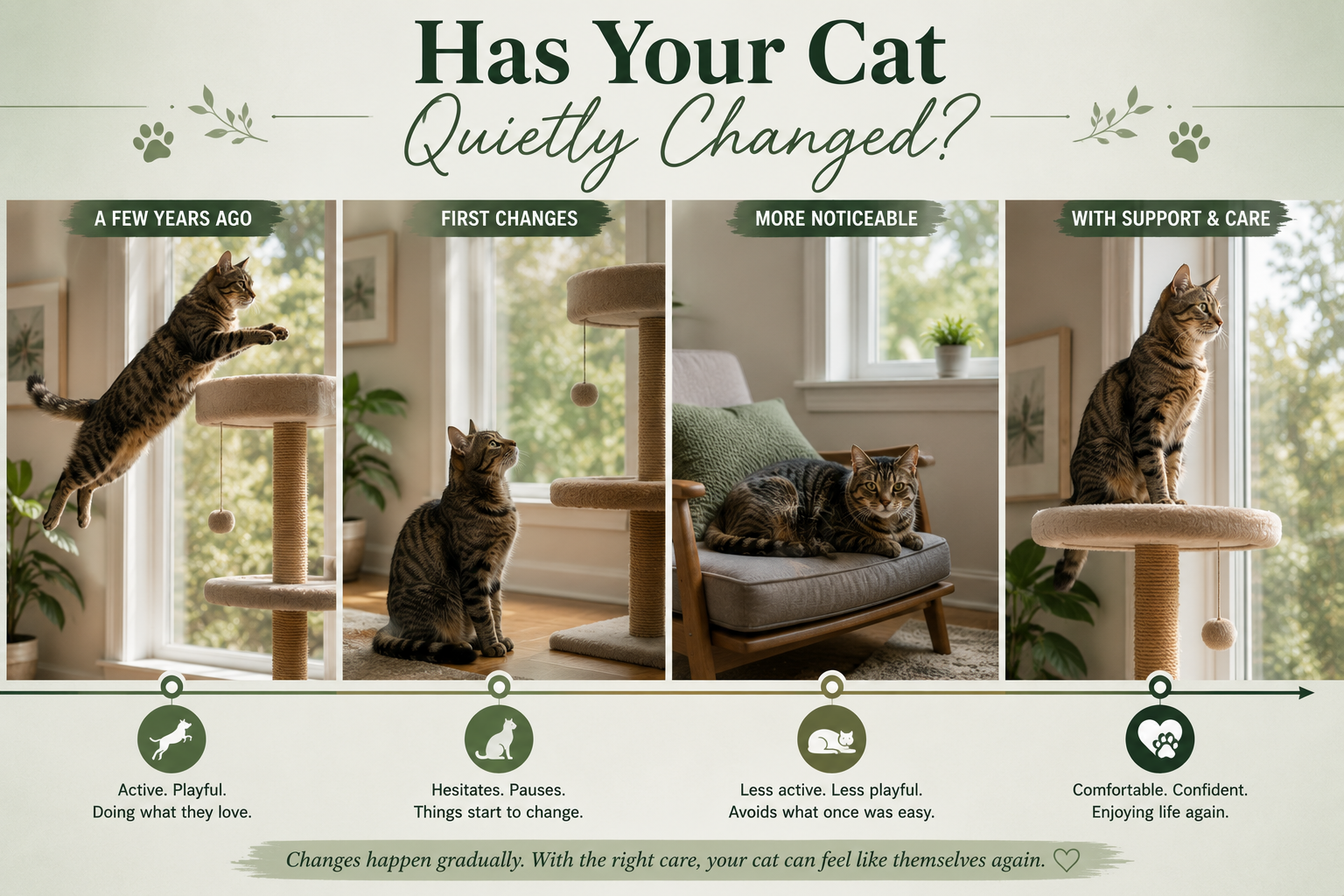
Cats experience arthritis just as commonly as dogs, but they rarely show it in the same way.
Unlike dogs, cats almost never develop an obvious limp or cry out in pain. Instead, they quietly change the way they live. Because these changes happen so gradually, many owners assume their cat is simply "slowing down" with age.
In reality, many cats have been adapting to chronic pain for months—or even years.
One of the biggest challenges in feline arthritis is recognizing what your cat has stopped doing rather than what they are doing.
Cats Don't Show Pain the Way Dogs Do
Cats have evolved to hide signs of weakness. In the wild, appearing injured could make them vulnerable, and that instinct remains—even for the pampered house cat sleeping on your couch.
Rather than showing obvious pain, cats simply begin avoiding movements that have become uncomfortable.
They don't usually complain.
They don't usually limp.
They simply make different choices.
Many owners don't realize anything is wrong until treatment begins and suddenly their cat starts acting years younger.
Watch Where Your Cat Chooses to Go
One of the easiest ways to recognize arthritis is to pay attention to where your cat spends their time.
Healthy cats naturally seek high places. They enjoy climbing cat trees, jumping onto windowsills, perching on bookshelves, and finding the highest spot in the house.
As arthritis develops, many cats slowly begin choosing lower, easier places to rest. They may still want to reach those favorite spots, but climbing and jumping have become uncomfortable.
Some cats begin using chairs, stools, or other furniture as "stepping stones" instead of making one effortless leap.
These small changes are often among the earliest signs of arthritis.
Changes You May Notice at Home
Cats with arthritis often make subtle adjustments that can easily be mistaken for normal aging.
Watch for changes such as:
- Jumping onto lower surfaces instead of higher ones
- Hesitating before jumping
- Pulling themselves up instead of making one smooth leap
- Using furniture as steps to reach higher places
- Spending more time resting
- Playing less than they once did
- Chasing toys for shorter periods
- Becoming less curious about their surroundings
- Staying in one room instead of exploring the house
- Avoiding stairs
- Choosing easier resting places
- Reduced interest in climbing cat trees
- Difficulty getting onto windowsills
Because these changes happen gradually, many families don't recognize them until they look back after treatment has begun.
Grooming Changes Can Be an Important Clue
Cats are meticulous groomers.
When bending, twisting, or lifting a hind leg becomes painful, grooming becomes more difficult.
You may notice:
- Matted fur over the lower back
- A greasy hair coat
- Dandruff along the spine
- Less grooming around the hips
- An overall unkempt appearance
Many owners assume these changes are simply part of aging.
Often, grooming has become uncomfortable.
Litter Box Problems May Be a Sign of Pain
One of the most misunderstood signs of arthritis is a cat that suddenly begins having litter box accidents.
Owners sometimes assume it's a behavioral problem.
In many cases, it's actually a mobility problem.
Your cat may struggle to:
- Step over the side of the litter box
- Squat comfortably
- Maintain their balance while urinating
- Climb into a covered litter box
Some cats begin eliminating beside the litter box—not because they're being stubborn, but because getting inside has become painful.
Arthritis Can Change Your Cat's Personality
Pain doesn't just affect movement.
It affects mood, confidence, and daily interactions.
Cats living with chronic discomfort may become:
- Less social
- More withdrawn
- Irritable when picked up
- Less tolerant of petting over the back or hips
- Easier to startle
- Less interested in playing
- More likely to hide
- Sleep more than they once did
Many owners describe these changes as "just getting older."
Very often, they're signs of chronic pain.
One of My Favorite Follow-Up Appointments
One of the most rewarding conversations I have is after a cat has started arthritis treatment.
Owners often tell me:
"She's on the top of the cat tree again."
"He's playing with toys I haven't seen him touch in years."
"She started greeting us at the door again."
"He's grooming himself again."
Those moments are incredibly rewarding because they remind us that arthritis doesn't just take away movement.
It quietly steals quality of life.
When Should You Schedule an Appointment?
If you've noticed any of these changes, don't assume they're simply part of getting older.
A veterinary examination can help determine whether arthritis—or another medical condition—is contributing to those changes.
The earlier arthritis is recognized, the more options we have to keep your cat comfortable, active, and enjoying life.
Why Chronic Pain Changes Behavior
One of the biggest misconceptions about arthritis is that pets only show pain when they cry, limp, or refuse to walk.
In reality, chronic pain usually changes behavior long before it causes obvious mobility problems.
Think about how you feel after sleeping in an uncomfortable position. You may move a little more slowly getting out of bed, hesitate before taking the stairs, or decide to skip a long walk because you're stiff.
Now imagine feeling that way every single day.
That's what many dogs and cats with arthritis experience.
Rather than telling us they're hurting, they simply begin making different choices. They choose the easier path, avoid movements that have become uncomfortable, and conserve energy whenever possible.
Over time, those small adjustments become their "new normal." Because the changes happen gradually, they're easy for families to overlook.
Pain Changes Decisions, Not Just Movement
Pets don't wake up one morning and decide they no longer enjoy playing fetch, climbing the cat tree, or jumping onto the couch.
Instead, they begin asking themselves a different question:
"Is this worth the discomfort?"
Maybe yesterday they jumped onto the couch without hesitation.
Today they pause for a moment.
Next month they ask for help.
Eventually, they stop trying altogether.
The same thing happens with stairs, getting into the car, climbing onto beds, chasing favorite toys, or greeting you at the door.
The activity hasn't lost its appeal.
It has simply become painful.
Arthritis Often Looks Like "Slowing Down"
One of the most common things I hear in the exam room is:
"I thought he was just getting older."
Or...
"She's always been a lazy cat."
The truth is that aging and arthritis often occur together, but they are not the same thing.
A healthy senior pet may sleep a little more or move a little slower than they did as a puppy or kitten.
A pet with arthritis, however, begins avoiding activities they once loved because those activities have become uncomfortable.
That's an important difference.
Growing older is normal.
Living with untreated pain is not.
Chronic Pain Is Exhausting
Pain doesn't just affect the joints.
It affects the entire body.
When every step requires more effort, pets naturally use more energy simply getting through the day.
Over time, many pets with arthritis become:
- Less playful
- More tired
- Less interested in exercise
- More withdrawn
- More irritable
- Less engaged with their families
Some owners worry that their pet is "losing their personality."
In reality, chronic pain may simply be preventing them from enjoying life the way they once did.
One of the Most Rewarding Parts of My Job
One of the most rewarding moments in practice is hearing an owner say,
"I didn't realize how painful my pet was until after we started treatment."
When pain is properly managed, many pets begin doing things their families thought they had simply outgrown.
They start playing with toys again.
They jump back onto the couch.
They greet people at the door.
They ask for longer walks.
They climb to the top of the cat tree.
Those changes aren't miracles.
They're reminders of who that pet always was beneath the pain.
Quality of Life Doesn't Have to Wait
Many owners worry that starting arthritis treatment means admitting their pet is "old."
I see it differently.
Treating arthritis isn't about giving up.
It's about helping your pet keep doing the things they love for as long as possible.
The earlier we recognize pain, the more opportunities we have to slow the cycle of discomfort, muscle loss, and declining mobility.
Our goal isn't simply to help pets live longer.
It's to help them live better.
Could Your Pet Be Telling You They're in Pain?
Ask yourself these questions:
- Has your pet stopped doing something they used to love?
- Do they hesitate before jumping or climbing stairs?
- Are they slower getting up after resting?
- Do they seem less excited for walks or playtime?
- Has their personality changed over the past year?
- Are they sleeping more than they used to?
- Do they avoid slippery floors?
- Have they become grumpy when touched or picked up?
If you answered yes to one or more of these questions, it's worth scheduling a veterinary examination.
Arthritis isn't the only possible cause of these changes, but it's one of the most common—and one of the most treatable.
Frequently asked questions
Educational only. This article is not a substitute for veterinary care. If your pet is unwell, please contact your veterinarian.
Next in this series
Arthritis Learning Series · Part 2 of 16
Part 3: How Is Arthritis Diagnosed?
How do veterinarians know it's really arthritis? Diagnosis comes from putting the pieces together: your story, the physical examination, gait evaluation, and—when appropriate—X-rays. Learn what each step reveals and why early diagnosis matters.
Continue readingKeep reading
Arthritis in Dogs and Cats: What Every Pet Owner Should Know
Arthritis is one of the most common causes of chronic pain in dogs and cats, yet the earliest signs are often mistaken for normal aging. Learn what happens inside an arthritic joint, which pets are at risk, and how early treatment can protect comfort and mobility.
Read DiseasesHome Modifications for Arthritis: A Home That Works With Your Pet
Your pet's home environment can be as important as medication. Learn room-by-room changes — non-slip rugs, supportive beds, ramps, accessible bowls and litter boxes, and support harnesses — that make everyday life easier for arthritic pets.
Read DiseasesLibrela® for Dogs: A New Way to Treat Arthritis Pain
Librela® is a monthly injection that blocks Nerve Growth Factor to reduce arthritis pain in dogs. Learn how it works, who it helps, what to expect, and the reported side effects to discuss with your veterinarian.
ReadKeep learning with Dr. Rene'
Browse the library, search another topic, or ask a question of your own.
Continue your journey
Loved this? Here's what to do next.
Every visit is a chance to understand your pet a little better. Pick your next step.
Explore the Learning Center
Browse evidence-based articles about symptoms, diseases, medications, treatments, preventive care, and more.
Explore ArticlesWatch Dr. Rene'
Prefer to watch instead of read? Explore practical veterinary education videos from Dr. Rene'.
Watch VideosGet Free Resources
Explore practical veterinary guides, checklists, and tools designed to help pet owners feel more informed and prepared.
Browse Free ResourcesProducts I Recommend
Browse pet products, supplies, and everyday essentials selected and recommended by Dr. Rene'.
See My RecommendationsEducational consultation
Want help understanding a diagnosis, test results, medications, or treatment options? Book educational guidance with Dr. Rene'. This does not replace veterinary care.
Learn more