
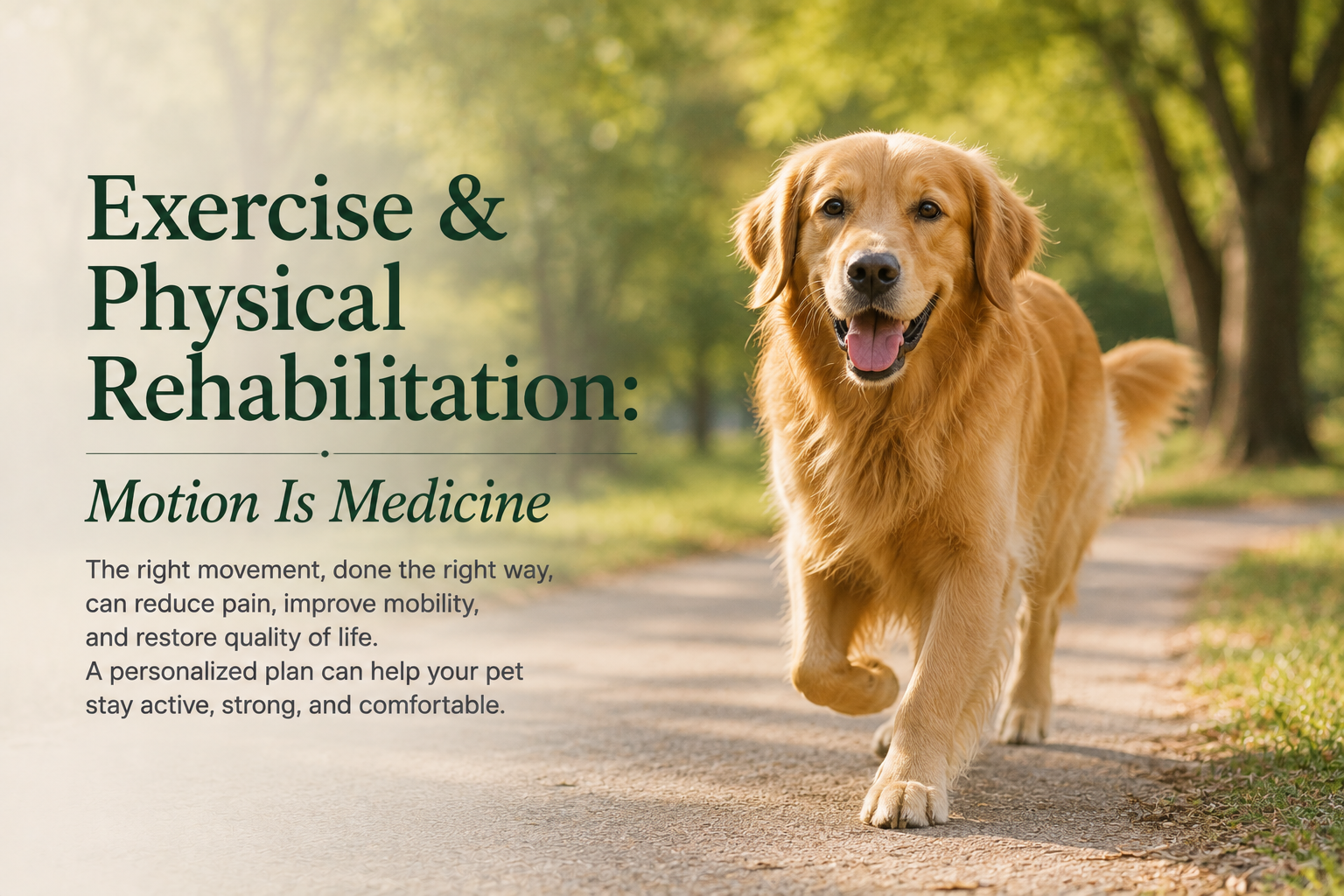
Exercise & Physical Rehabilitation: Motion Is Medicine
Too much rest often makes arthritis worse. Learn how gentle, consistent, low-impact movement keeps arthritic pets stronger and more comfortable.
For most pets with arthritis, the goal isn't less movement—it's better movement. Learn which activities help, how physical rehabilitation and laser therapy fit in, how to exercise a cat, and when to stop.
Quick answer
In this article you'll learn
- Why too much rest makes arthritis worse
- How gentle movement helps joints, muscles, and balance
- Why consistency beats occasional intense activity
- Which low-impact activities are best for arthritic pets
- What physical rehabilitation and laser therapy involve
- How to encourage movement in cats
- Warning signs that exercise was too much
One of the biggest misconceptions about arthritis is that painful joints should be rested as much as possible.
While it may seem logical, too much rest often makes arthritis worse, not better.
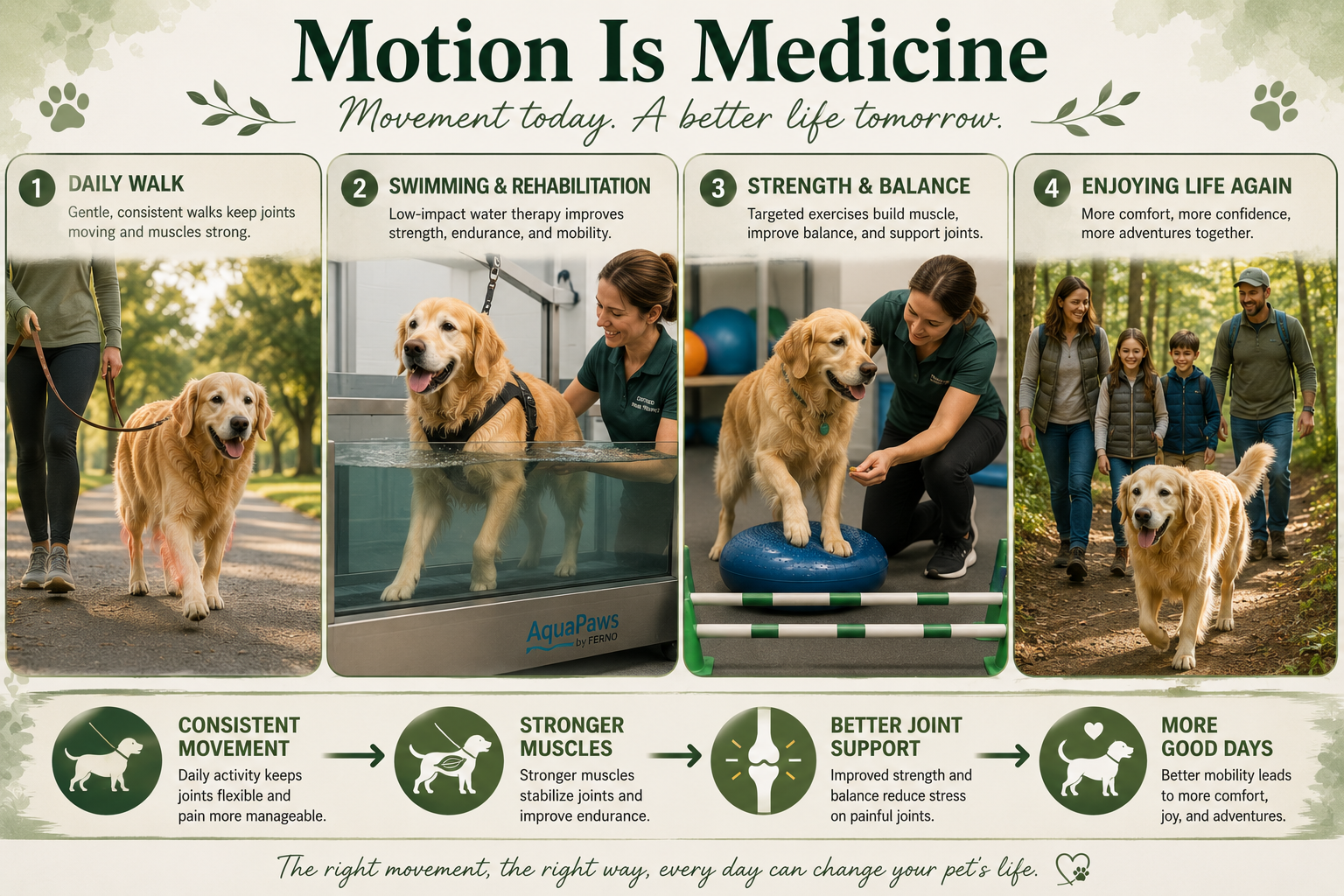
Healthy movement keeps joints flexible, strengthens muscles, improves balance, and helps maintain a healthy weight. Without regular activity, muscles weaken, joints become stiffer, and even simple activities become more difficult.
For most pets with arthritis, the goal isn't less movement—it's better movement.
Why Movement Matters
Think about how you feel after sitting through a long flight or spending hours in the car.
When you first stand up, you're probably stiff.
After walking for a few minutes, your body loosens up and moving becomes easier.
Many dogs and cats with arthritis experience the same thing every day.
Gentle movement helps:
- Lubricate the joints
- Improve flexibility
- Maintain muscle mass
- Improve balance and coordination
- Support healthy weight
- Reduce stiffness
- Improve overall quality of life
That's why controlled exercise is one of the cornerstones of arthritis management.
The Goal Is Consistency
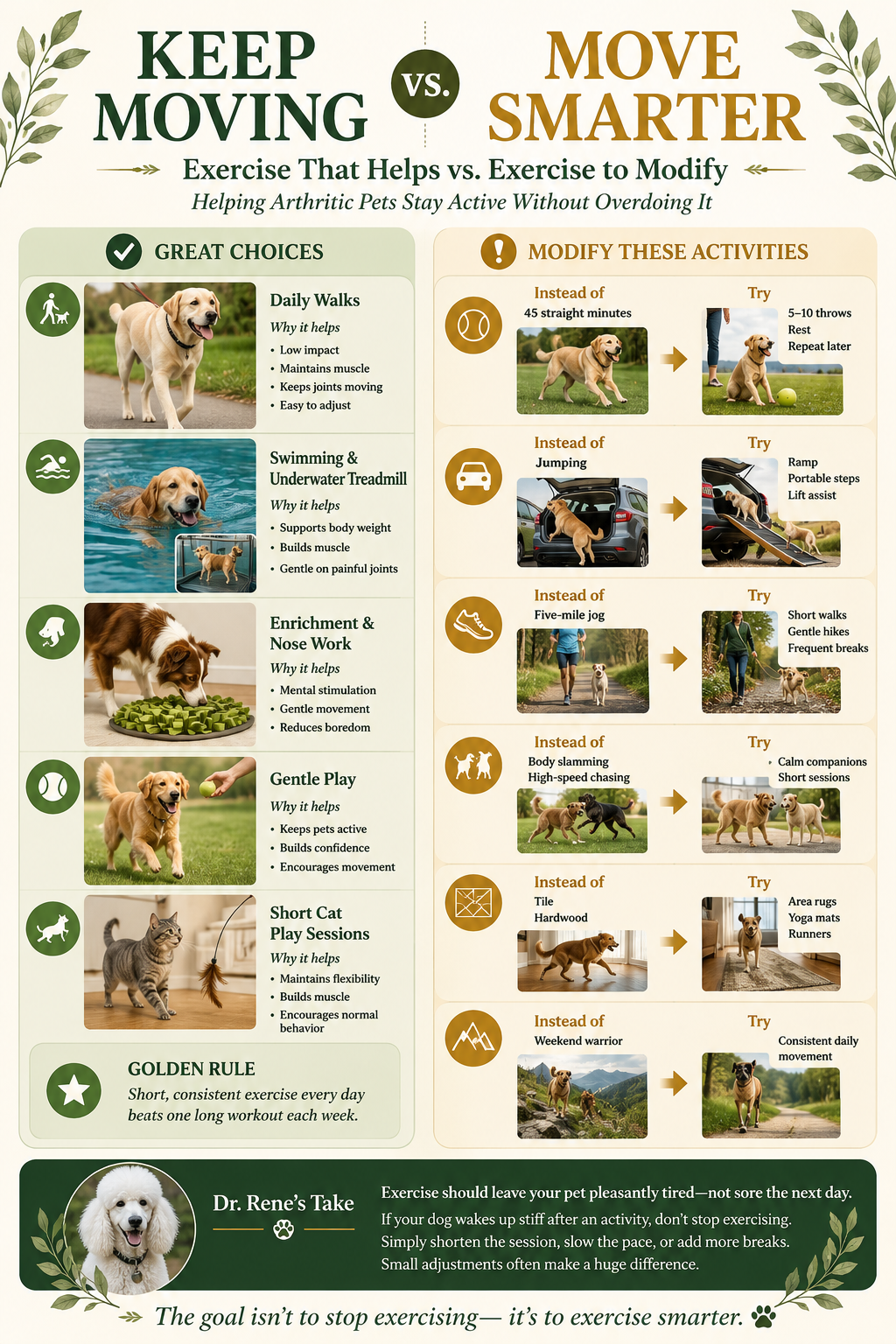
Weekend warriors often get into trouble.
A dog that spends six days lying around and then hikes five miles on Saturday is much more likely to be sore afterward than a dog who enjoys moderate exercise every day.
Instead of occasional intense activity, aim for:
- Short daily walks
- Regular play sessions
- Gentle stretching (when recommended)
- Controlled activity on even surfaces
Consistency is much kinder to arthritic joints than long periods of inactivity followed by strenuous exercise.
Choose Low-Impact Activities
Not all exercise is created equal.
Activities that involve sudden stops, sharp turns, or repeated jumping place much more stress on arthritic joints.
Whenever possible, choose lower-impact activities such as:
- Leisurely leash walks
- Swimming
- Underwater treadmill therapy
- Gentle hiking on even terrain
- Controlled games of fetch
- Nose work and scent games
- Food puzzles for mental enrichment
These activities encourage movement while reducing unnecessary stress on painful joints.
Swimming: One of Nature's Best Exercises
If your dog enjoys the water, swimming can be an excellent form of exercise.
Water supports much of your dog's body weight, allowing them to move their joints with less impact while still building muscle and improving cardiovascular fitness.
Not every dog enjoys swimming, and that's perfectly okay.
The goal is finding activities your pet enjoys and can do comfortably.
Physical Rehabilitation
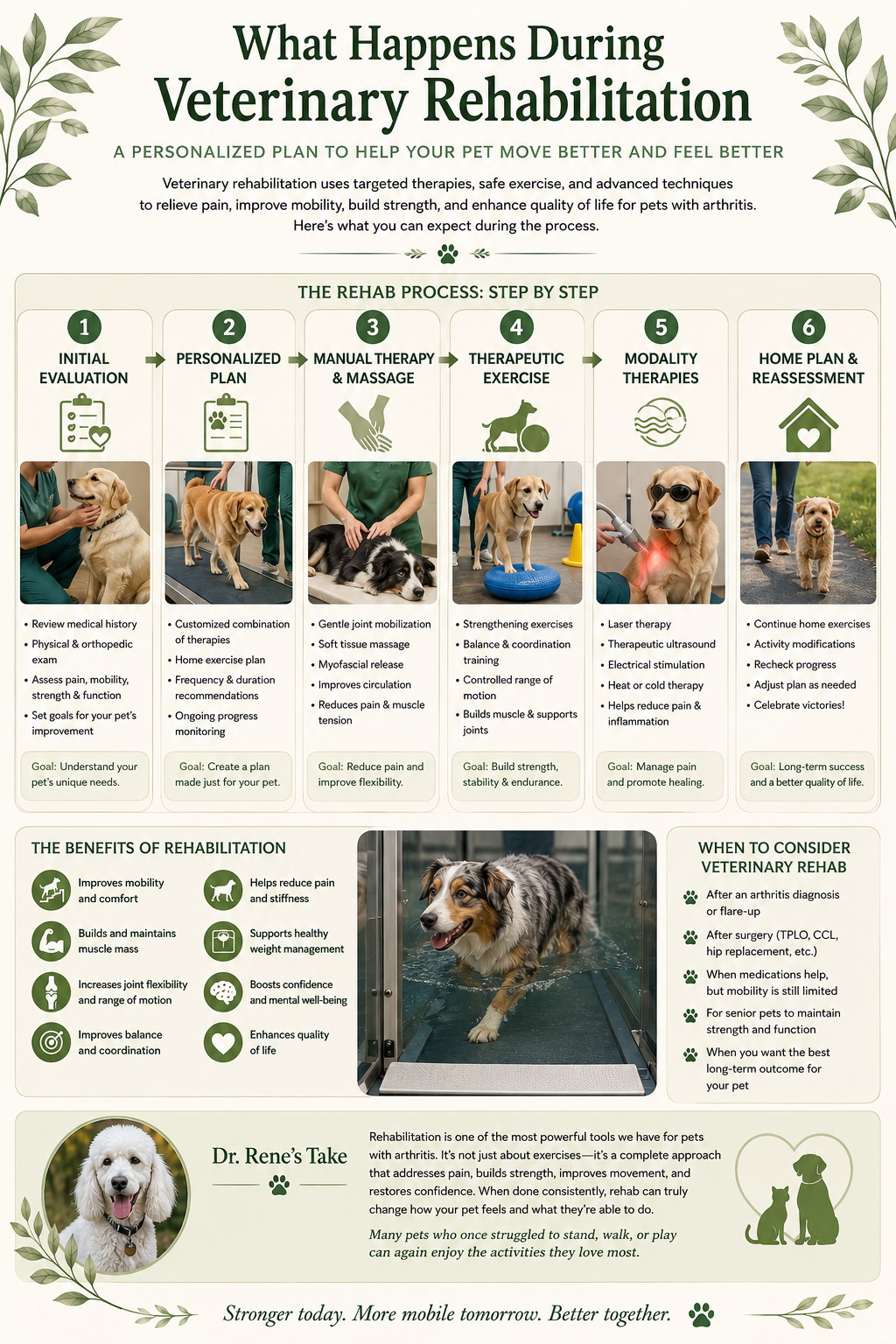
Physical rehabilitation is one of the fastest-growing areas of veterinary medicine—and for good reason.
Just as people benefit from physical therapy after injuries or surgery, dogs and cats with arthritis can often benefit from individualized rehabilitation programs.
Depending on your pet's needs, rehabilitation may include:
- Therapeutic exercises
- Underwater treadmill sessions
- Balance and stability training
- Cavaletti rails
- Stretching exercises
- Massage
- Manual therapy
- Range-of-motion exercises
- Home exercise programs
These therapies help improve strength, flexibility, coordination, and confidence.
Laser Therapy
Therapeutic laser (also called photobiomodulation or cold laser therapy) is commonly used to help manage arthritis pain.
The goal is to reduce inflammation, improve circulation, and promote healing within the affected tissues.
Some pets appear to benefit significantly, while others show more modest improvement.
Laser therapy is often used alongside weight management, medications, rehabilitation, and other treatments as part of a comprehensive arthritis plan.
What About Cats?
Cats benefit from movement too, but they usually exercise very differently than dogs.
Instead of long walks, encourage gentle daily activity by:
- Using wand toys
- Offering food puzzles
- Placing multiple low climbing platforms around the home
- Creating easy routes to favorite windows
- Encouraging short play sessions throughout the day
Small bursts of activity are often much more successful than trying to convince a cat to exercise for long periods.
Know When to Stop
Exercise should help your pet feel better—not worse.
If you notice:
- Increased limping
- Reluctance to move the next day
- Heavy panting from mild activity
- Difficulty getting up after exercise
- Increased soreness lasting more than 24 hours
…it may be time to reduce the intensity and discuss your exercise plan with your veterinarian.
Think of soreness as your pet's way of saying, "That was a little too much."
Building an Arthritis Team
Exercise is just one piece of the puzzle.
The most successful arthritis plans usually combine several treatments working together, including:
- Weight management
- Physical rehabilitation
- Appropriate exercise
- Medications when needed
- Joint supplements
- Home modifications
- Regular veterinary monitoring
That's called multimodal pain management, and it's the approach that gives most pets the best chance of staying comfortable and active for years to come.
Frequently asked questions
Educational only. This article is not a substitute for veterinary care. If your pet is unwell, please contact your veterinarian.
Next in this series
Arthritis Learning Series · Part 5 of 16
Part 6: Arthritis Medications: Finding the Right Treatment for Your Pet
What's the best arthritis medication? Usually, there isn't just one. Learn how multimodal pain management combines medications, weight management, rehabilitation, and supplements—and why safety and realistic goals matter.
Continue readingKeep reading
Adequan®, Librela®, and NSAIDs: Which Arthritis Treatment Does My Dog Need?
NSAIDs, Adequan®, and Librela® each treat arthritis in a completely different way. Learn what each one does, how they compare, and why combining them is often the most effective approach.
Read DiseasesAdequan®: One of the Most Underused Arthritis Treatments in Veterinary Medicine
Adequan® Canine is one of the few FDA-approved medications designed to support joint health, not just relieve pain. Learn how it works, how it's given, which dogs benefit most, and why it's often overlooked.
Read DiseasesLibrela® for Dogs: A New Way to Treat Arthritis Pain
Librela® is a monthly injection that blocks Nerve Growth Factor to reduce arthritis pain in dogs. Learn how it works, who it helps, what to expect, and the reported side effects to discuss with your veterinarian.
ReadKeep learning with Dr. Rene'
Browse the library, search another topic, or ask a question of your own.
Continue your journey
Loved this? Here's what to do next.
Every visit is a chance to understand your pet a little better. Pick your next step.
Explore the Learning Center
Browse evidence-based articles about symptoms, diseases, medications, treatments, preventive care, and more.
Explore ArticlesWatch Dr. Rene'
Prefer to watch instead of read? Explore practical veterinary education videos from Dr. Rene'.
Watch VideosGet Free Resources
Explore practical veterinary guides, checklists, and tools designed to help pet owners feel more informed and prepared.
Browse Free ResourcesProducts I Recommend
Browse pet products, supplies, and everyday essentials selected and recommended by Dr. Rene'.
See My RecommendationsEducational consultation
Want help understanding a diagnosis, test results, medications, or treatment options? Book educational guidance with Dr. Rene'. This does not replace veterinary care.
Learn more