
Acupuncture for Arthritis in Dogs & Cats: Can Tiny Needles Make a Big Difference?
What veterinary acupuncture is, how it may work, and what the research actually shows.
Is veterinary acupuncture real medicine or placebo? A veterinarian explains how acupuncture may reduce arthritis pain in dogs and cats, which pets are good candidates, what a session is like, and what the evidence shows.
Quick answer
In this article you'll learn
- What veterinary acupuncture is and who should perform it
- How acupuncture may reduce arthritis pain
- What happens during a typical treatment
- Which pets are most likely to benefit
- What the research does and doesn't show
- Whether acupuncture is safe for dogs and cats
For thousands of years, acupuncture has been used in human medicine to help manage pain and improve function.
Today, it's also used by many veterinarians as part of a comprehensive treatment plan for dogs and cats with arthritis.
Some owners are enthusiastic about it.
Others are understandably skeptical.
If you're wondering whether acupuncture is "real medicine" or simply a placebo, you're not alone.
The truth is that acupuncture has become an accepted part of veterinary rehabilitation and pain management. While it isn't a cure for arthritis, it may help improve comfort for some pets.
What Is Veterinary Acupuncture?
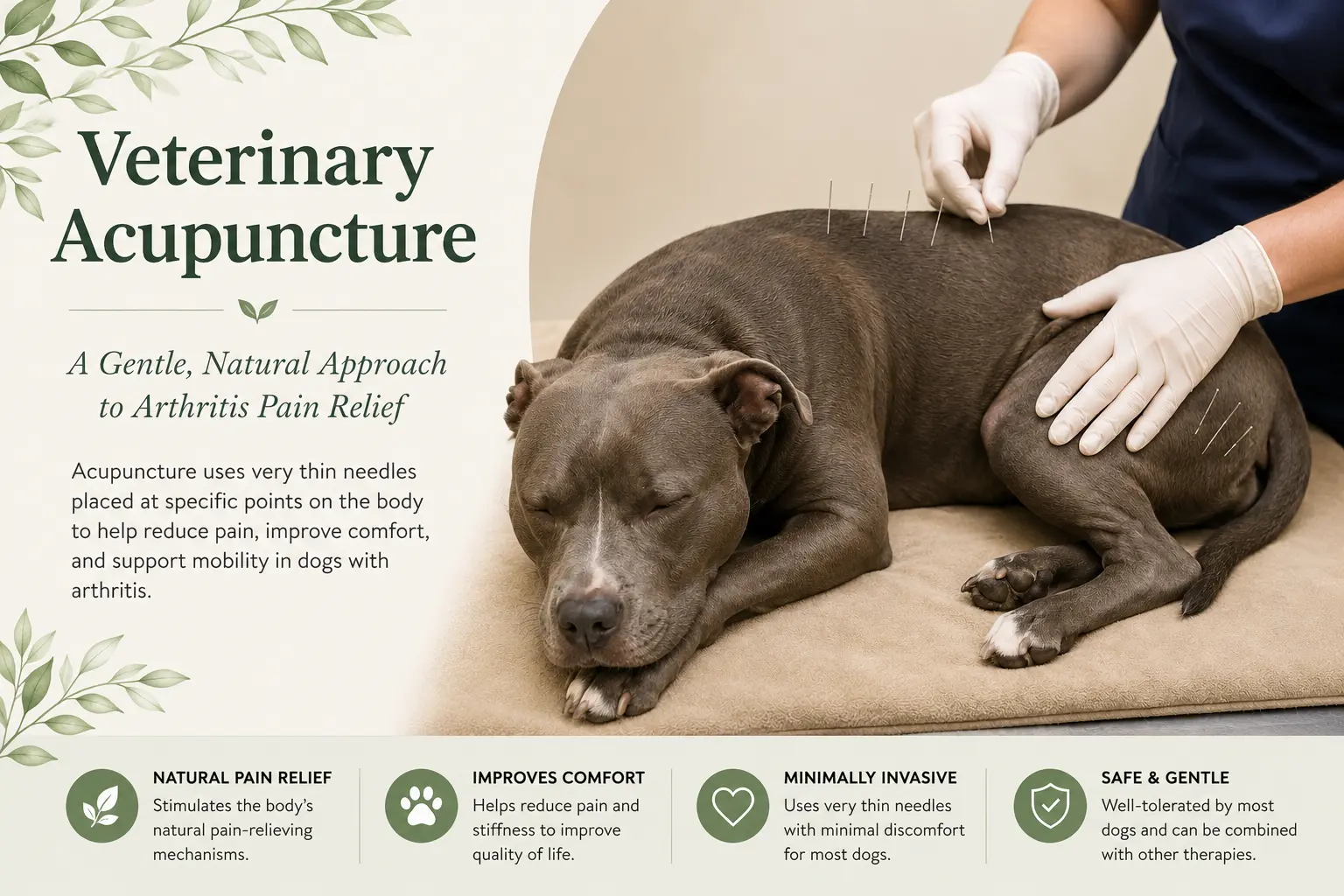
Veterinary acupuncture involves placing very thin, sterile needles into specific points on the body.
The procedure should always be performed by a veterinarian who has received additional training and certification in veterinary acupuncture.
Unlike many human patients, our pets don't know they're "supposed" to feel better.
That makes veterinary acupuncture particularly interesting because any improvements are based on observed changes in mobility and comfort rather than expectation alone.
How Might Acupuncture Work?
Researchers are still learning exactly how acupuncture produces its effects.
Current evidence suggests it may:
- Stimulate the release of endorphins and other natural pain-relieving chemicals.
- Influence how pain signals are processed by the nervous system.
- Improve local blood flow.
- Reduce muscle tension around painful joints.
- Encourage relaxation.
Rather than repairing the damaged joint itself, acupuncture appears to help the body manage pain more effectively.
What Happens During a Treatment?
Most acupuncture appointments are surprisingly calm.
Very fine needles are placed into carefully selected locations based on your pet's condition.
Many pets tolerate the needles extremely well.
In fact, some dogs become so relaxed during treatment that they lie down and even fall asleep.
The needles typically remain in place for about 15 to 30 minutes before being removed.
Most pets return home immediately afterward with no recovery period.
Which Pets May Benefit?
Acupuncture may be considered for pets with:
- Osteoarthritis.
- Hip dysplasia.
- Elbow dysplasia.
- Chronic back pain.
- Neurologic conditions.
- Muscle tension associated with arthritis.
- Pets that cannot tolerate certain pain medications.
It can also be used alongside medications, rehabilitation, weight management, and other therapies.
What Does the Research Say?
Research into veterinary acupuncture has produced encouraging—but not definitive—results.
Some studies have shown improvements in pain scores, mobility, and quality of life for dogs with osteoarthritis.
Other studies have found more modest benefits.
One challenge is that acupuncture research is difficult to standardize. Treatment points, techniques, practitioner experience, and treatment frequency often differ between studies.
Overall, I think it's fair to say that acupuncture has moderate scientific support as part of a multimodal arthritis treatment plan, but it should not replace therapies with stronger evidence, such as weight management, appropriate exercise, and effective pain control.
Is It Safe?
When performed by a properly trained veterinarian, acupuncture is generally considered very safe.
Side effects are uncommon but may include:
- Mild soreness.
- Temporary fatigue after treatment.
- Occasional bruising.
- Rarely, a temporary worsening of symptoms before improvement.
Serious complications are extremely uncommon.
My Perspective
Continue learning
- Shockwave therapy (ESWT) — the next advanced therapy in this section.
- Exercise and physical rehabilitation — the therapy acupuncture pairs with best.
- Arthritis medications for dogs and cats — what acupuncture is added to, not replacing.
- Advanced arthritis treatments overview — compare every option side by side.
Acupuncture at a Glance
How it works
Fine needles stimulate nerves, muscles, and natural pain-relieving pathways to help reduce discomfort.
Best candidates
Dogs and cats with chronic arthritis, pets with muscle tension, or those needing additional pain control alongside traditional therapies.
Evidence
⭐⭐⭐☆☆ (Moderate evidence. Many patients appear to benefit, but results are variable and additional high-quality studies are still needed.)
Typical cost
$$–$$$ (Depends on your location, the practitioner's training, and the number of treatments.)
Invasiveness
Low (Thin needles placed through the skin with little or no recovery time.)
Dr. Rene's recommendation
A reasonable complementary therapy when performed by a veterinarian trained in acupuncture. I view it as an addition to—not a replacement for—a comprehensive arthritis management plan.
Frequently asked questions
Educational only. This article is not a substitute for veterinary care. If your pet is unwell, please contact your veterinarian.
Next in this series
Advanced Arthritis Treatments · Part 2 of 9
Part 3: Shockwave Therapy (ESWT) for Arthritis in Dogs: Using Sound Waves to Reduce Pain
Shockwave therapy uses high-energy sound waves — not electricity — to reduce pain and support healing in arthritic joints and injured tendons. A veterinarian explains how ESWT works, which dogs benefit, and what the research shows.
Continue readingKeep reading
Shockwave Therapy (ESWT) for Arthritis in Dogs: Using Sound Waves to Reduce Pain
Shockwave therapy uses high-energy sound waves — not electricity — to reduce pain and support healing in arthritic joints and injured tendons. A veterinarian explains how ESWT works, which dogs benefit, and what the research shows.
Read DiseasesAdvanced Arthritis Treatments for Dogs & Cats: When Traditional Care Isn't Enough
When weight management, exercise, and pain medication are no longer enough, advanced arthritis treatments may help. A veterinarian explains each option, what the evidence actually shows, and which pets are most likely to benefit.
Read DiseasesPlatelet-Rich Plasma (PRP) for Dogs with Arthritis: Can Your Pet's Own Blood Help Their Joints?
Platelet-rich plasma uses your dog's own concentrated platelets to deliver growth factors into an arthritic joint. A veterinarian explains how PRP works, which patients may benefit, what the procedure involves, and what the evidence shows.
Read DiseasesStem Cell Therapy for Arthritis in Dogs: Can Regenerative Medicine Help?
Stem cell therapy is one of the most talked-about — and most overpromised — arthritis treatments. A veterinarian explains what stem cells do, how treatment works, what it costs, and what the evidence really shows.
Read DiseasesJoint Injections for Arthritis in Dogs: Treating the Joint from the Inside
Joint injections place medication or biologic products directly inside an arthritic joint. A veterinarian explains hyaluronic acid, corticosteroid injections, what the procedure involves, and which pets are good candidates.
Read DiseasesFemoral Head Ostectomy (FHO) in Dogs & Cats: A Different Approach to Hip Pain
An FHO removes the painful ball of the hip joint so a fibrous false joint can form. A veterinarian explains which dogs and cats are good candidates, why rehabilitation determines success, and how FHO compares to total hip replacement.
ReadKeep learning with Dr. Rene'
Browse the library, search another topic, or ask a question of your own.
Continue your journey
Loved this? Here's what to do next.
Every visit is a chance to understand your pet a little better. Pick your next step.
Explore the Learning Center
Browse evidence-based articles about symptoms, diseases, medications, treatments, preventive care, and more.
Explore ArticlesWatch Dr. Rene'
Prefer to watch instead of read? Explore practical veterinary education videos from Dr. Rene'.
Watch VideosGet Free Resources
Explore practical veterinary guides, checklists, and tools designed to help pet owners feel more informed and prepared.
Browse Free ResourcesProducts I Recommend
Browse pet products, supplies, and everyday essentials selected and recommended by Dr. Rene'.
See My RecommendationsEducational consultation
Want help understanding a diagnosis, test results, medications, or treatment options? Book educational guidance with Dr. Rene'. This does not replace veterinary care.
Learn more