
First-Year Puppy Vaccinations: What Your Puppy Needs and Why They Matter
Bringing home a new puppy is exciting, but protecting them from dangerous diseases starts with the right vaccination schedule. Learn which vaccines your puppy needs, when they should receive them, why multiple boosters are necessary, and how to safely socialize your puppy during their first year.
By Dr. Rene' Holt
Bringing home a new puppy is one of life's greatest joys—but it's also one of the most important times to protect their health.
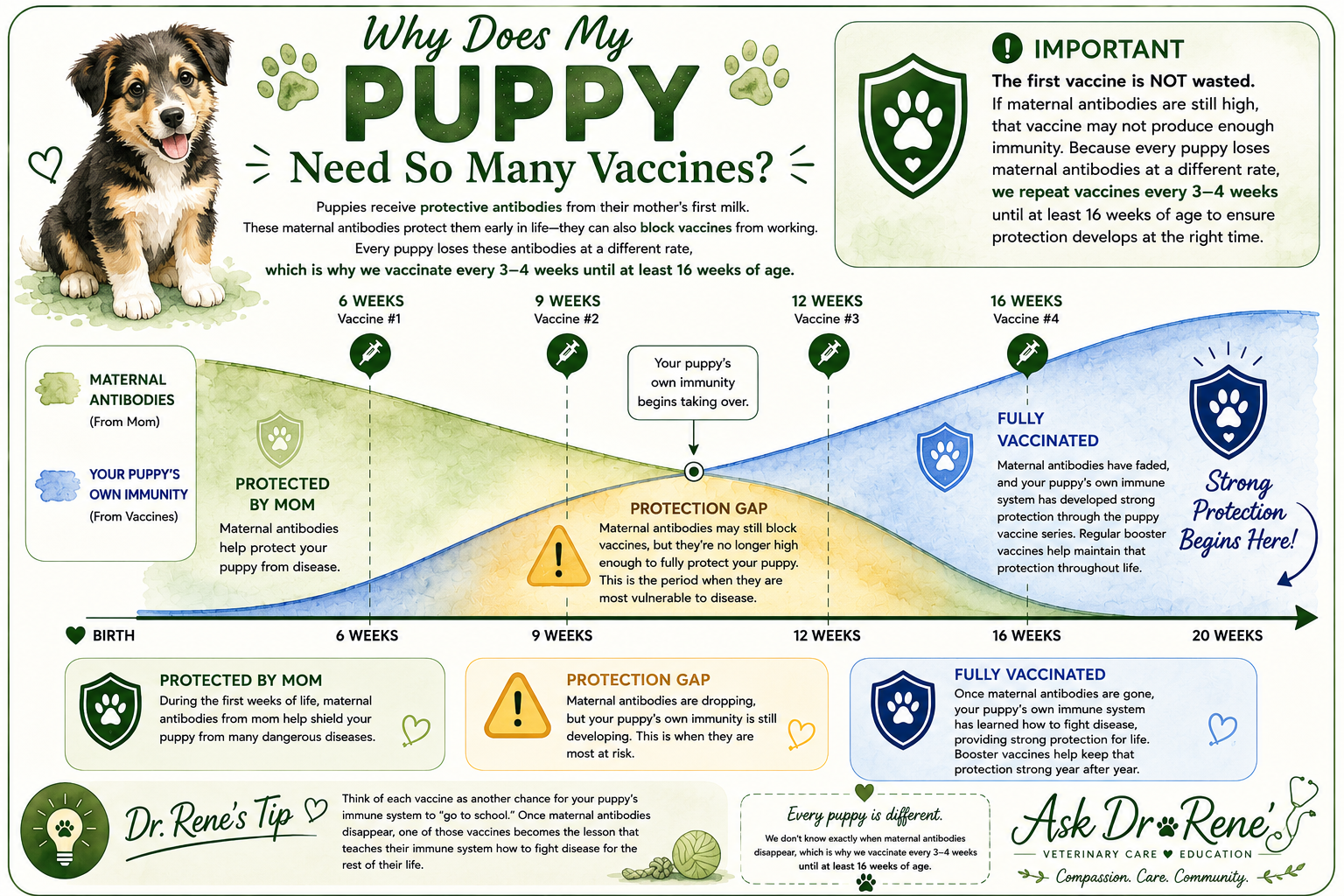
Puppies are born with immature immune systems and rely on antibodies they receive from their mother's first milk (colostrum) for early protection. While these maternal antibodies help keep puppies safe during their first weeks of life, they also interfere with vaccines.
That's why puppies need a series of vaccinations, not just one shot.
Each vaccine builds upon the last, giving your puppy's immune system multiple opportunities to develop lasting protection against dangerous—and sometimes fatal—diseases.
Vaccines are one of the safest, most effective ways to give your puppy the healthiest possible start in life.
Why Do Puppies Need Multiple Vaccines?
One of the most common questions I hear is:
"Why can't my puppy just get one vaccine?"
The answer lies in maternal antibodies.
These antibodies gradually disappear over the first few months of life, but every puppy loses them at a different rate. If a vaccine is given while maternal antibodies are still high, those antibodies can neutralize the vaccine before your puppy's immune system has a chance to respond.
By vaccinating every 3–4 weeks until at least 16 weeks of age, we greatly increase the chances that your puppy develops strong, long-lasting immunity.
Think of each vaccine visit as another opportunity to teach your puppy's immune system how to recognize and fight disease.
Core Vaccines I Recommend for Every Puppy
Every puppy should receive protection against diseases that are severe, widespread, and potentially life-threatening.
In my practice, I recommend these vaccines for every puppy, unless there is a specific medical reason not to vaccinate.
DHPP Vaccine
This combination vaccine may also be called:
- DHPP
- DAPP
- DA2PP
- Distemper/Parvo
It protects against four serious diseases.
Distemper
Canine distemper attacks multiple body systems, including the:
- Brain
- Lungs
- Eyes
- Skin
- Nervous system
It is often fatal, and survivors may be left with permanent neurological damage.
Adenovirus (Canine Hepatitis)
Adenovirus can affect the:
- Liver
- Kidneys
- Eyes
- Blood vessels
Although vaccination has made this disease much less common, it remains a serious illness that is easily prevented.
Parvovirus
Parvovirus is one of the most devastating diseases we see in puppies.
It causes:
- Severe vomiting
- Bloody diarrhea
- Rapid dehydration
- Sepsis
- Death if left untreated
Treatment often requires intensive hospitalization and can cost thousands of dollars. Fortunately, it is highly preventable through vaccination.
Parainfluenza
Parainfluenza is a contagious respiratory virus and one of the organisms involved in kennel cough.
While it is typically less severe than distemper or parvovirus, it spreads quickly anywhere dogs gather.
Leptospirosis Vaccine
Although some veterinary guidelines classify leptospirosis as a lifestyle vaccine, I consider it a core vaccine for nearly every puppy.
Leptospirosis is a bacterial infection that can cause:
- Acute kidney failure
- Liver failure
- Severe illness
- Death
Just as importantly, it is zoonotic, meaning infected dogs can transmit the disease to people.
Many owners believe their dog isn't at risk because they don't hunt, hike, or spend time in wooded areas. Unfortunately, leptospirosis doesn't work that way.
The bacteria are spread through the urine of infected wildlife, including:
- Raccoons
- Opossums
- Rats
- Mice
- Skunks
- Deer
Dogs become infected through contact with contaminated water, soil, mud, or wet grass. That exposure can happen in a backyard, neighborhood park, sidewalk drainage ditch, or anywhere wildlife has traveled.
The reality is that most dogs are exposed to wildlife or areas contaminated by wildlife at some point in their lives, regardless of whether they live in the city or the country.
Because leptospirosis is potentially fatal, expensive to treat, and poses a risk to both pets and people, I believe the benefits of vaccination far outweigh the risks for the overwhelming majority of dogs.
Rabies Vaccine
Rabies is one of the deadliest diseases known.
Once clinical signs develop, it is almost always fatal.
Rabies can infect all mammals, including humans, making vaccination essential for protecting both your family and your community.
It is also important to know that rabies is transmitted not only by wildlife such as raccoons, skunks, and foxes, but also by bats. Bats frequently enter homes through small openings and can be a hidden source of exposure for indoor pets, even when those pets never go outside.
Most puppies receive their first rabies vaccine between 12 and 16 weeks of age, depending on local laws and your veterinarian's recommendations.
Additional Lifestyle Vaccines
Some vaccines are recommended based on your puppy's activities, travel, and potential exposure.
Your veterinarian can help determine whether these vaccines are appropriate for your dog.
Bordetella (Kennel Cough)
Recommended for puppies that:
- Attend daycare
- Visit boarding facilities
- Go to groomers
- Attend puppy classes
- Frequently interact with other dogs
Canine Influenza
Dog flu outbreaks occur periodically throughout the United States.
Vaccination may be recommended for dogs that:
- Board frequently
- Attend daycare
- Travel often
- Live in areas where outbreaks occur
Lyme Disease
Lyme vaccination is recommended for dogs living in or traveling to regions where tick-borne disease is common.
Typical First-Year Puppy Vaccine Schedule
| Puppy Age | Vaccines |
|---|---|
| 6–8 weeks | DHPP |
| 9–12 weeks | DHPP + Leptospirosis (first vaccine) + Bordetella if needed |
| 12–15 weeks | DHPP + Leptospirosis booster + Rabies + additional lifestyle vaccines if recommended |
| 15–17 weeks | Final DHPP booster depending on age at previous vaccination |
Your veterinarian may recommend slight adjustments based on your puppy's age, previous vaccine history, local disease risks, and overall health.
Can My Puppy Go Outside Before They're Fully Vaccinated?
Yes—but safely.
Avoid high-risk areas such as:
- Dog parks
- Pet store floors
- Areas where unknown dogs frequently visit
- Places heavily contaminated with dog waste
Safer options include:
- Your own yard (if healthy, vaccinated dogs are the only visitors)
- Carrying your puppy in public places
- Visiting healthy vaccinated dogs you know
- Puppy socialization classes that require vaccinations
Proper socialization during the first few months of life is incredibly important. The goal is to provide positive experiences while minimizing exposure to infectious disease.
Are Vaccines Safe?
For the overwhelming majority of puppies, yes.
Most experience only mild, temporary side effects such as:
- Mild soreness at the injection site
- Sleepiness
- A temporary decrease in appetite
Serious vaccine reactions are uncommon.
Contact your veterinarian immediately if your puppy develops:
- Facial swelling
- Hives
- Repeated vomiting
- Difficulty breathing
- Collapse
These reactions are rare but require prompt medical attention.
Why Staying on Schedule Matters
Delaying vaccines leaves your puppy vulnerable during the time they are most susceptible to life-threatening infectious diseases.
Completing the full vaccine series provides the strongest possible protection and allows your puppy to safely explore the world as they grow.
Vaccination doesn't just protect your puppy—it helps protect other pets, your family, and your community.
Frequently Asked Questions
- Can my puppy be vaccinated if they're sick?
Mild illness may not prevent vaccination, but puppies with fever, vomiting, diarrhea, or more significant illness may need to recover first. Your veterinarian will determine the safest timing.
- Will my puppy need vaccines after the first year?
Yes. Most puppies receive booster vaccines at about one year of age. After that, your veterinarian will recommend an ongoing vaccination schedule based on current guidelines, your dog's health, lifestyle, and risk factors.
- Does an indoor puppy still need vaccines?
Absolutely. Viruses such as parvovirus can be carried indoors on shoes, clothing, or other objects. Wildlife also enters neighborhoods and backyards far more often than many people realize, increasing the risk of diseases like leptospirosis and rabies, including exposure from bats that may enter homes.
Key Takeaways
- Puppies need multiple vaccines because maternal antibodies gradually disappear over time.
- I recommend DHPP, Leptospirosis, and Rabies as core vaccines for virtually every puppy.
- Leptospirosis is a serious disease that can be fatal to dogs and can also infect people.
- Rabies can be transmitted by wildlife, including bats that may enter homes and expose indoor pets.
- Additional vaccines such as Bordetella, Canine Influenza, and Lyme disease may be recommended based on your puppy's lifestyle and geographic location.
- Keeping your puppy on schedule provides the best protection during the months when they are most vulnerable.
Dr. Rene's Tip
One of the best things you can do is make every veterinary visit a positive experience. Bring your puppy's favorite treats, offer plenty of praise, and let each visit end on a happy note. A puppy who learns that the veterinary hospital isn't scary is much more likely to grow into an adult dog that is calm, confident, and easy to examine for years to come.
Educational only. This article is not a substitute for veterinary care. If your pet is unwell, please contact your veterinarian.
Keep reading
First-Year Kitten Vaccinations: What Your Kitten Needs and Why They Matter
Vaccinating your kitten is one of the most important steps you can take to protect them from serious and potentially life-threatening diseases. Learn which vaccines your kitten needs, why multiple boosters are necessary, and how to keep them safe during their first year of life.
Read Foreign Body IngestionMy Dog Ate a Sock: The Complete Veterinarian's Guide to Intestinal Blockages, Surgery, and Recovery
Did your dog swallow a sock? Learn when it may pass on its own, when an intestinal blockage is likely, what symptoms to watch for, whether vomiting should be induced, and when emergency surgery may be needed.
Read Foreign Body IngestionMy Dog Ate a Sock (Part 2): Symptoms of an Intestinal Blockage and When It's an Emergency
Wondering if your dog will pass a swallowed sock or develop an intestinal blockage? Learn when vomiting may be appropriate, why symptoms don't always appear immediately, the warning signs of an obstruction, and when emergency veterinary care is needed.
ReadKeep learning with Dr. Rene'
Browse the library, search another topic, or ask a question of your own.
Continue your journey
Loved this? Here's what to do next.
Every visit is a chance to understand your pet a little better. Pick your next step.
Explore the Learning Center
Browse evidence-based articles about symptoms, diseases, medications, treatments, preventive care, and more.
Explore ArticlesWatch Dr. Rene'
Prefer to watch instead of read? Explore practical veterinary education videos from Dr. Rene'.
Watch VideosGet Free Resources
Explore practical veterinary guides, checklists, and tools designed to help pet owners feel more informed and prepared.
Browse Free ResourcesProducts I Recommend
Browse pet products, supplies, and everyday essentials selected and recommended by Dr. Rene'.
See My Recommendations