My Dog Ate a Sock (Part 5): Recovery After Intestinal Surgery
Bringing your dog home after intestinal surgery can feel overwhelming. Learn what to expect during recovery, how to care for the incision, manage activity restrictions, recognize warning signs, and help prevent another foreign body emergency.
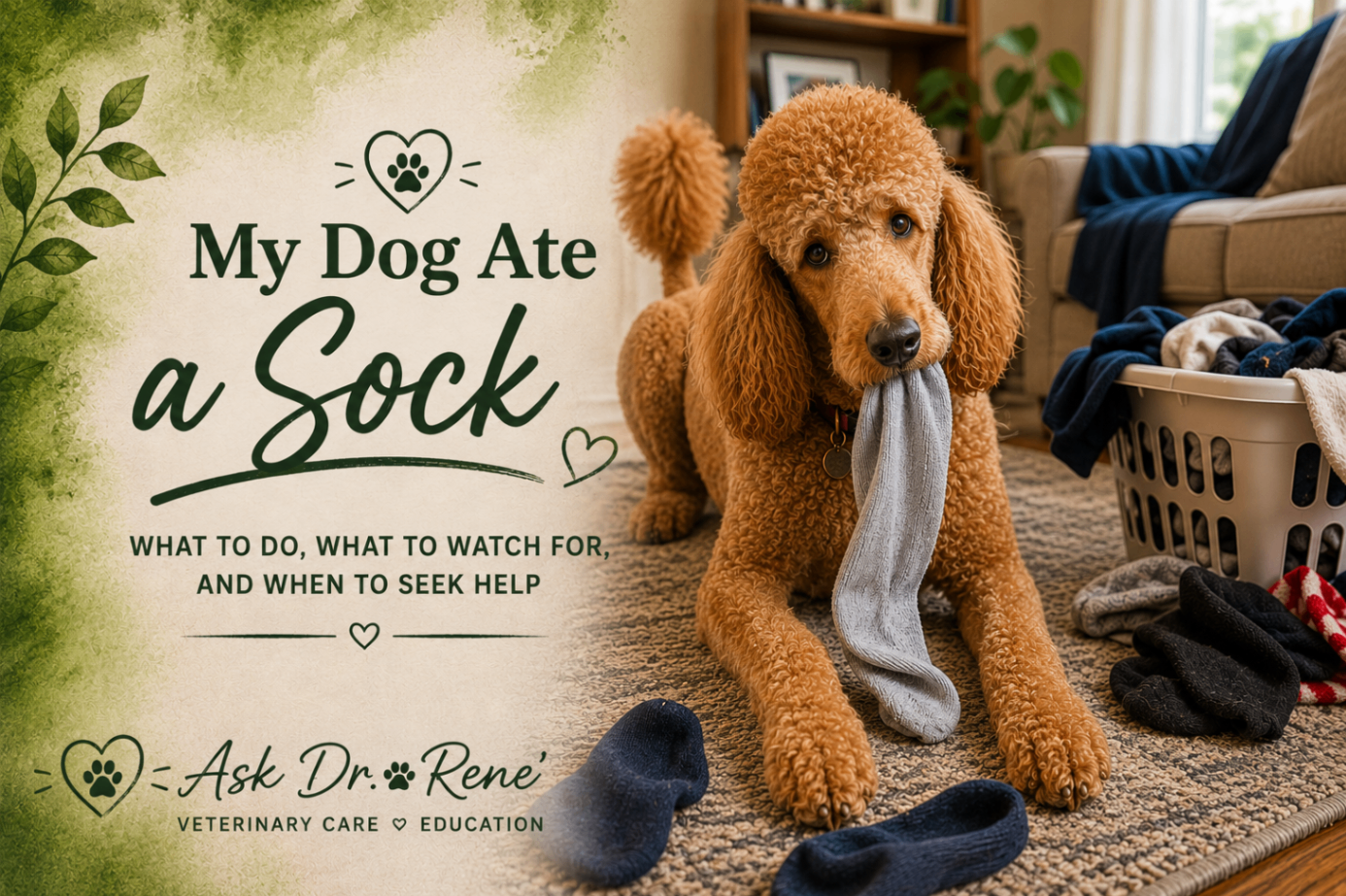
Going Home: Recovery Week by Week
For many families, bringing their dog home after surgery is both exciting and nerve-wracking.
The good news is that most dogs recover very well after foreign body surgery, especially when the obstruction was treated before the intestine became severely damaged.
Knowing what to expect during recovery can help you feel more confident while your dog heals.
The First 24 Hours
The first day home is usually the quietest.
Many dogs are still feeling the effects of anesthesia and pain medication.
It's common for your dog to:
- Sleep more than usual
- Have a decreased appetite
- Drink small amounts of water
- Walk more slowly
- Seem less interested in playing
- Need frequent potty breaks
Some dogs eat dinner the same evening.
Others aren't interested in food until the next morning.
As long as your veterinarian isn't concerned, either can be normal.
Feeding Instructions
Most veterinarians recommend:
- Small, frequent meals
- A bland or easily digestible diet if instructed
- Plenty of fresh water available at all times
Avoid offering a large meal immediately after surgery, even if your dog seems hungry.
Managing Pain
Dogs are very good at hiding discomfort.
Even if your dog seems comfortable, continue giving pain medications exactly as prescribed.
Signs your dog may still be painful include:
- Restlessness
- Panting while resting
- Whining
- Reluctance to lie down
- Trembling
- Guarding the abdomen
- Not wanting to move
Never give over-the-counter human pain medications unless specifically instructed by your veterinarian. Many are toxic to dogs.
Caring for the Incision
Check the incision at least once or twice daily.
A normal incision may have:
- Mild redness at the skin edges
- Mild swelling
- Small amounts of bruising
- A dry appearance
Contact your veterinarian if you notice:
- Thick discharge
- Pus
- A foul odor
- Significant swelling
- Increasing redness
- Bleeding
- The incision opening
One of the best things you can do is prevent licking.
Even a few minutes of licking can damage the incision or introduce bacteria.
If your veterinarian sent home an Elizabethan collar (cone), inflatable collar, or recovery suit, use it exactly as directed—even if your dog isn't happy about it.
Activity Restrictions
Your dog may feel much better before the incision has fully healed.
That doesn't mean it's safe to resume normal activity.
For the first 10–14 days, avoid:
- Running
- Jumping on furniture
- Wrestling with other pets
- Fetch
- Dog parks
- Swimming
- Off-leash activity
Short leash walks for bathroom breaks are usually appropriate unless your veterinarian advises otherwise.
Remember: The incision on the skin heals faster than the incision inside the stomach or intestines.
What About Bowel Movements?
Many owners become worried if their dog doesn't have a bowel movement right away.
This is often completely normal.
Why?
Several factors slow the digestive tract after surgery:
- Fasting before anesthesia
- The obstruction itself
- Anesthesia
- Pain medications
- Eating smaller meals
Some dogs don't have a bowel movement for two to three days after surgery.
The first stool may look different than usual and can even contain small amounts of old blood if your veterinarian says this is expected.
If your dog is eating normally, comfortable, and otherwise acting well, this temporary delay is often not a cause for concern.
Days 2–3
By the second or third day, many dogs begin acting much more like themselves.
You may notice:
- Better appetite
- Increased energy
- More interest in family members
- Improved hydration
- Less abdominal discomfort
Ironically, this is often when owners have the hardest time enforcing activity restrictions.
Just because your dog feels better doesn't mean they're fully healed.
Days 4–7
Most uncomplicated surgical patients continue improving steadily.
During this stage:
- Appetite should be close to normal.
- Energy continues improving.
- Vomiting should have resolved.
- The incision should look cleaner every day.
Continue monitoring carefully.
If vomiting suddenly returns after your dog had been recovering well, contact your veterinarian promptly.
Days 10–14
Many dogs return for a recheck examination around this time.
Your veterinarian may:
- Evaluate the incision
- Remove skin sutures or staples (if present)
- Discuss gradually increasing activity
- Transition back to the regular diet
Internal healing continues beyond this point, so follow your veterinarian's recommendations regarding exercise.
Warning Signs During Recovery
Contact your veterinarian immediately if your dog develops:
- Repeated vomiting
- Refusal to eat for more than 24 hours (or sooner if instructed)
- Severe lethargy
- Pale gums
- Abdominal swelling
- Difficulty breathing
- Fever
- Persistent diarrhea
- Incision drainage
- Opening of the incision
- Collapse
Most complications occur within the first several days after surgery, making close observation especially important during this time.
Long-Term Outlook
The overwhelming majority of dogs recover completely and return to their normal lives.
Once the intestine has healed, there are usually no lasting effects from an uncomplicated surgery.
The biggest long-term concern isn't the surgery itself.
It's making sure your dog doesn't swallow another foreign object.
Unfortunately, dogs that eat one sock often have a habit of eating other non-food items.
Preventing Future Foreign Body Surgeries
The best surgery is the one that never has to happen.
Simple changes around the house can dramatically reduce the risk of another emergency.
Laundry Management
Keep dirty clothes behind closed doors.
Use covered laundry hampers.
Pick up socks immediately after changing clothes.
Teach children not to leave clothing on the floor.
Enrichment
Many dogs that chew inappropriate objects are simply bored.
Provide:
- Food puzzle toys
- Durable chew toys
- Daily exercise
- Training sessions
- Interactive play
Mental stimulation can be just as important as physical exercise.
Crate Training
If your dog has a history of swallowing foreign objects, supervised confinement when you're unable to watch them may prevent another emergency.
Talk to Your Veterinarian About Pica
Dogs that repeatedly swallow socks, underwear, rocks, toys, or other non-food items may have pica.
Your veterinarian can help determine whether boredom, anxiety, compulsive behavior, or an underlying medical problem is contributing to the behavior.
Addressing the underlying cause may prevent future surgeries.
Dr. Rene's Clinical Pearls
🧦 The hardest part of recovery is often keeping your dog quiet. Most dogs feel better long before their intestines have fully healed.
🧦 Don't compare your dog's recovery to another dog's. Age, the location of the obstruction, whether surgery involved the stomach or intestines, and overall health all influence recovery.
🧦 Trust your instincts. If your dog suddenly seems worse after surgery, I'd much rather hear from you early than have you wait until the next day.
🧦 One foreign body surgery doesn't make a dog fragile forever. Once healed, most dogs go on to live completely normal, happy lives—as long as we can keep the socks out of reach.
The Bottom Line
Swallowing a sock is one of the most common reasons dogs require emergency surgery, but it doesn't always end that way. Early recognition, prompt veterinary evaluation, and appropriate treatment can often prevent life-threatening complications.
If your dog has swallowed a sock, don't rely on guesswork or home remedies. Contact your veterinarian as soon as possible. The earlier we know about the problem, the more options we may have—including removing the sock before it causes an intestinal blockage.
And if surgery is necessary, take heart: with timely treatment and careful recovery, the vast majority of dogs recover well and get back to doing what they do best—bringing joy (and occasionally stealing another sock if we're not paying attention!).
References
- Fossum TW. Small Animal Surgery.
- Ettinger SJ, Feldman EC. Textbook of Veterinary Internal Medicine.
- Nelson RW, Couto CG. Small Animal Internal Medicine.
- Merck Veterinary Manual. Gastrointestinal Foreign Bodies in Dogs and Cats.
- American College of Veterinary Surgeons (ACVS). Guidelines on Gastrointestinal Foreign Body Surgery.
Educational only. This article is not a substitute for veterinary care. If your pet is unwell, please contact your veterinarian.
You've reached the end
Foreign Body Ingestion Learning Series · Part 5 of 5
That's the final part of this series. Head back to the series hub to revisit any chapter.
Keep reading
My Dog Ate a Sock (Part 4): What Happens During Intestinal Surgery?
If your dog needs surgery after swallowing a sock, knowing what to expect can make the experience less overwhelming. Learn how veterinarians stabilize patients, remove intestinal foreign bodies, when part of the intestine must be removed, and what recovery typically looks like.
Read Foreign Body IngestionMy Dog Ate a Sock: The Complete Veterinarian's Guide to Intestinal Blockages, Surgery, and Recovery
Did your dog swallow a sock? Learn when it may pass on its own, when an intestinal blockage is likely, what symptoms to watch for, whether vomiting should be induced, and when emergency surgery may be needed.
Read Foreign Body IngestionMy Dog Ate a Sock (Part 2): Symptoms of an Intestinal Blockage and When It's an Emergency
Wondering if your dog will pass a swallowed sock or develop an intestinal blockage? Learn when vomiting may be appropriate, why symptoms don't always appear immediately, the warning signs of an obstruction, and when emergency veterinary care is needed.
ReadKeep learning with Dr. Rene'
Browse the library, search another topic, or ask a question of your own.
Continue your journey
Loved this? Here's what to do next.
Every visit is a chance to understand your pet a little better. Pick your next step.
Explore the Learning Center
Browse evidence-based articles about symptoms, diseases, medications, treatments, preventive care, and more.
Explore ArticlesWatch Dr. Rene'
Prefer to watch instead of read? Explore practical veterinary education videos from Dr. Rene'.
Watch VideosGet Free Resources
Explore practical veterinary guides, checklists, and tools designed to help pet owners feel more informed and prepared.
Browse Free ResourcesProducts I Recommend
Browse pet products, supplies, and everyday essentials selected and recommended by Dr. Rene'.
See My Recommendations