
Allergy Learning Center · Part 22
Is My Dog's Allergic Reaction an Emergency?
When to See a Veterinarian Immediately
Most allergies are uncomfortable—not life-threatening. But some allergic reactions can become medical emergencies. Here's how to recognize the warning signs and when your dog needs immediate veterinary care.
About a 7 minute read
How Do I Know If This Is an Emergency?
Most allergy flare-ups aren't emergencies.
A dog with itchy feet or seasonal scratching usually needs an appointment—not an emergency hospital.
But...
Some allergic reactions can progress rapidly.
Knowing the difference can save your dog's life.
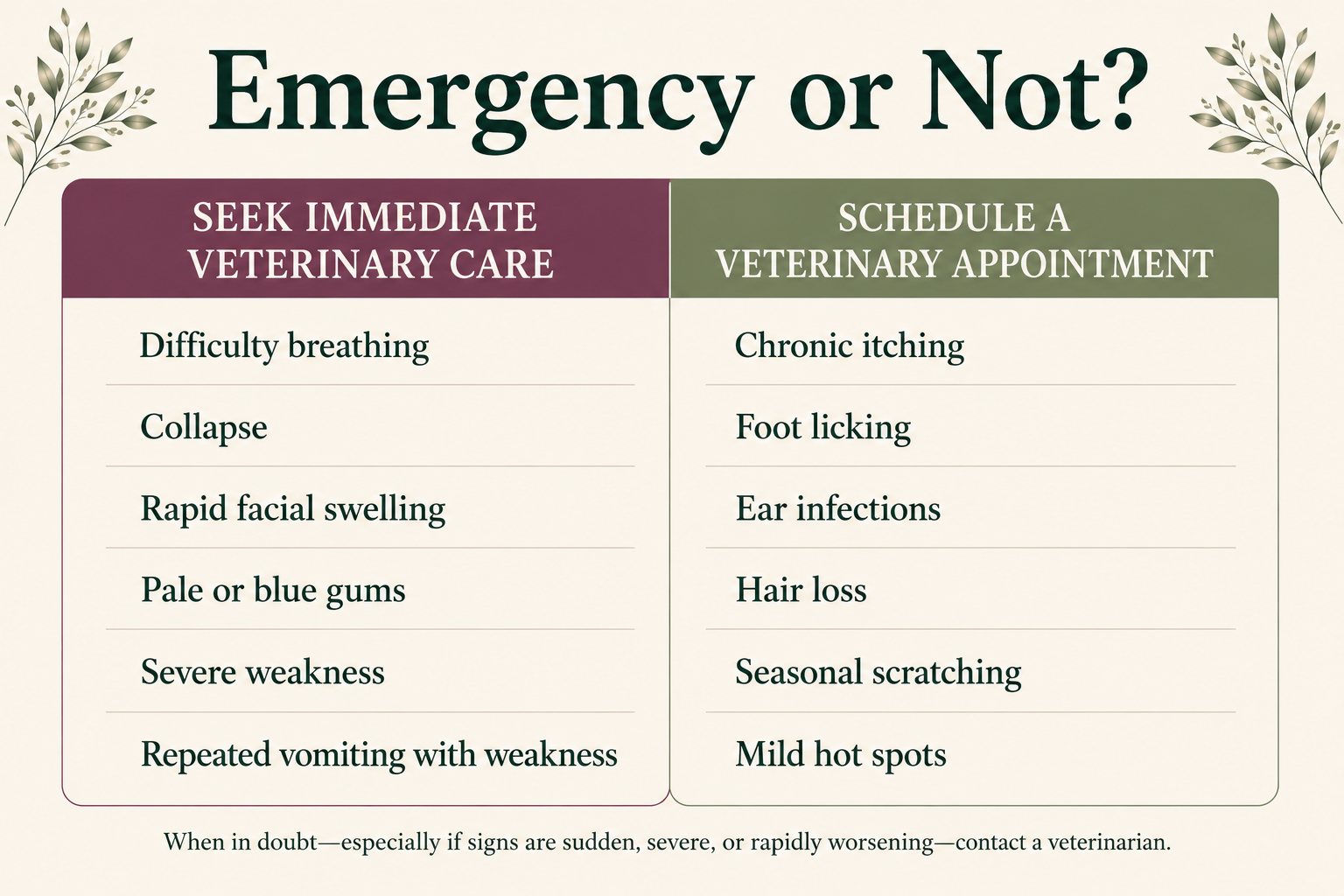
When You Should Seek Veterinary Care Immediately
If your dog develops signs of a potentially severe allergic reaction, don't wait to see whether things improve on their own.
Contact your veterinarian or the nearest emergency veterinary hospital immediately.
Facial Swelling
One of the most common acute allergic-reaction presentations is sudden swelling around the face.
You may notice:
- Puffy muzzle
- Swollen lips
- Swollen eyelids
- Swollen ears
- Rapid facial enlargement
Facial swelling may occur after things such as:
- Insect stings
- Vaccines
- Medications
- Other sudden allergic reactions
Many dogs with facial swelling remain otherwise stable.
However, swelling can progress, and it can be difficult to predict which dogs will worsen.
That's why sudden facial swelling deserves prompt veterinary evaluation, particularly if it is progressing rapidly or accompanied by vomiting, weakness, breathing changes, or collapse.
Hives (Urticaria)
Hives appear as raised, firm areas or bumps beneath the skin or coat.
They often develop suddenly and may be accompanied by:
- Intense itching
- Facial swelling
- Red skin
- Restlessness
Hives themselves aren't always life-threatening.
However...
They can be one part of a more serious allergic reaction.
Pay particular attention if hives occur along with facial swelling, gastrointestinal signs, weakness, collapse, or changes in breathing.
Difficulty Breathing
This is always an emergency.
Signs may include:
- Open-mouth breathing
- Rapid or labored breathing
- Noisy or abnormal breathing
- Blue or gray gums
- Neck stretched forward while trying to breathe
- Obvious distress while breathing
Sudden Collapse
Collapse can occur during a severe allergic reaction.
Your dog may:
- Suddenly become weak
- Fall over
- Struggle or become unable to stand
- Lose consciousness
- Become profoundly lethargic or poorly responsive
Collapse can indicate anaphylaxis, shock, or another life-threatening condition.
Immediate veterinary care is essential.
Vomiting and Diarrhea During an Allergic Reaction
This one surprises many dog owners.
A severe allergic reaction doesn't always look like the classic human picture of a swollen face and difficulty breathing.
Dogs experiencing a severe acute allergic reaction may develop:
- Repeated vomiting
- Profuse diarrhea
- Drooling
- Sudden weakness
- Collapse
This is particularly concerning when the signs begin suddenly after a potential trigger such as:
- A bee or wasp sting
- A vaccine
- A medication
- An insect bite
- Another known or suspected allergen exposure
Sudden gastrointestinal signs accompanied by weakness, collapse, swelling, or other signs of an acute allergic reaction warrant immediate veterinary attention.
What Is Anaphylaxis?
Anaphylaxis is the most severe type of allergic reaction.
Thankfully...
It is uncommon.
But when it occurs, it can become life-threatening very quickly.
During anaphylaxis, the immune system releases large amounts of inflammatory mediators throughout the body.
This can lead to:
- Shock
- Low blood pressure
- Difficulty breathing
- Collapse
- Gastrointestinal signs
- Organ dysfunction
Without prompt treatment, anaphylaxis can be fatal.
Common Triggers
Although anaphylaxis is rare, possible triggers include:
- Bee or wasp stings
- Vaccines
- Medications
- Certain foods
- Insect bites
- Rarely, other environmental exposures
The important thing to remember is that most allergic dogs will never experience anaphylaxis.
A dog with chronic environmental allergies is not automatically walking around at constant risk of a life-threatening allergic reaction.
These are different clinical situations.
What Should I Do?
If you think your dog is experiencing a severe allergic reaction:
- Stay as calm as possible.
- Call your veterinarian or emergency veterinary hospital while you're on your way.
- Transport your dog for veterinary care immediately.
- If it's easy to do without delaying your departure, bring relevant medication packaging, information about a possible insect sting or exposure, or recent vaccine records.
Most importantly:
Do not delay seeking veterinary care while searching the internet for home treatments.
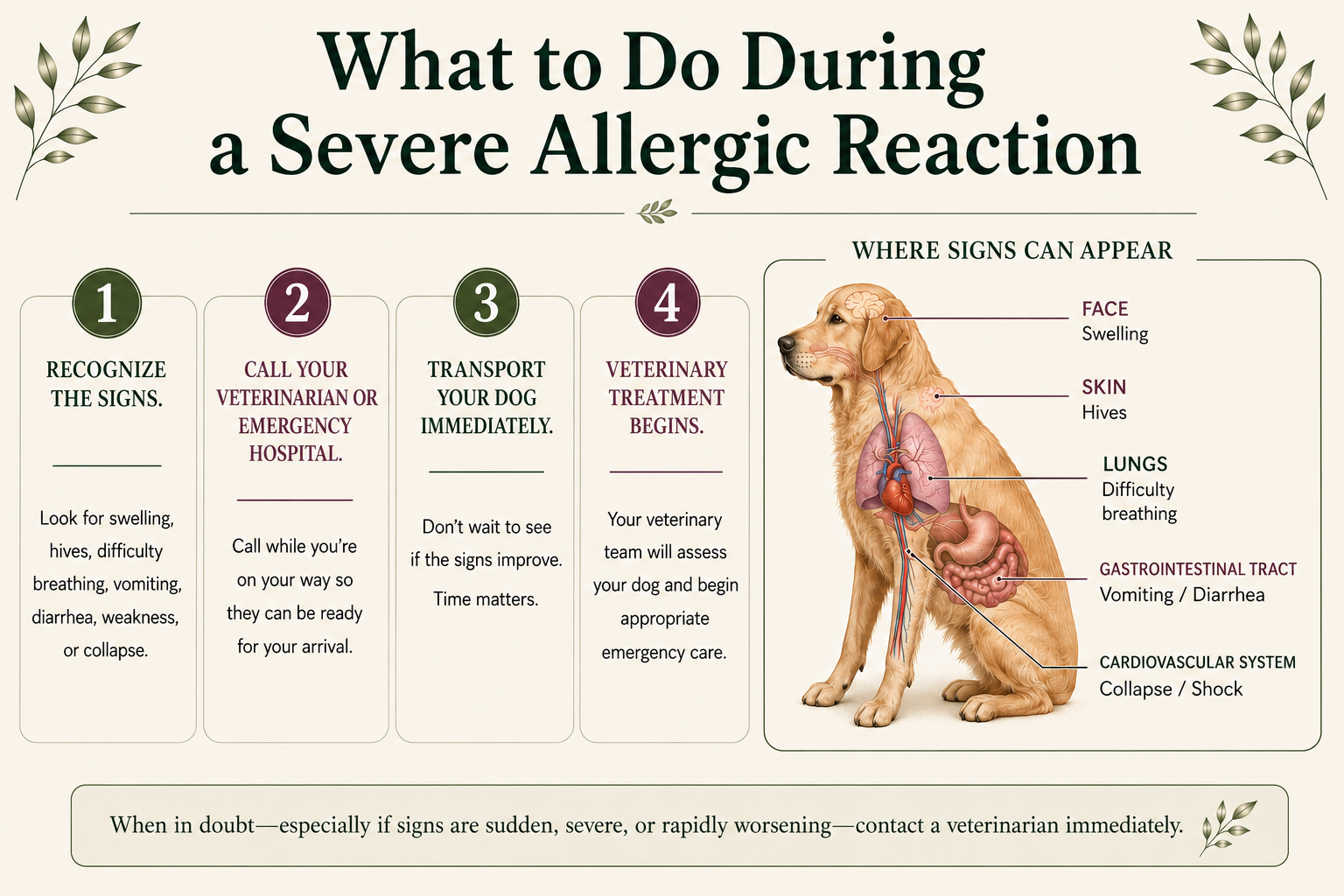
Time matters.
Questions Owners Often Ask
"Can I Give Benadryl at Home?"
Sometimes your veterinarian may recommend diphenhydramine (Benadryl) for certain mild allergic reactions in certain dogs.
However...
Benadryl is not a substitute for emergency veterinary care.
If your dog is having difficulty breathing, collapsing, becoming profoundly weak, or showing other signs of anaphylaxis, don't delay treatment while trying to manage the reaction at home.
If you're unsure how urgent your dog's reaction is, call your veterinarian or an emergency veterinary hospital for guidance.
"Should I Wait to See If It Gets Better?"
Not if your dog is:
- Having difficulty breathing
- Collapsing or unable to stand
- Becoming progressively weaker
- Developing rapidly worsening facial swelling
- Developing abnormal gum color
- Experiencing rapidly progressing signs
Those signs deserve immediate evaluation.
When Is It Okay to Schedule a Regular Appointment Instead?
Most chronic allergy problems can safely be evaluated during normal veterinary office hours.
Examples include:
- Seasonal itching
- Paw licking
- Recurrent ear problems
- Mild localized hot spots
- Chronic scratching
- Hair loss
These problems can make a dog absolutely miserable and still deserve veterinary attention.
But they're very different from an acute, unstable patient.
And that's the distinction I want owners to remember.
Uncomfortable... or Unstable?
An easy way to think about urgency is to ask:
Is my dog uncomfortable?
Examples:
- Itching
- Licking the paws
- Scratching
- Chronic ear problems
- Hair loss
- Mild localized skin irritation
These dogs generally need veterinary care, but they usually don't need an emergency hospital simply because they're itchy.
Or is my dog unstable?
Examples:
- Difficulty breathing
- Collapse
- Inability to stand
- Severe weakness
- Pale, gray, or blue gums
- Rapidly progressing facial swelling
- Repeated vomiting or diarrhea accompanied by weakness during a suspected acute allergic reaction
- Rapid deterioration
An unstable dog needs immediate veterinary care.
The Bottom Line
Most allergy dogs will never experience a life-threatening allergic reaction.
Most of the dogs we treat for allergies are dealing with chronic itching, recurrent skin problems, paw licking, or ear disease—not anaphylaxis.
But acute allergic reactions are different.
Difficulty breathing, collapse, severe weakness, abnormal gum color, rapidly progressing facial swelling, or other rapidly worsening signs require immediate veterinary attention.
If you're unsure how urgent your dog's signs are, contact your veterinarian or an emergency veterinary hospital for guidance.
Early recognition and treatment can make an enormous difference.
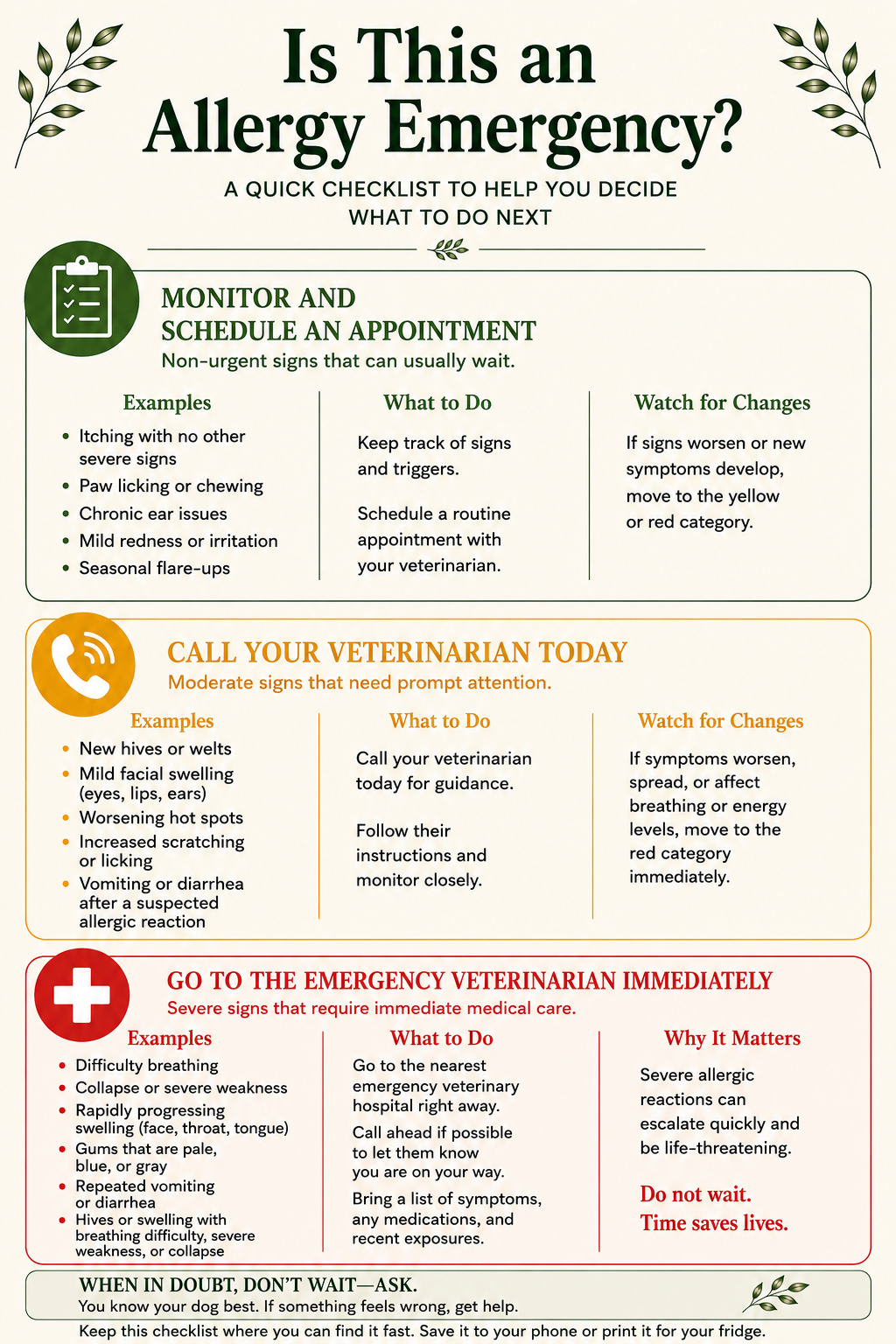
Save This Emergency Checklist
Keep this quick-reference guide somewhere easy to find. Save it to your phone or print a copy for your refrigerator so you'll know what signs can wait, when to call your veterinarian, and when your dog needs emergency care.
Key Takeaways
- Most chronic allergies are uncomfortable—not emergencies.
- Sudden facial swelling deserves prompt veterinary evaluation, particularly if it is progressing or accompanied by other signs.
- Difficulty breathing is always an emergency.
- Collapse, severe weakness, abnormal gum color, and rapidly worsening signs require immediate veterinary attention.
- Dogs experiencing anaphylaxis may develop vomiting, diarrhea, weakness, collapse, or shock rather than dramatic facial swelling alone.
- A dog does not need to show every classic sign for a severe allergic reaction to be occurring.
- Benadryl is not a substitute for emergency veterinary care in an unstable dog.
- If you're unsure how urgent your dog's signs are, contact your veterinarian or the nearest emergency veterinary hospital for guidance.
Still Not Sure How Urgent Your Dog's Signs Are?
If your dog is stable and you want help understanding an allergic reaction that has already been evaluated, an educational consultation can make your next veterinary conversation far more productive.
For an actively unstable dog, contact your veterinarian or the nearest emergency veterinary hospital right away.
Work With Dr. Rene'References & Further Reading
- Shmuel DL, Cortes Y. Anaphylaxis in dogs and cats. J Vet Emerg Crit Care. 2013;23(4):377–394. PMID: 23855441
- Fosset FTJ, Lucas BEG, Wolsic CL, Billhymer AC, Lavergne SN. Retrospective evaluation of hypersensitivity reactions and anaphylaxis in dogs (2003–2014): 86 cases. J Vet Emerg Crit Care. 2023. PMID: 37578030
- Smith SA, Sharp CR, Boyd CJ, et al. Clinical characteristics of two-hundred thirty-two dogs (2006–2018) treated for suspected anaphylaxis in Perth, Western Australia. Aust Vet J. 2021. PMID: 34541658
Next in this series
Canine Allergy Learning Center · Part 22 of 23
Part 23: Frequently Asked Questions About Dog Allergies
Quick, veterinarian-written answers to the allergy questions owners ask every week — itching, food allergies, Apoquel, Cytopoint, Benadryl, allergy testing, ear infections, paw licking, and bathing.
Continue readingContinue Learning
Is It Really Allergies?
How to tell whether your dog's itching is truly allergic — and what else can look the same.
Read articleWhy Does My Dog Keep Itching?
The science behind allergic skin disease and the skin barrier beneath the surface.
Read articleHot Spots: Everything Owners Should Know
Why hot spots appear so suddenly, and how they are treated and prevented.
Read articleWhy Benadryl Usually Doesn't Work for Itchy Dogs
What antihistamines can and can't do for chronic allergic itching in dogs.
Read article